Trockene Nase im Flugzeug: Warum sie auftritt und was wirklich hilft
Eine trockene Nase im Flugzeug hat einen Hauptgrund: die Luft. In Reiseflughöhe liegt die Luftfeuchtigkeit in der Kabine zwischen 5 % und 12 %, was trockener ist als die Sahara mit etwa 25 %. Die Nase muss jedem Atemzug Feuchtigkeit zuführen, und bei dieser Trockenheit kann sie einfach nicht mithalten.
Das Ergebnis ist ein straffes, verkrustetes Gefühl, das sich über mehrere Stunden aufbaut und ab und zu in Nasenbluten endet. Die zugrunde liegende Ursache ist einfach genug, und so sind auch die Dinge, die wirklich helfen.

Wichtige Erkenntnisse
- Die Luftfeuchtigkeit in der Kabine liegt zwischen 5 % und 12 %, verglichen mit 40 % bis 50 % in einem komfortablen Raum.
- Die Nase wärmt und befeuchtet jeden Atemzug mit Wasser, das aus ihrer eigenen Schleimhaut gewonnen wird.
- Trockene Kabinenluft entzieht dieses Wasser schneller, als der Körper es wieder zuführen kann.
- Die meisten Reisenden spüren die Trockenheit zuerst drei bis vier Stunden nach Beginn eines Fluges.
- Salzlösung und Gele behandeln die Oberfläche. Die Befeuchtung der Luft reduziert den Verlust selbst.
Warum die Kabinenluft so trocken ist
Die Kabinenluft wird von außen aus etwa 10.000 Metern Höhe angesaugt. Luft in dieser Höhe enthält fast keinen Wasserdampf. Sie wird auf dem Weg nach innen erwärmt und unter Druck gesetzt, aber nichts auf dem Weg führt die Feuchtigkeit zurück.
Welche Luftfeuchtigkeit in der Kabine vorhanden ist, stammt von den Menschen darin, durch Atem, Haut und Getränke. Selbst in einem vollen Flugzeug ist die Luft weit trockener als in jedem Raum am Boden. Hier erfahren Sie, woher die Kabinenluft kommt und warum sie so trocken ist.
Die Nase ist bereits ein Luftbefeuchter
Die Luft, die die Lungen erreicht, muss nahe an der Körperwärme sein und fast vollständig mit Feuchtigkeit gesättigt. Die Nase erledigt diese Arbeit bei jedem Atemzug ohne Pause, und es ist eine der am wenigsten beachteten Aufgaben im Körper.
Die Feuchtigkeit stammt von einer dünnen Flüssigkeitsschicht in der Nase. Forscher nennen sie Atemwegsoberflächenflüssigkeit, was den feuchten Film bedeutet, der die Atemwege überzieht. Sie sitzt auf winzigen Härchen, den Zilien, die eingeschlossenen Staub und Keime wieder nach außen befördern.

Warum das System in großer Höhe zu kurz kommt
Trockene Luft entzieht dieser Schicht viel mehr Wasser als feuchte Luft. Der Körper füllt sie aus dem darunterliegenden Gewebe auf, aber bei Kabinenfeuchtigkeit übersteigt der Bedarf das Angebot und die Schicht wird langsam dünner.
Ab einem bestimmten Punkt können die Zilien nicht mehr richtig kehren, und die Schleimhaut beginnt sich straff anzufühlen, bevor sie verkrustet. Das ist die trockene Nase, die die meisten Reisenden irgendwo über dem Meer bemerken.
Warum ein Nasenloch verstopft ist
Die meisten Menschen atmen ungleichmäßig durch ihre beiden Nasenlöcher, ohne es jemals zu bemerken. Eine Seite übernimmt den größten Teil des Luftstroms, während sich die andere erholt, und der Körper wechselt sie alle paar Stunden.
Forscher der Auckland University of Technology modellierten, warum dies geschieht. Ihre Arbeit über den Zweck des Nasenzyklus ergab, dass die beanspruchte Seite austrocknet, während sie die Luft konditioniert. Die ruhende Seite bleibt feucht genug, um den Schleim weiter abzutransportieren.
Die Nase kann Luft nicht gleichzeitig befeuchten und mit voller Kraft reinigen. Der Wechsel zwischen den Passagen ist die Art und Weise, wie der Körper diesen Konflikt bewältigt. Sehr trockene Kabinenluft erschwert beide Aufgaben erheblich.
Wann Reisende es bemerken
Kurze Flüge verursachen selten Probleme. Eine veröffentlichte Übersicht über die Forschung zur Kabinenfeuchtigkeit ergab, dass die Auswirkungen geringer Luftfeuchtigkeit normalerweise erst nach drei bis vier Stunden spürbar sind. Das stimmt mit dem überein, was Langstreckenreisende beschreiben.
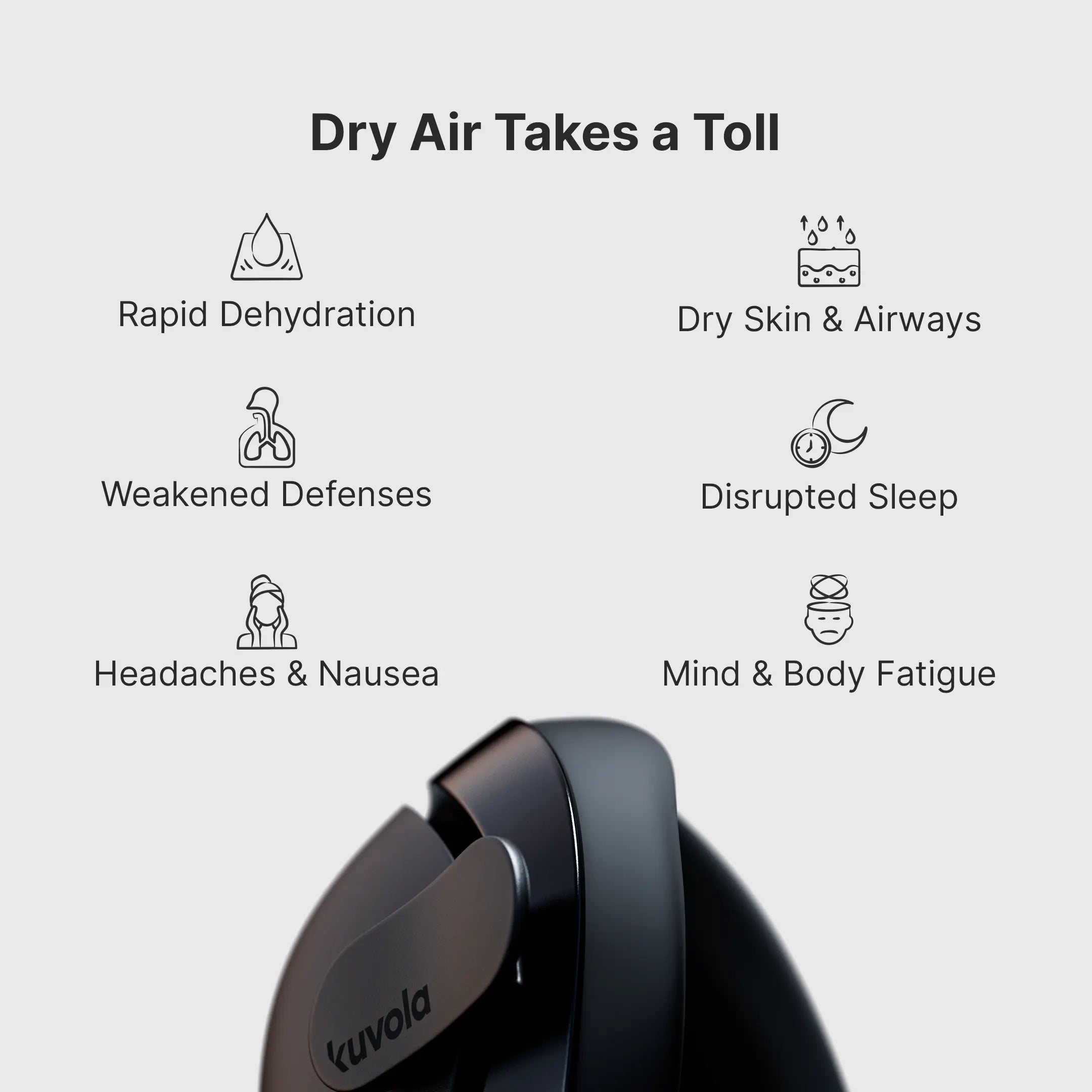
Danach baut sich das Gefühl langsam auf, und eine straffe Nase wird zu sichtbaren Krusten. Verkrustete Schleimhaut kann reißen, und gerissene Schleimhaut blutet.
Gleichzeitig passiert dasselbe im Hals und Mund. Es hilft zu wissen, wie viel Wasser die Atemwege auf einem langen Flug verlieren, denn die Nase ist nur ein Teil eines größeren Bildes.

Was tatsächlich hilft
Manche Mittel behandeln direkt die Oberfläche, während andere den Feuchtigkeitsverlust von vornherein reduzieren. Beide Ansätze haben ihren Platz und wirken gut in Kombination.
| Ansatz | Was es bewirkt | Am besten geeignet für |
|---|---|---|
| Salzsprays oder -tropfen | Führt der Schleimhaut direkt Wasser zu | Schnelle Linderung, alle paar Stunden wiederholen |
| Salzgel oder Barrierecreme | Verlangsamt den Wasserverlust an der Oberfläche | Nachtflüge und aufrechtes Schlafen |
| Durch die Nase atmen | Hält das Befeuchtungssystem am Laufen | Jeder, der in Mundatmung verfällt |
| Befeuchtung der Atemluft | Reduziert den Feuchtigkeitsverlust an der Quelle | Flüge über etwa vier Stunden |
| Trinkwasser | Unterstützt den Körper als Ganzes | Nützlich, aber allein keine vollständige Lösung |
Dieser letzte Punkt überrascht die Leute immer wieder. Trinkwasser wird in den Blutkreislauf aufgenommen, während die Trockenheit auf einer nur wenige Zellen dicken Oberfläche auftritt, verursacht durch die darüber strömende Luft.
Was nicht viel hilft
- Verzicht auf Milchprodukte. Die Annahme, dass Milch Schleim verdickt, ist nicht gut belegt.
- Öffnen des Belüftungsschlitzes über dem Kopf. Es bewegt mehr trockene Luft über Ihr Gesicht, nicht weniger.
- Nur trinken, wenn Sie durstig sind. Durst hinkt den tatsächlichen Verlusten auf einem langen Flug hinterher.
- Warten, bis es schmerzt. Eine trockene Schleimhaut ist viel einfacher zu schützen als zu reparieren.
Reduzierung des Verlusts an der Quelle
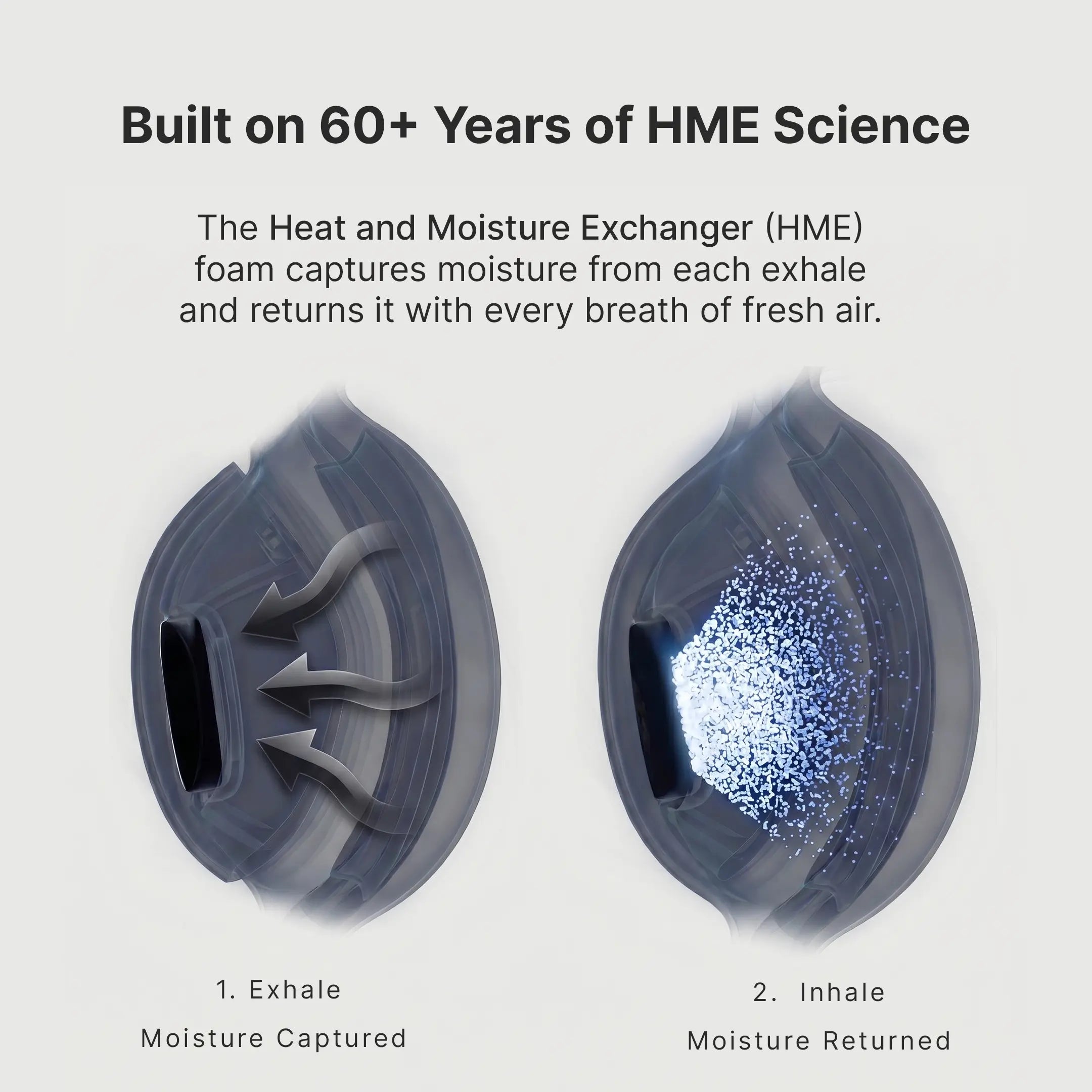
Es gibt noch eine weitere Option, die auf einem anderen Prinzip basiert. Ausgeatmete Luft verlässt den Körper warm und fast gesättigt mit Feuchtigkeit, und in einer normalen Kabine geht all dieses Wasser für immer verloren.
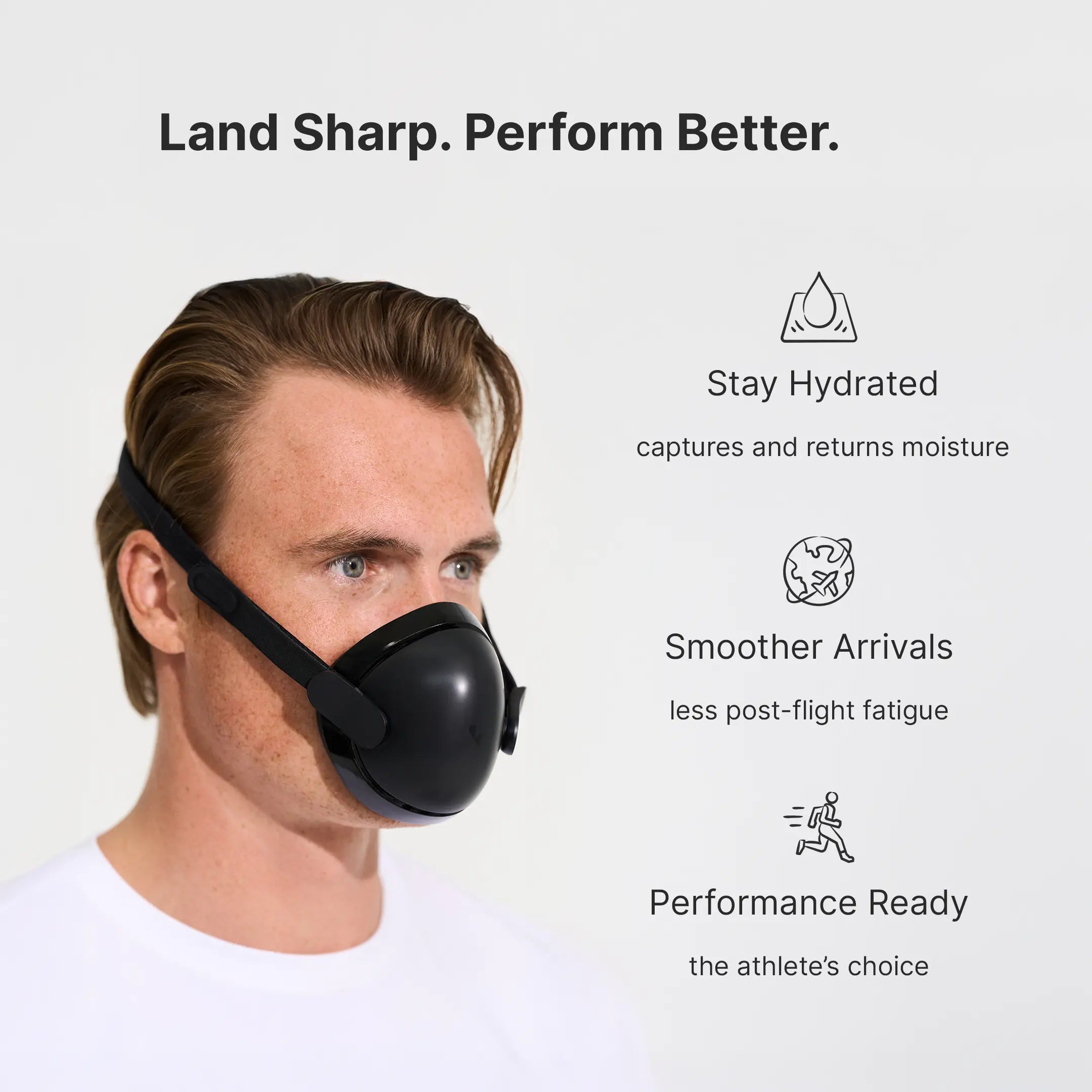
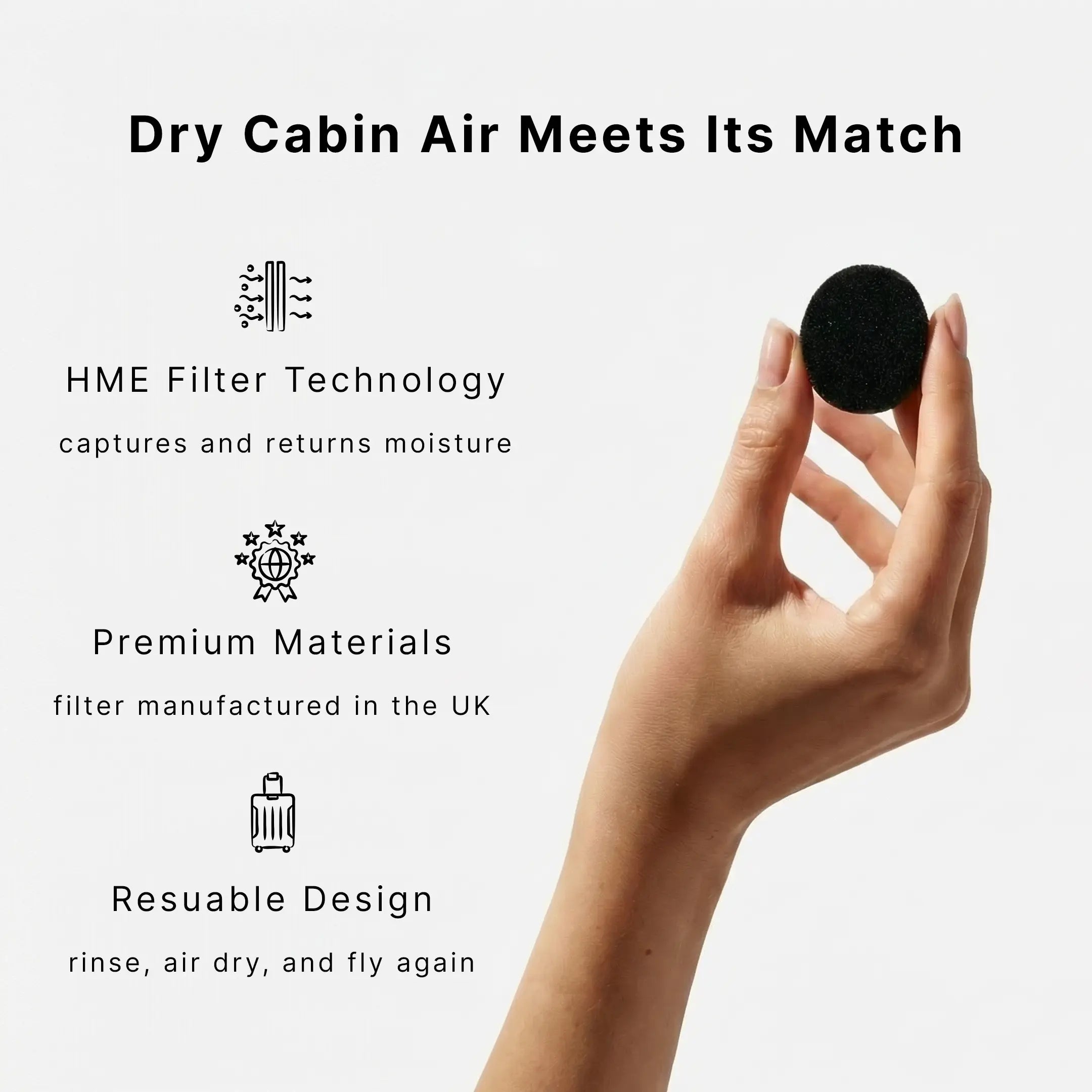
Heat and Moisture Exchange, abgekürzt HME, fängt es stattdessen ein. Dieselbe Technologieklasse wird in der Krankenhausbeatmung eingesetzt, um die eingeatmete Luft feucht zu halten. Ein Filter speichert die Feuchtigkeit jedes Ausatmens und gibt sie beim nächsten Einatmen wieder ab.
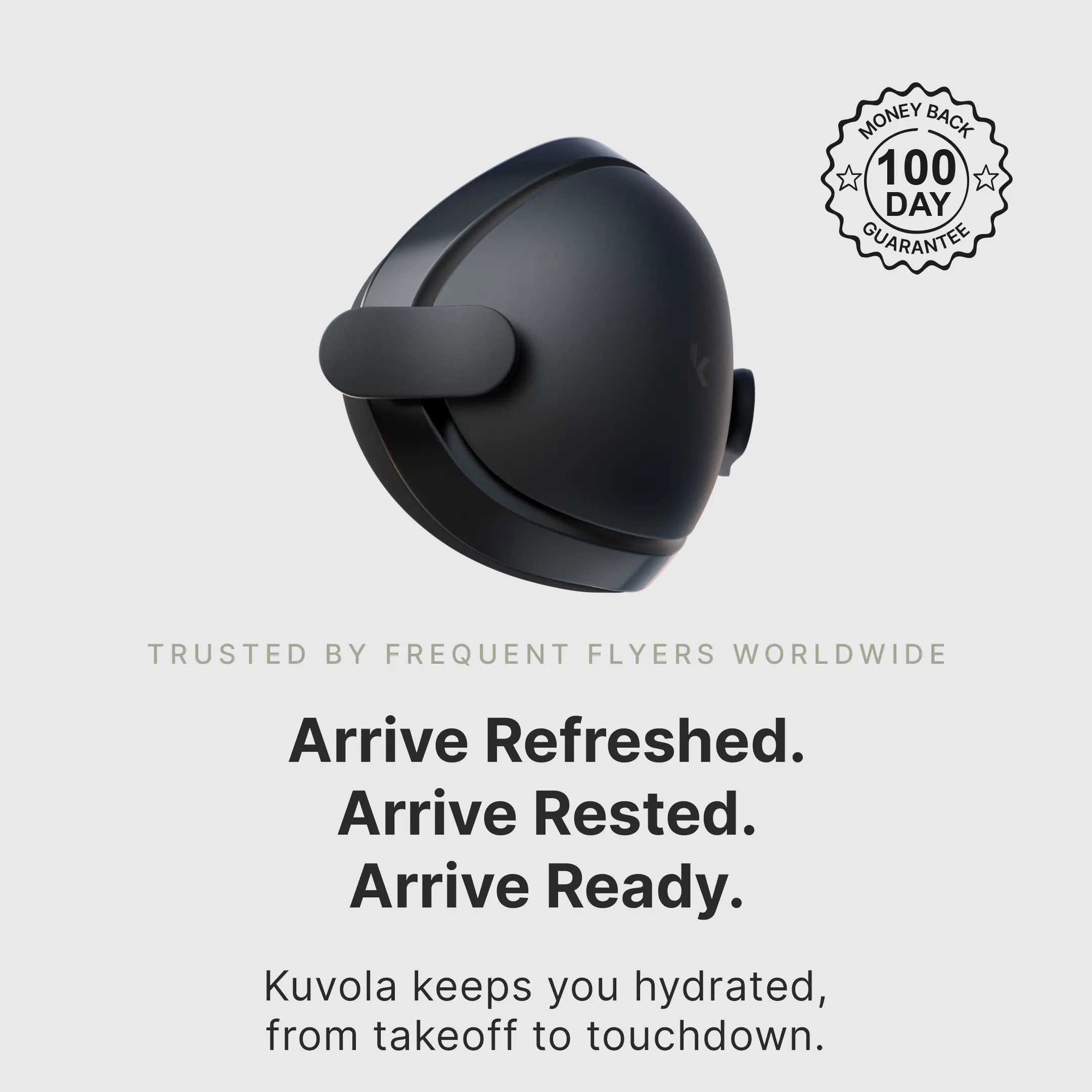
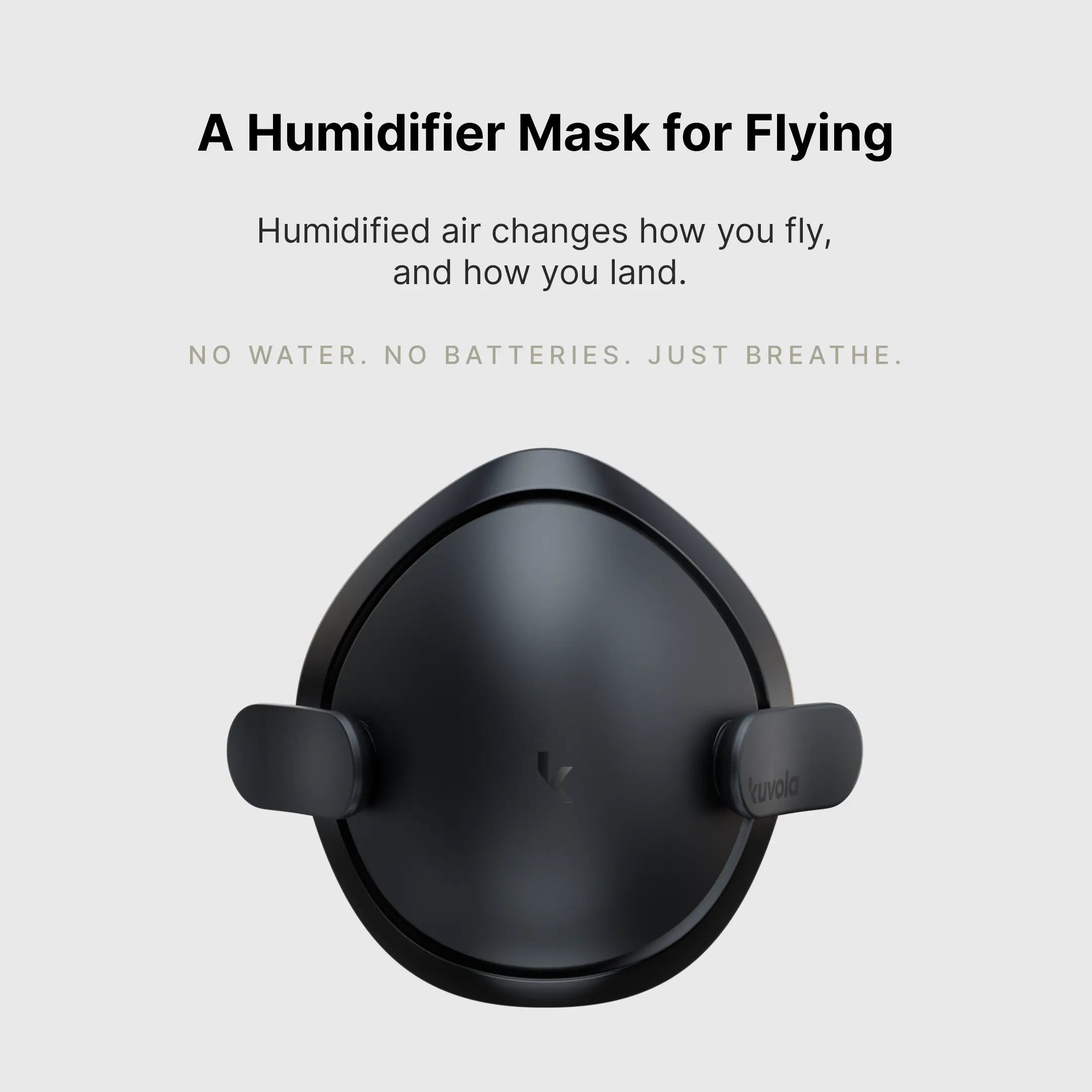
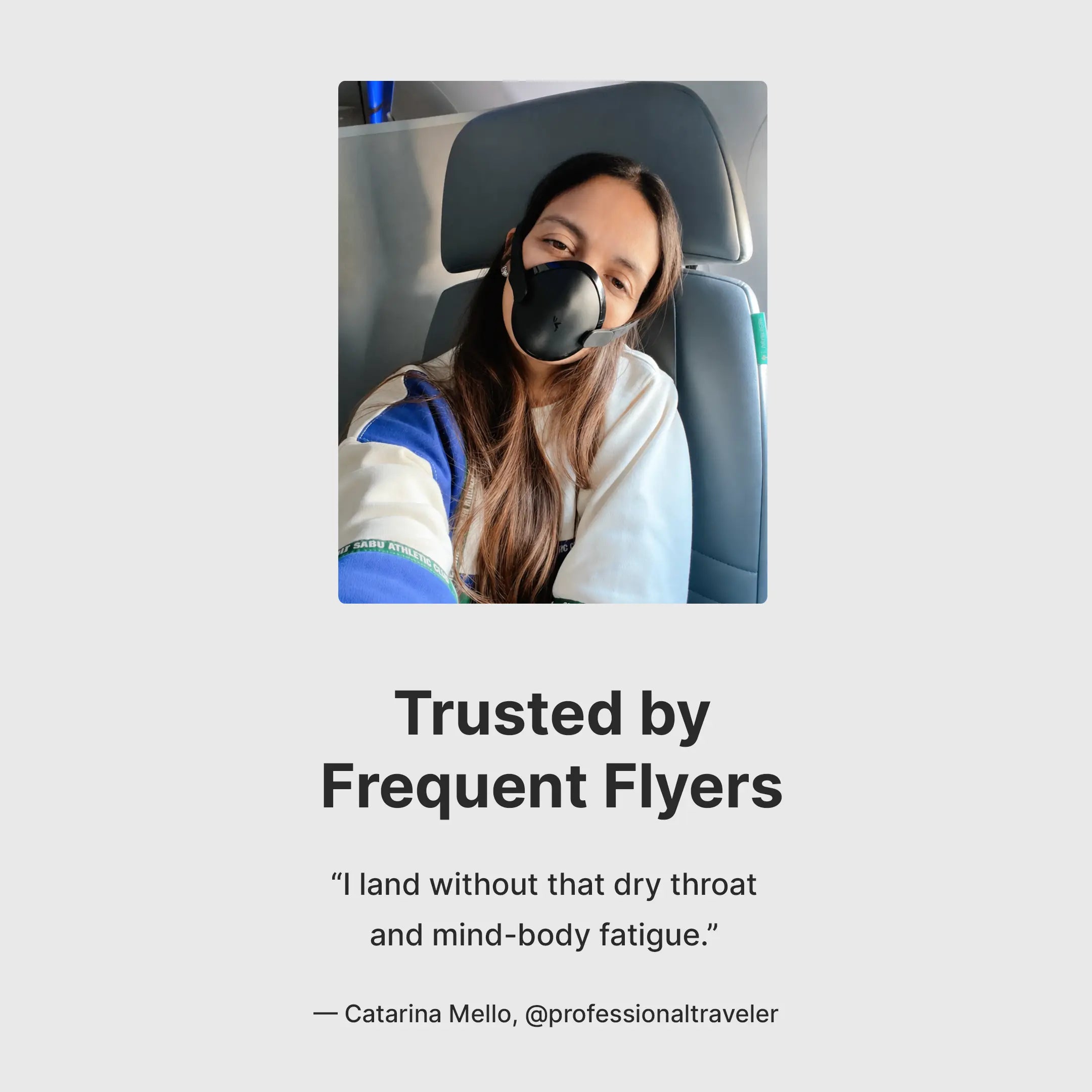
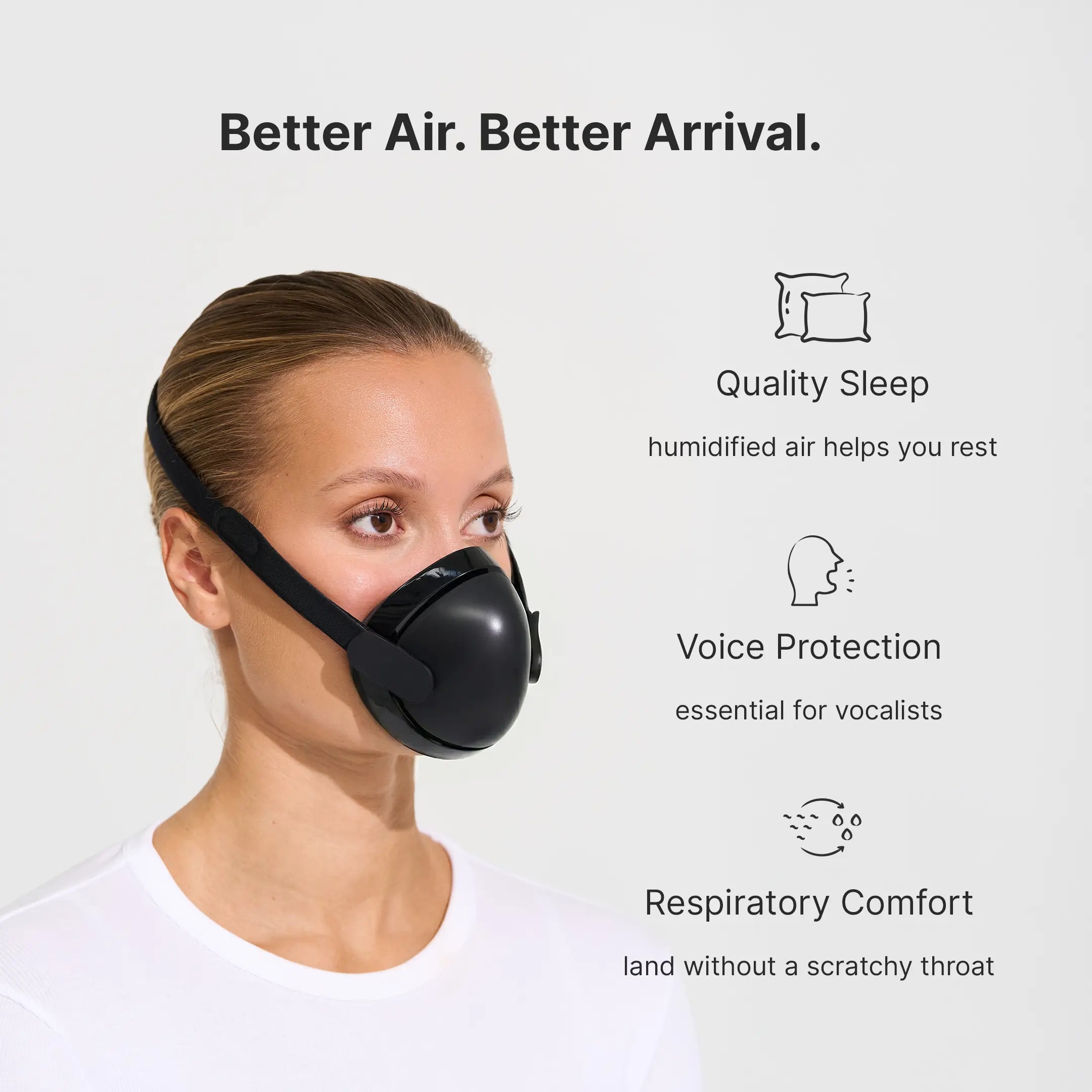
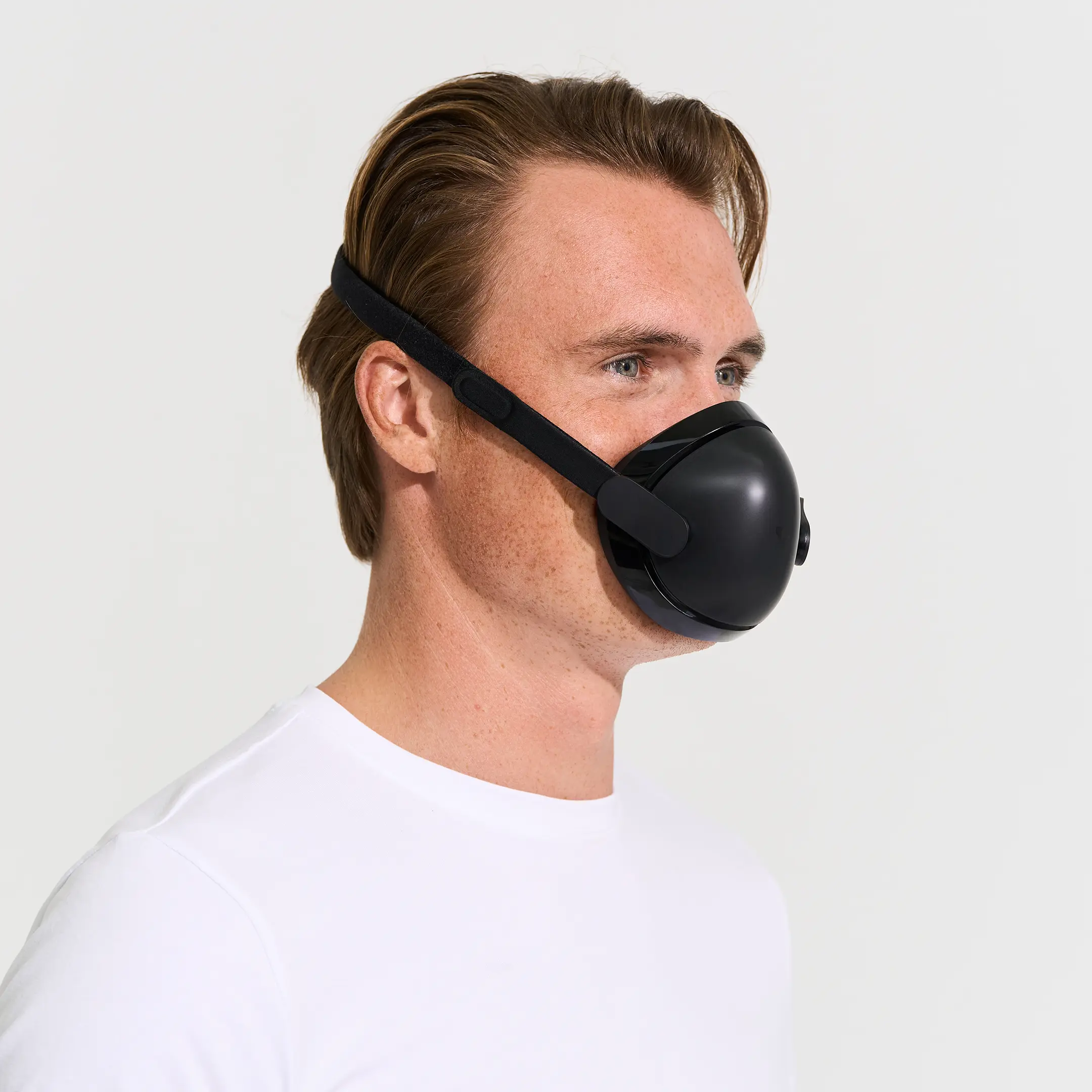
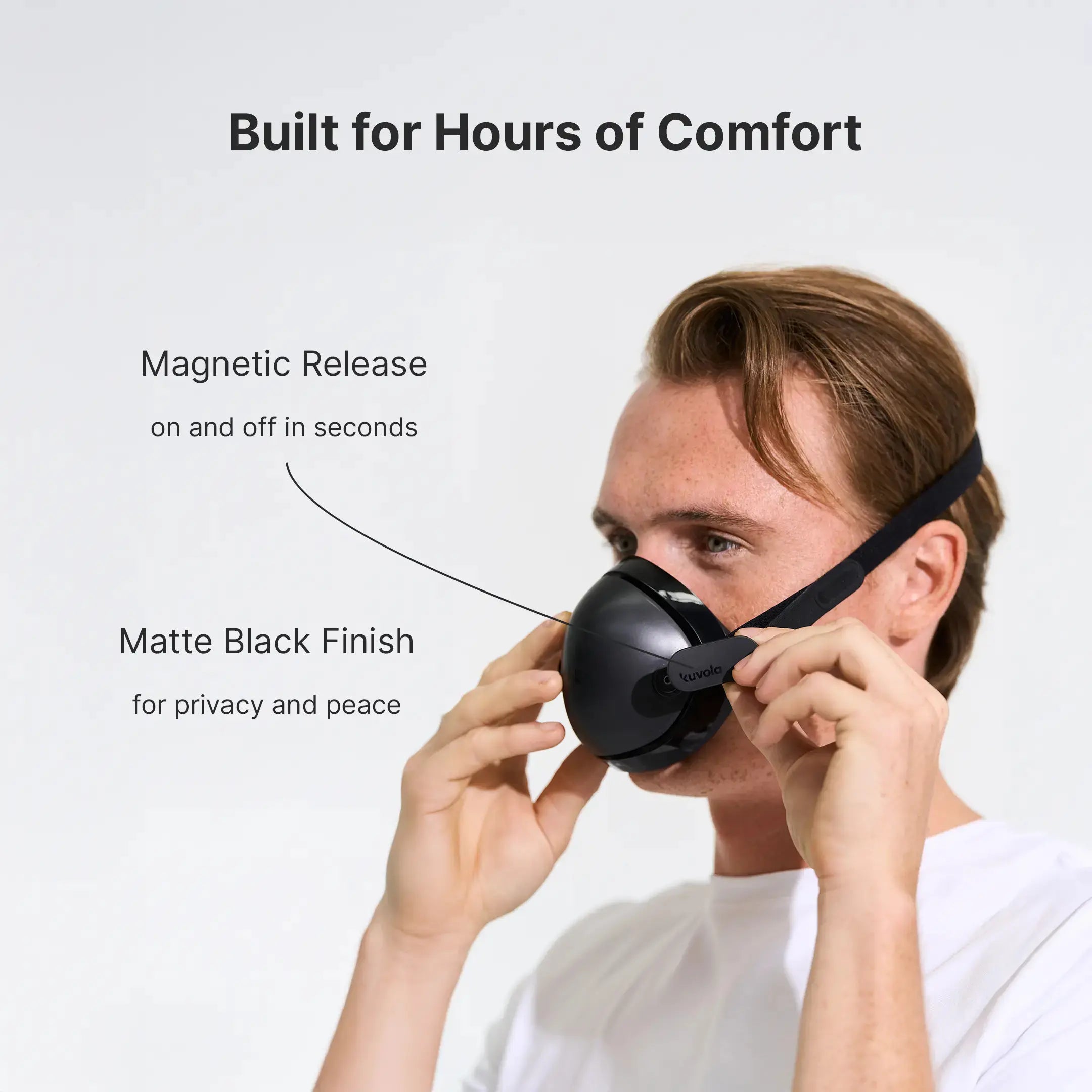
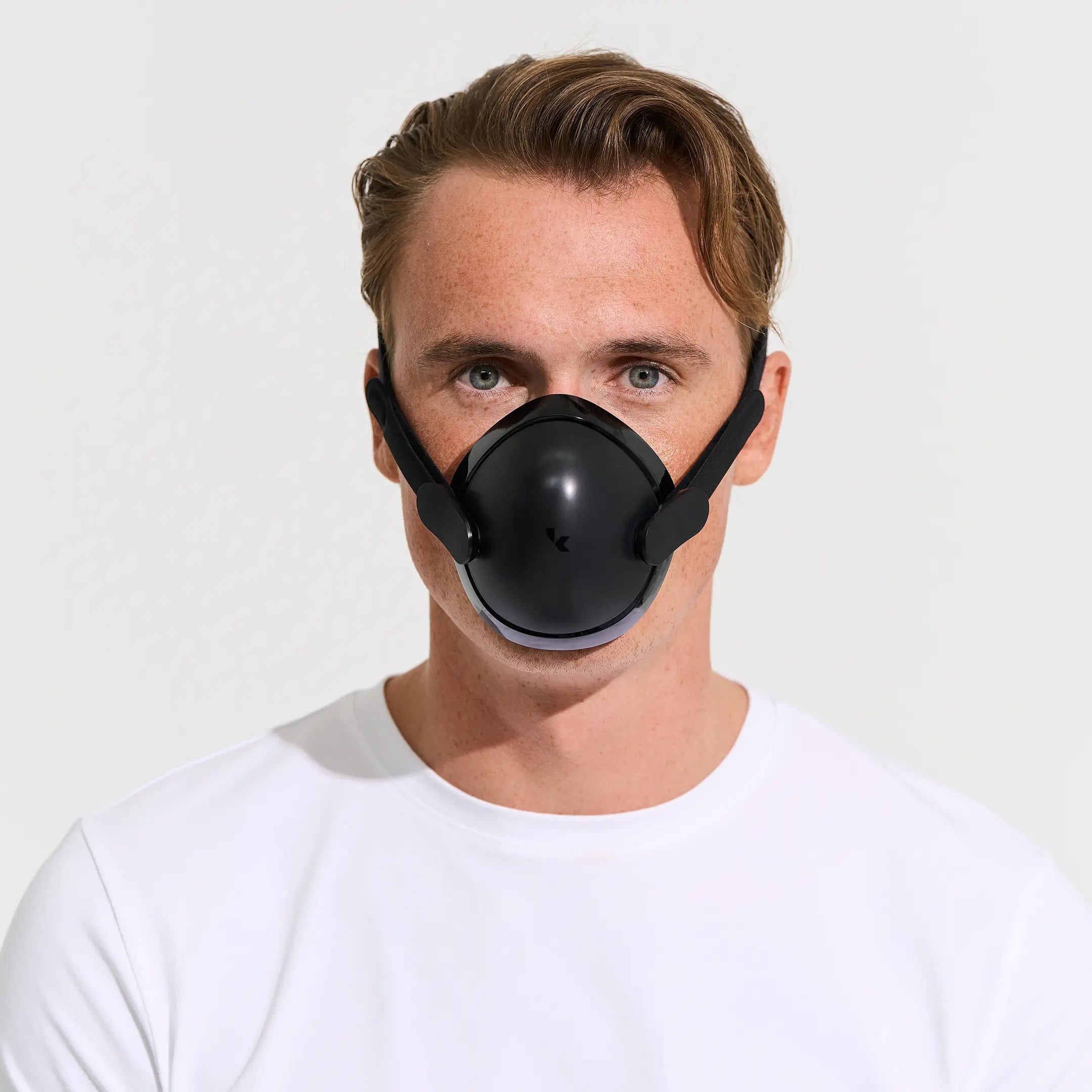
So funktioniert die Kuvola Befeuchtermaske. Es gibt keinen Wasserbehälter, keine Batterien und keine Elektronik. Das gleiche Prinzip erklärt, warum trockene Luft den Schlaf auf ähnliche Weise stört, wenn man auf dem Boden ist.
Wer es am meisten bemerkt
Vielreisende auf Langstreckenflügen spüren die Auswirkungen über viele Flüge hinweg, nicht nur bei einem einzigen. Jeder, der häufig den Atlantik oder Pazifik überquert, erkennt das Muster schnell.
Sprachberufe sind am stärksten betroffen, darunter Sänger, Schauspieler, Rundfunksprecher und Stimmlehrer, deren Arbeitsinstrument von gut befeuchteten Atemwegen abhängt. Für sie ist Kabinenluft eher eine Berufsgefahr als ein Ärgernis.
Wann man einen Arzt aufsuchen sollte
Die meisten trockenen Nasen in Flugzeugen sind ein Komfortproblem und nichts Ernsteres. Eine Minderheit ist es nicht, und häufiges oder starkes Nasenbluten verdient eine angemessene medizinische Behandlung.
Die Cleveland Clinic führt trockene Luft als eine häufige Ursache für Nasenbluten auf, neben mehreren anderen. Jeder, der an einer Nasen- oder Atemwegserkrankung leidet, sollte vor einem langen Flug seinen Arzt befragen, ebenso wie jeder, der blutverdünnende Medikamente einnimmt.

Häufig gestellte Fragen
Warum blutet meine Nase nach dem Fliegen?
Stundenlange trockene Luft dünnt die Nasenschleimhaut aus, bis sie Risse bekommt. Die Blutgefäße dort liegen sehr nah an der Oberfläche, sodass ein kleiner Riss ausreicht, um zu bluten. Das zeigt sich oft erst nach der Landung und nicht während des Fluges.
Hilft Wassertrinken gegen eine trockene Nase im Flugzeug?
Nicht allein, obwohl es sich trotzdem lohnt. Die Trockenheit in der Nase wird durch Luft verursacht, die über eine sehr dünne Oberflächenschicht strömt. Ein Oberflächenproblem erfordert etwas, das auf diese Oberfläche aufgetragen wird, oder feuchtere Luft zum Atmen.
Kann Nasenspray durch die Flughafenkontrolle mitgenommen werden?
Ja, innerhalb der üblichen Grenzen. Flüssigkeiten im Handgepäck müssen 100 ml oder weniger betragen und in den transparenten Beutel passen. Nasensprays werden aus diesem Grund in dieser Größe häufig verkauft.
Warum ist ein Nasenloch im Flugzeug stärker verstopft als das andere?
Das ist der Nasenzyklus, und er passiert auch am Boden. Ein Durchgang übernimmt den größten Teil des Luftstroms, während der andere ruht und Schleim abführt. Trockene Kabinenluft macht den Unterschied viel leichter spürbar.
Sind Langstreckenflüge wirklich schlimmer als Kurzstreckenflüge?
Viel schlimmer. Die Forschung zur Kabinenfeuchtigkeit deutet darauf hin, dass die Auswirkungen normalerweise erst nach drei bis vier Stunden spürbar sind, danach nimmt der kumulative Verlust weiter zu. Deshalb ist die Wissenschaft hinter der Kabinentrockenheit bei Langstreckenrouten am wichtigsten.
Vor Ihrem nächsten Langstreckenflug
Packen Sie Salzlösung ein und verwenden Sie sie vor dem Boarding, anstatt erst, wenn die Trockenheit eingesetzt hat. Fügen Sie ein Barrierengel hinzu, wenn Sie schlafen möchten, insbesondere auf einem Nachtflug.
Berücksichtigen Sie dann die Luft selbst, denn jedes andere Mittel behandelt ein Symptom und nicht die Ursache. Die Befeuchtung dessen, was Sie tatsächlich atmen, behebt diese Ursache, und auf einem zehnstündigen Flug ist es der Unterschied, den Sie bei der Ankunft bemerken.
Reisende mit einer Erkrankung, die Nase, Nebenhöhlen oder Atmung betrifft, sollten vor Änderungen mit ihrem Arzt sprechen.
Fotografie: Kornél Máhl, Mahdi Mahmoodi, Waldemar Brandt, Alex Azabache via Unsplash.