How Air Gets Into an Airplane Cabin: The Science Behind Breathing at 35,000 Feet
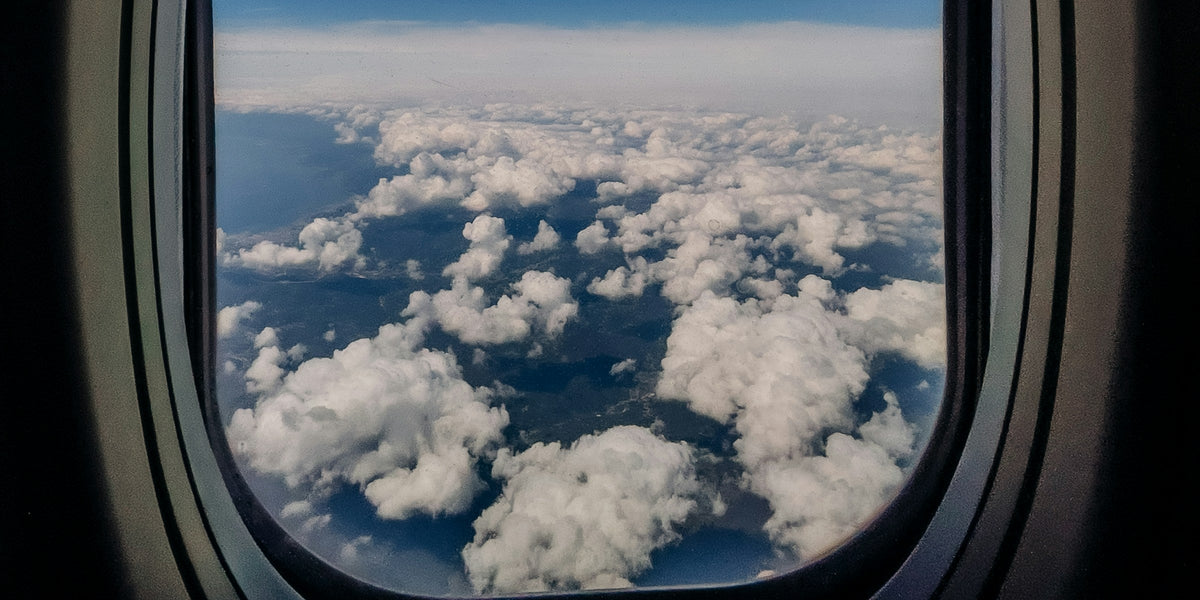
You're settled into your window seat, climbing through 30,000 feet, when a thought strikes you: Where is all this air coming from?
It's a question most passengers never consider... until turbulence hits, the cabin feels stuffy, or someone nearby starts coughing. Then suddenly, you're very aware of the air you're breathing in this pressurized metal tube hurtling through the sky.
The truth about airplane cabin air is far more fascinating—and reassuring—than most people realize. Let's pull back the curtain on one of aviation's most misunderstood systems.

image: Airbus
The Bleed Air System: Your Lifeline at Altitude
When you're cruising at 35,000 feet, the air outside is hostile to human life. The outside air temperature at cruise altitude is as cold as -65°C (-85°F) and is so thin that it doesn't hold enough oxygen for humans to breathe.
So how does fresh air get inside?
The answer lies in a brilliant piece of engineering called the bleed air system. Bleed air is compressed air taken from the engine's compressor stage, upstream of the fuel-burning sections, with typical values of 200–250°C (400–500°F) and 275 kPa (40 psi).
Here's how it works:
Step 1: Air Enters the Engine
Air from outside the airplane enters the turbine engines where it becomes pressurized as it's heated and compressed. While most of this air proceeds to the combustion chamber to burn with jet fuel and generate thrust, a portion is diverted before it reaches the flame.
Step 2: Cooling the Superheated Air
Because bleed air is over 250°C when it leaves the engine, it must be cooled via an air-to-air heat exchanger before circulation by passing cold outside air over the hot bleed air until reaching the desired temperature.
Think of it like a car radiator, but for air instead of coolant. The system uses the frigid outside air as a cooling agent, bringing the temperature down to a comfortable level for the cabin.
Step 3: Distribution Throughout the Cabin
Once cooled and conditioned, this fresh air is distributed throughout the aircraft. Air enters the cabin via numerous air inlets at the top of the cabin and leaves at floor level, designed to prevent longitudinal airflow within the cabin.
Understanding Cabin Pressurization: Why You Can Breathe Normally
Pressurization and oxygen delivery are separate but related concerns. The cabin pressurization system ensures you have enough oxygen molecules available to breathe comfortably.
An airtight fuselage is pressurized using a source of compressed air and controlled by an environmental control system (ECS), with the most common source being bleed air from the compressor stage of gas turbine engines.
The Oxygen Challenge
At cruise altitude, the atmosphere contains roughly the same percentage of oxygen (about 21%), but the air pressure is so low that there simply aren't enough oxygen molecules per breath to sustain consciousness.
There is less oxygen in the air when the cabin is pressurized to 8,000 feet than on the ground—about three-quarters as much (74%). This is why most commercial aircraft maintain cabin pressure equivalent to 6,000-8,000 feet elevation, even when flying at 35,000-40,000 feet.
The system works through outflow valves, typically located at the rear of the fuselage. The outflow valve controls cabin pressure and acts as a safety relief valve, with automatic controllers constantly adjusting the valve position to maintain proper cabin altitude.

The Air You Actually Breathe: Fresh vs. Recirculated
Now for the question everyone really wants answered: Is airplane air just recycled over and over?
The short answer: No.
Most modern commercial aircraft ventilation systems provide approximately 50% fresh engine bleed air mixed with 50% recirculated airflow. But here's what makes this safe:
The HEPA Filter Advantage
Most U.S. commercial airplanes use High Efficiency Particulate Air (HEPA) filters in the recirculated airflow, which remove 99.97% of particulate material including viruses and bacteria.
These aren't ordinary filters, they're hospital-grade systems, the same technology used in surgical operating rooms. About 40% of cabin air is filtered through HEPA systems while the remaining 60% is fresh air piped in from outside, with cabin air completely changed every 2-3 minutes on average while cruising.
Air Changes Faster Than Your Office
The air in the cabin is completely replaced around 15 times an hour. Compare that to a typical office building, which might change its air 2-4 times per hour, and you'll realize airplane air is actually cleaner than most indoor environments you regularly occupy.
None of the air supplied to aircraft toilets, galleys, and cargo holds is recirculated into the cabin. Instead, it is dumped directly overboard.
The One Thing the System Doesn't Fix: Humidity
Here's where the system shows its single significant limitation.
Airplane cabin air is remarkably clean and well filtered. It is also extraordinarily dry, sitting between 5% and 12% relative humidity against the 40-50% your airways prefer. Every stage of the process described above — compression, cooling, expansion — strips moisture out, and the air arriving from outside had almost none to begin with.

Airlines could add moisture back, and largely choose not to. Water is heavy, and higher humidity risks condensation and corrosion inside conventional aluminium airframes. The full explanation — the physics, the engineering constraints, and what hours of that air actually do to you — is covered in why airplane cabins are so dry.
The short version of the consequences: you lose one to two litres of water through breathing on a long-haul flight, your mucous membranes dry out and trap pathogens less effectively, and jet lag lands harder. A passive humidifier mask addresses the moisture loss at its source by returning your own exhaled humidity to the air you breathe in.
Debunking Common Myths About Airplane Cabin Air
Let's address the misconceptions head-on:
Myth #1: "Cabin Air is Just Recycled Over and Over"
Reality: While a portion of cabin air is recirculated, fresh air is continuously circulated into the cabin through complex vents in the engines. Airplanes aren't hermetically sealed environments. Half the air you breathe is fresh from outside, and the entire cabin air volume changes every 2-3 minutes.

Myth #2: "Recycled Air Makes You Sick"
Reality: Studies have shown that a crowded airplane is no more germ-laden than other enclosed spaces and usually less, with Boeing reporting that between 94 and 99.9% of airborne microbes are captured by HEPA filters.
Modern aircraft have cutting-edge filter systems that can remove over 95% of germs, with hospital-grade HEPA systems cleaning and replacing air up to 30 times an hour.
Myth #3: "Pilots Cut Back Airflow to Save Fuel"
Reality: This persistent urban myth is baseless—pilots don't routinely reduce airflow volume to save fuel. Ventilation rates are automatically controlled and maintained for passenger safety and comfort.
Myth #4: "Pilots Reduce Oxygen Levels to Keep Passengers Docile"
Reality: Not only is this false, but oxygen shortage would cause hypoxia, inducing confusion, nausea, and severe headaches rather than docility. Oxygen levels are determined by cabin pressurization and rarely adjusted during cruise unless there's a malfunction.
Myth #5: "The Air on Planes is Stale and Unhealthy"
Reality: The air in an airline cabin actually changes over much more frequently than air in other indoor spaces like stores, offices, or even restaurants. Studies by the FAA and EASA indicate cabin air quality is on par with or better than other forms of public transportation and public buildings.
What Really Makes You Feel Rough on Planes
If the air is so clean, why do people often feel unwell after flying?
It is generally not what you are breathing so much as how dry it is. Dry air degrades the mucous barrier that normally traps particles in the nose and throat, which is also why your throat starts hurting somewhere over the Atlantic and not before takeoff.
Modern Innovations: The Boeing 787 Difference
Some newer aircraft are addressing the humidity problem head-on. The Boeing 787 has among the healthiest air of any commercial plane, thanks to filters with 99.97% efficiency and higher humidity levels made possible by its all-composite structure, which is less susceptible to condensation damage than aluminium.
The 787's unique circulation system even pumps dry air through the lining between cabin walls and exterior skin, allowing for more comfortable humidity levels without risking structural corrosion. Even so, it reaches only 15-20%.
The Bottom Line: Cleaner Than You Think, Drier Than You'd Like
Airplane cabin air is a marvel of engineering—remarkably clean, efficiently circulated, and carefully controlled. The HEPA filtration systems work as advertised, fresh air continuously flows from the engines, and the complete air change rate far exceeds most buildings you enter.
The real challenge isn't air quality or oxygen. It's humidity. At 5% to 12% relative humidity, airplane cabins create an environment that's genuinely uncomfortable and can worsen dehydration, respiratory irritation, and jet lag.
Understanding how airplane air systems actually work helps separate fact from fiction. The air you're breathing at 35,000 feet is fresh, filtered, and safe. It's just very, very dry.
And that's a problem worth solving.
Dr. Petra Illig, MD is a board-certified emergency physician turned senior Aviation Medical Examiner who has served commercial airlines and private pilots alike. She combines her licensed pilot experience with decades of specialized aeromedical practice to address cabin-environment health, flight physiology and certification standards.