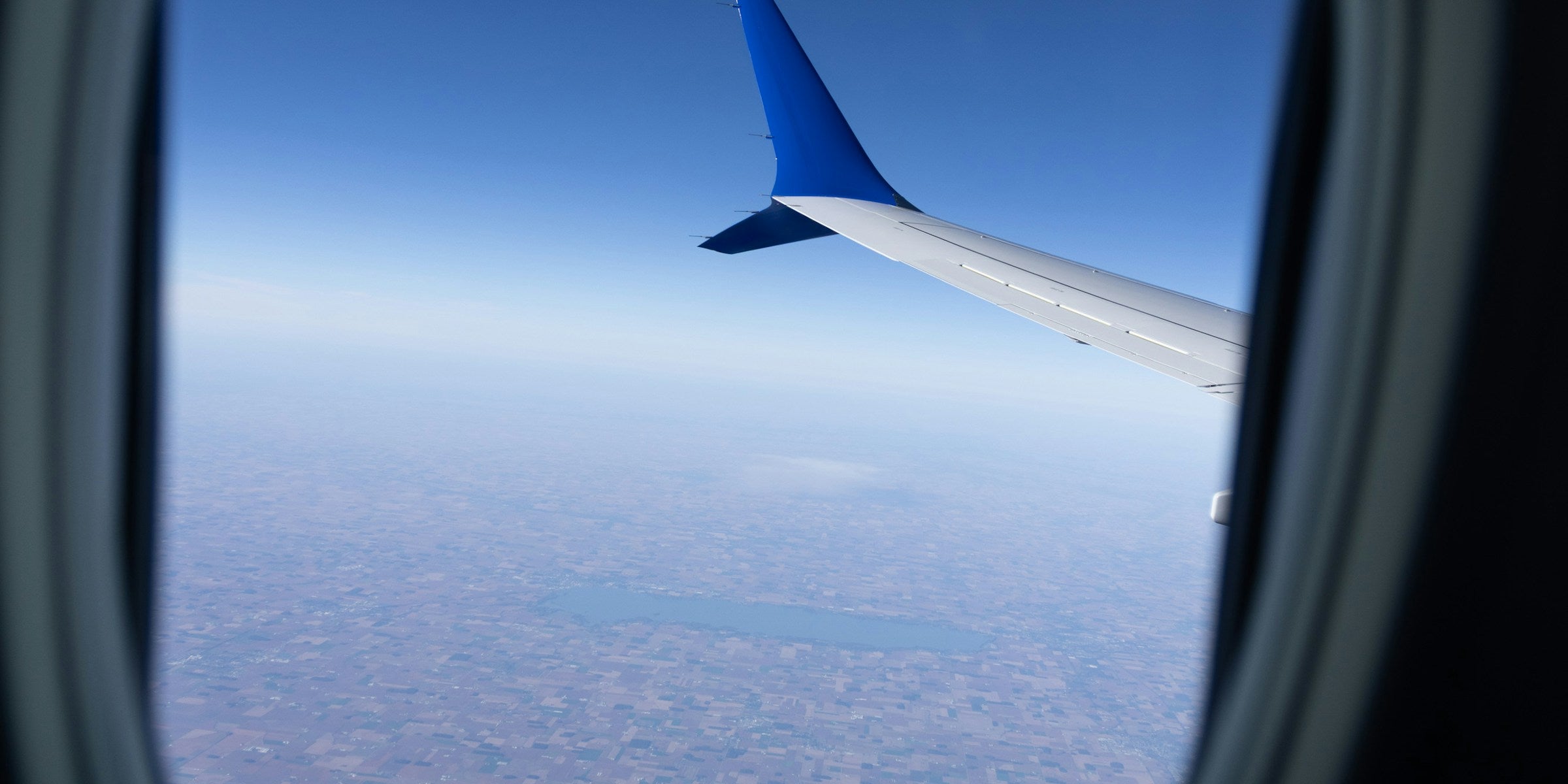
Why Do I Cough After Flying? Dry Air vs a Cold
A cough that begins after you land is usually dry cabin air rather than an illness, because hours of breathing air drier than the Sahara leave the airway short of moisture. The body then coughs to clear thick, sticky mucus that has nowhere else to go.
The cough often appears on the jet bridge or the next morning, which feels worrying because it arrives so late. In most cases it is simple irritation, and it settles within a day or two once you are breathing normal air again.
Key Takeaways
- Cabin humidity sits between 5% and 12%, far below the 40% to 50% that feels comfortable indoors.
- Dry air thickens the airway mucus and slows the tiny hairs, called cilia, that normally sweep it away.
- The cough is the backup system, clearing the mucus that the overloaded cilia can no longer move.
- A dry-air cough usually starts after landing and fades within a day or two of rest and moisture.
- A cough with fever, colored phlegm, or one lasting past a few days needs a doctor.

Why Dry Cabin Air Makes You Cough
A cough is a reflex whose job is to clear the airway when something irritates it or blocks the flow of air. Dry cabin air happens to trigger both of those problems at the same time.
At cruising altitude, cabin humidity sits between 5% and 12%, and research on cabin air quality ties that dryness to the throat and airway irritation travelers so often report. A comfortable living room, by comparison, sits closer to 40% to 50%.
That dry air pulls water off the moist lining of your nose, throat, and lungs, and the lining depends on a thin, watery layer to stay smooth and do its job. As the layer dries out, it turns sticky and begins to catch.
The Cleaning System That Slows Down
Your airway cleans itself through a process called mucociliary clearance, where a thin film of mucus traps dust and germs. Millions of microscopic hairs, the cilia, then sweep that film upward and out like a slow-moving staircase.
The staircase only works while the mucus stays thin, so dry air thickens it and the cilia struggle to shift the heavier load. One study measured the slowdown and found that mucus took over eighteen minutes to clear on dry air, against roughly twelve minutes on normal room air.
When the cilia fall behind, mucus pools where it should not, and the airway reaches for its backup. That backup is the cough, which forces the stuck mucus loose with a sudden burst of air.
Why the Cough Starts After You Land
The timing throws people off, because you feel fine at the gate and then start coughing in the taxi or wake up hacking the next morning. Nothing new went wrong overnight, though it can certainly feel that way.
Dryness is cumulative, so it builds quietly through the flight while the airway keeps pace, then tips over once the moisture debt grows too large. A dry airport and an even drier hotel room only add to the total.
The cough is really the delayed bill for hours spent in very dry air. It follows the same slow build behind the sore throat that creeps up during a flight, except the cough tends to peak a little later.

Sleeping on the Plane Makes It Worse
Your nose is a built-in humidifier that warms and moistens air before it reaches your throat and lungs. Breathing through your nose gives the airway a real buffer, but sleeping upright quietly breaks that arrangement.
The jaw drops, the mouth falls open, and raw cabin air runs straight past the throat for hours while you sleep. This is exactly why the worst coughs tend to follow overnight flights.
Dry-Air Cough or an Infection?
This is the question that actually matters, and most pages online blur it, because a dry-air cough and an early cold can feel alike in the first few hours. The pattern that follows over the next day is what tells them apart.
A dry-air cough tends to stay dry and tickly, with no fever and no thick phlegm, and it eases as you rehydrate and breathe normal air. An infection usually builds rather than fades, and it brings other symptoms along with it.
Crowded cabins do raise the odds of catching a bug, and the CDC notes that respiratory infections are common after travel and worth taking seriously when symptoms persist. Dryness and a virus can also overlap on the very same trip.
| Sign | Points to dry air | Points to infection |
|---|---|---|
| Onset | During or just after the flight | One to three days later |
| Cough type | Dry, tickly, comes in bursts | Wetter, brings up phlegm |
| Fever | None | Often present |
| Direction | Fades within a day or two | Holds steady or worsens |
Watch the direction of travel rather than the first hour. Dryness improves steadily once you are breathing normal air, whereas a cough that digs in past a few days is pointing at something other than the cabin.
What Actually Helps
Anything that adds moisture to the air you breathe will do more for the cough than anything you swallow, and that single idea is the whole point. Here is how the common moves compare against each other.
- Breathe through your nose. Free, and comfortably the single best habit on this list.
- Use a saline nasal spray. It keeps nasal passages moist so they keep conditioning the incoming air.
- Swallow instead of clearing your throat. A hard throat clear only irritates the tissue further.
- Go easy on alcohol and coffee. Both quietly nudge you toward mouth breathing in your sleep.
- Humidify the air you breathe. This one targets the cause rather than the symptom.
Drinking water still matters for the rest of the body, but it works slowly and from the inside, so it does not re-wet the airway surface on contact. That is why the moisture you lose through breathing leaves faster than a glass of water can ever replace it.

After You Land
Steam is the fastest fix, because a hot shower or a bowl of hot water with a towel over your head puts moisture straight onto the tissue. A few quiet minutes of it helps the mucus thin and start moving again.
After that, give the airway time and normal air, since most dry-air coughs settle within a day once the lining rebuilds. A dry hotel room slows that recovery, so run a humidifier overnight if you have one.
When a Cough After Flying Needs a Doctor
Dry air can explain a cough for a day or two, but it does not explain much beyond that, and the difference genuinely matters for your health.
See a doctor if any of these apply:
- The cough lasts more than a few days or keeps getting worse.
- You develop a fever, chills, or body aches alongside it.
- You cough up thick, colored, or bloody phlegm.
- You feel short of breath, wheezy, or tight in the chest.
- You have a heart or lung condition and the cough is not easing.
Coughing can also act as an asthma trigger, since cold, dry air irritates sensitive airways, and anyone who lives with asthma may want to understand why flying can set off a flare. Anyone with a medical condition should speak to their own doctor before relying on comfort measures alone.
Frequently Asked Questions
Why do I start coughing right after I get off the plane?
Moisture loss builds through the flight, and the airway keeps up until it simply cannot, so the cough is the delayed result once mucus turns thick and slow. Airports and dry cars often push it over the edge as you leave.
Is a cough after flying a sign I caught something?
Not usually, on its own, because a dry-air cough arrives without fever, stays dry, and eases within a day or two. If a fever, thick phlegm, or body aches appear as well, it points more toward an infection.
How long should a dry-air cough last after a flight?
For most travelers it clears within a day or two, given moisture and rest, since the airway lining rebuilds fairly quickly. A cough still hanging on after several days deserves a look from a doctor, whatever first started it.
Does drinking water stop a cough after flying?
It helps the body overall but works slowly, through the bloodstream, so it does not wet the dry airway surface on contact. Adding moisture to the air you breathe does far more for the cough itself.
Why is the cough worse at night after I fly?
Lying down lets mucus settle at the back of the throat, and bedroom air is often dry, so both irritate the airway and set off more coughing. A humidifier in the room usually takes the edge off.
Can a humidifier mask stop a post-flight cough?
It reduces one cause by keeping the air you breathe closer to a comfortable moisture level, but it cannot stop a cough that a virus has caused. Neither dryness nor infection is a problem it treats as a medicine.
The Short Version
A cough after flying is usually dry cabin air catching up with you rather than a cold. The airway dries out, the mucus thickens, and the cough clears what the cilia no longer can. Most of it fades within a day or two of steam, rest, and normal air.
The fixes that work best are the ones used in the air, before the moisture debt has a chance to build. Nose breathing helps as much as losing less moisture in the first place. Reducing that loss is the whole reason Kuvola built its humidifier mask.
The filter captures moisture as you exhale and returns it to the fresh air you breathe in. It uses Heat and Moisture Exchange, the same class of technology used in respiratory care, with no water tank and no batteries. It also helps to understand why cabin air is so dry in the first place.
Kuvola is a comfort product rather than a medical device, and a cough that will not settle is always a reason to see a doctor. The humidifier mask is there for comfort, not treatment.
This article is for general information and does not constitute medical advice. Speak with a qualified clinician about any cough that persists or worsens.
Photography: Kornél Máhl, Saman Tsang, Higor Prestes, Francesco Liotti via Unsplash.