Why Does My Throat Hurt on a Plane? What Happens Hour by Hour
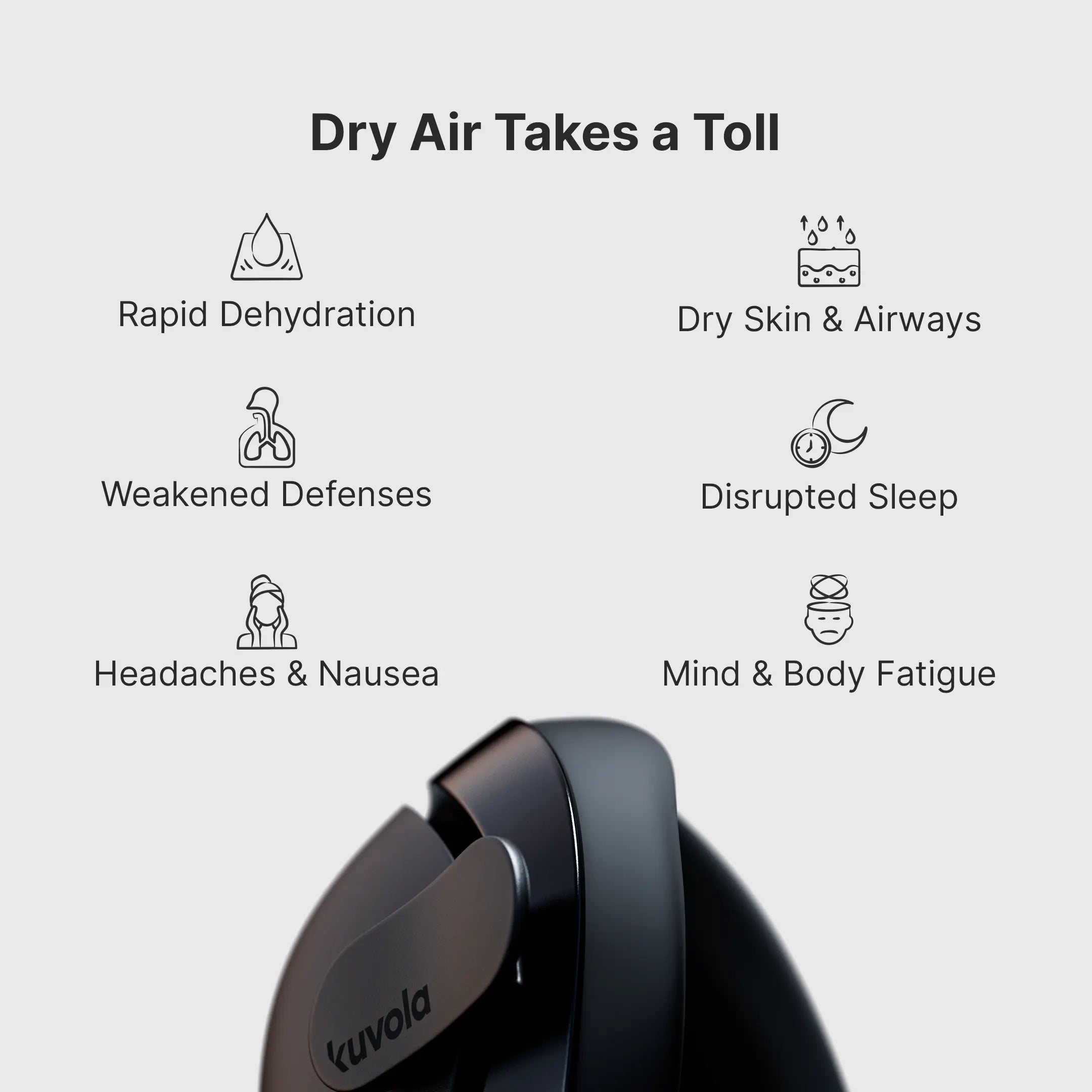
Your throat hurts on a plane because cabin air holds almost no moisture. At cruising altitude, humidity sits between 5% and 12%, drier than the Sahara, and research on cabin air quality links that dryness to the mucosal irritation travelers report.
That air pulls water straight off the surface of your throat, hour after hour. The soreness is usually not an infection. It is the thin layer of fluid coating your airway drying out faster than your body can replace it, and the timing explains both why the ache builds so slowly and why a glass of water rarely settles it.
Key takeaways
- Cabin humidity sits between 5% and 12%, far below the 40-50% that feels comfortable indoors.
- The dryness acts on the surface of your throat, not on your bloodstream.
- Research suggests the effects become noticeable after roughly three to four hours.
- Sleeping upright encourages mouth breathing, which bypasses your nose and dries the throat faster.
- Water is worth drinking, but one study found it did little for the airway surface itself.

Why the air in a cabin is so dry
The air outside a plane at 35,000 feet is extremely cold, and cold air carries very little water. Engines pull that air in, compress it, and feed it into the cabin, where it arrives warm and almost completely stripped of moisture.
Nothing in a standard cabin adds humidity back. The only moisture in the air comes from the passengers breathing it, so on a long flight with a light load the cabin can stay remarkably dry from takeoff to landing.
This is worth understanding in more detail, because it explains a lot about how flying feels. Kuvola covers the full mechanism in a separate piece on why cabin air starts out this dry.
What dry air does to the surface of your throat
Your airway is lined with a thin film of watery mucus that keeps tissue soft, traps dust, and lets you swallow without friction. When the surrounding air is dry, that film evaporates faster than your body can rebuild it.
Once the film thins, the sensitive tissue underneath is exposed and swallowing starts to catch. The rawness people describe as a sore throat is often just an airway surface that has run short of water.
Dry air also slows the system that keeps that film moving. In one study, researchers had healthy adults breathe very dry air through a nasal mask for thirty minutes. Mucus took 18.5 minutes on average to clear, against 11.9 minutes on normal room air.
The same process affects your nose first, since your nose does most of the conditioning work. Many travelers notice the same dryness in their nose before their throat.
Hour by hour: how the soreness builds
The discomfort is not instant, and that is the confusing part. A review of cabin humidity research found that the effects of low humidity tend to become noticeable after three to four hours, which is why short hops rarely bother anyone while long-haul flights almost always do.
| Time in the air | What is happening | What you notice |
|---|---|---|
| 0-1 hour | Your nose warms and humidifies incoming air. It is keeping up. | Little or nothing. |
| 1-3 hours | Nasal passages begin drying. Some people shift toward mouth breathing. | A slightly dry nose, mild thirst. |
| 3-5 hours | The film lining the throat thins. Mucus thickens and moves slower. | Scratchiness, throat clearing, a rougher voice. |
| 5+ hours | Surface moisture loss continues, often during sleep. | Real soreness, painful swallowing on waking. |
The pattern matters more than the exact hours. Dryness is cumulative, so it builds quietly and then announces itself. That is why the worst of it often lands in the final third of a flight.

Why sleeping on a plane makes it worse
Your nose is a remarkably good humidifier, warming and moistening air before it ever reaches your throat. Breathe through your nose and your throat gets a protective buffer.
Sleeping upright in a seat tends to break that arrangement. The jaw relaxes, the mouth falls open, and unconditioned cabin air runs straight across the throat for hours. Nasal congestion from pressure changes pushes people in the same direction.
This is why the sorest throats usually follow overnight flights. You spend several hours mouth breathing the driest air you will meet all year, and you are not awake to notice.
Why drinking water does not solve it
Almost every article on this subject says to drink more water. Water is genuinely good for you on a flight, and worth doing. It just does not do what most people assume it does.
Swallowed water goes to your stomach, then into your bloodstream. The dryness in your throat is happening on the surface of the tissue, where air meets skin. Those are two different places, and topping up the first does not directly refill the second.
Research supports the distinction. In a study where volunteers sat for four hours at 10% humidity, plain water made no measurable difference to how well the airway cleared itself. A carbohydrate-electrolyte drink did help, though this was a small trial of fourteen people.
The honest summary is that hydration works from the inside and slowly. Cabin dryness works from the outside and constantly. Kuvola looks at the physics of this in a piece on how much water you lose through breathing alone.
What actually helps
Anything that raises the humidity of the air you breathe will do more than anything you swallow. That is the whole principle. Here is how the common options compare.
- Breathe through your nose. Free, and the single most effective habit on this list.
- Use a saline nasal spray. Keeps nasal passages working so they can keep conditioning air.
- Skip alcohol and heavy coffee. Neither causes the dryness, but neither helps you sleep nasally.
- Drink water steadily. Good for you overall, modest effect on the throat itself.
- Humidify the air you breathe. Addresses the actual cause rather than the symptom.
That last point is the one the ranking advice tends to skip. If dry air is the problem, less dry air is the answer. The same logic applies on the ground, which is why air conditioning irritates throats in offices and hotels.
How long the soreness usually lasts
Dryness alone tends to settle within a day, because the airway lining rebuilds itself fairly quickly once the surrounding air carries normal moisture again. Most travelers feel close to normal by the following morning.
Recovery slows down if the environment stays dry after landing. Hotel rooms with heating or air conditioning often sit well below comfortable humidity, which means the airway never really gets a chance to recover overnight.
The useful signal is direction of travel, not intensity. Dryness improves steadily once you are breathing normal air, whereas soreness that worsens over two or three days, or arrives with fever, is pointing at something other than humidity.
Frequently asked questions
Why does my throat hurt after flying but not during?
Moisture loss builds through the flight, and the tissue keeps drying after you land. Airports and hotels are often dry too. The soreness peaks a few hours after the cabin door opens.
Is a sore throat after a flight a cold?
Often it is simply dryness, which fades within a day. A cold usually brings other signs, such as fever, body aches, or a cough that lasts. If symptoms stretch past a few days, it is worth seeing a doctor.
Does the recycled air on planes cause it?
Not really. Cabin air passes through fine filters and is refreshed regularly. It is the lack of moisture, not the recycling, that dries your throat.
Why is my voice hoarse after a long flight?
Vocal folds need a moist surface to vibrate cleanly. When that surface dries, the voice turns rough and tires quickly. Singers and speakers usually feel this well before other travelers do.
Does seat position make any difference?
Yes. Business and First class is actually drier than Economy. Why? Because there are fewer people exhaling moisture into the cabin (kinda gross right?). Fun fact, the driest place on a plane is the cockpit and crew rest area.
Do face masks help with throat dryness?
A standard surgical or cloth mask traps a little warmth and moisture, so some people notice a small difference. Masks built specifically to exchange heat and moisture are designed to do it deliberately.
Landing without the sore throat
A sore throat on a plane is a moisture problem, not a mystery. The air is dry, your airway surface pays for it, and the effect compounds over several hours. Once you see it that way, the useful responses get much easier to pick.
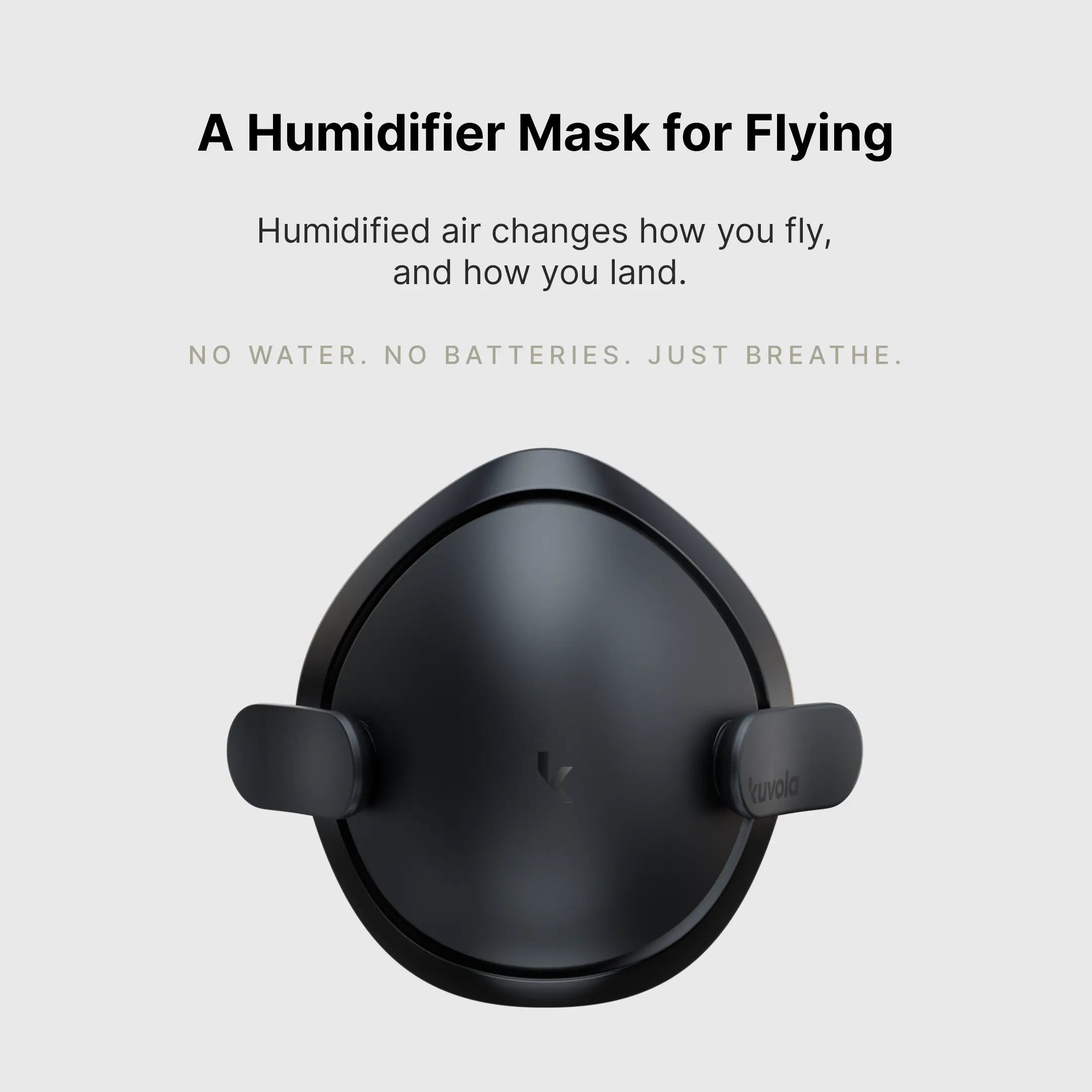
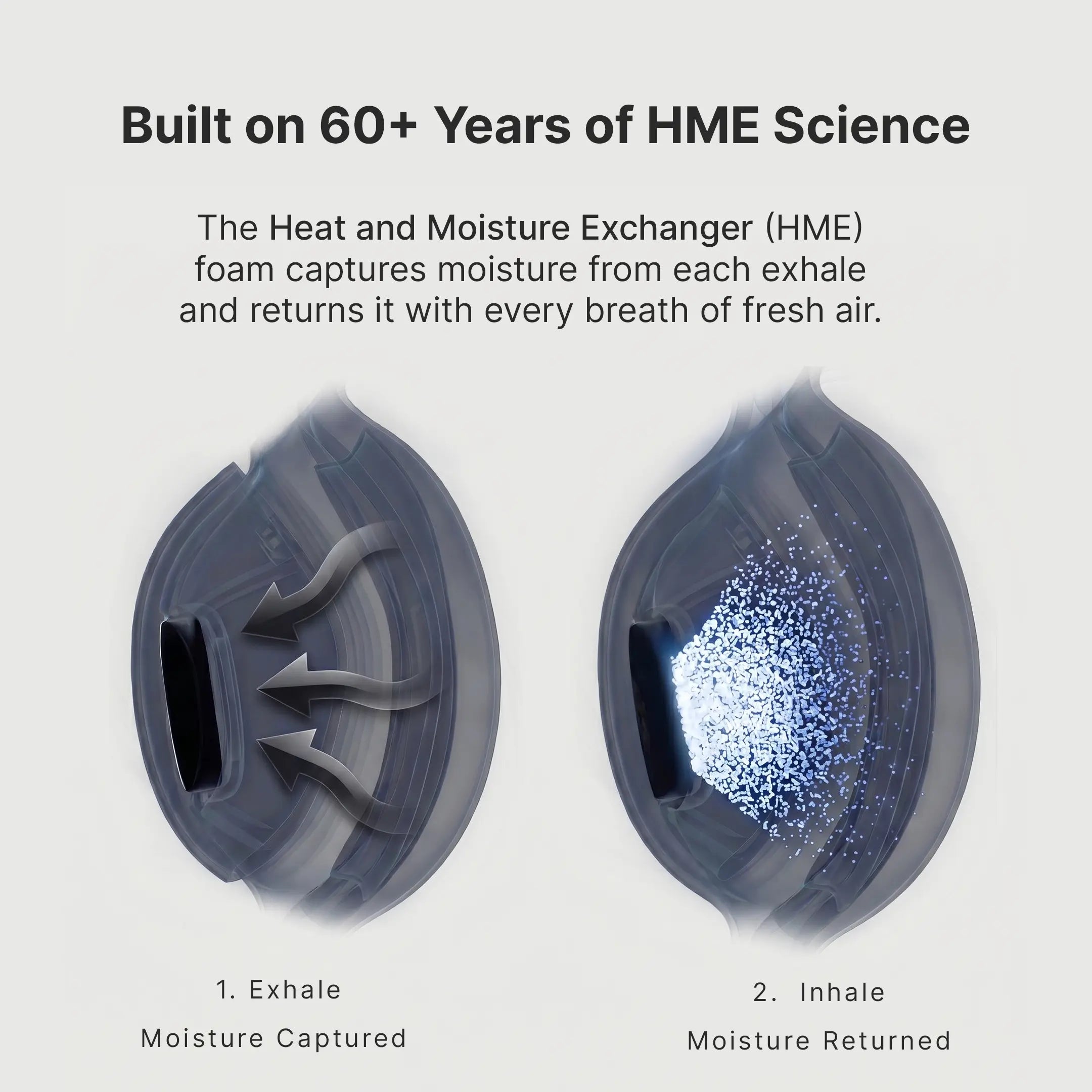
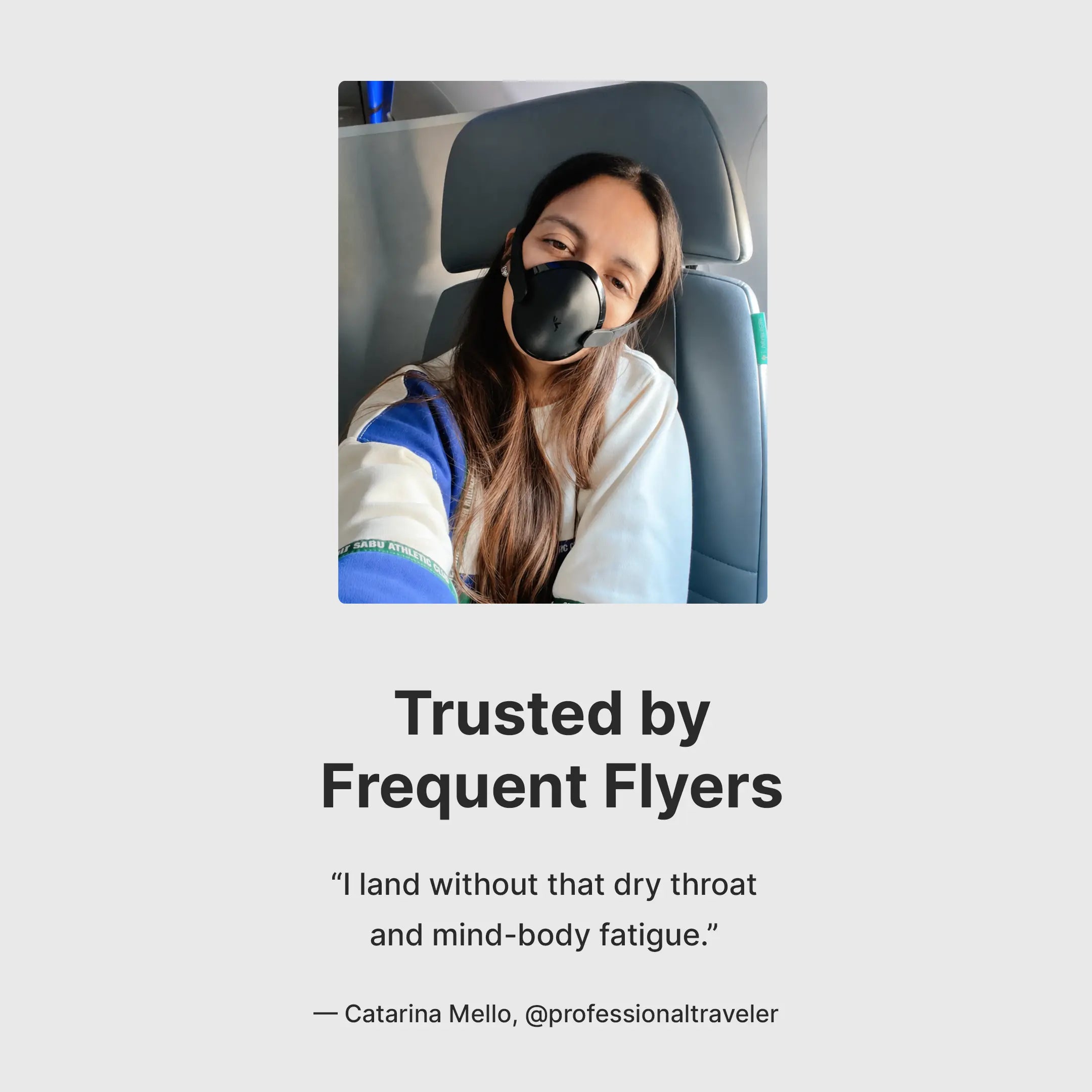
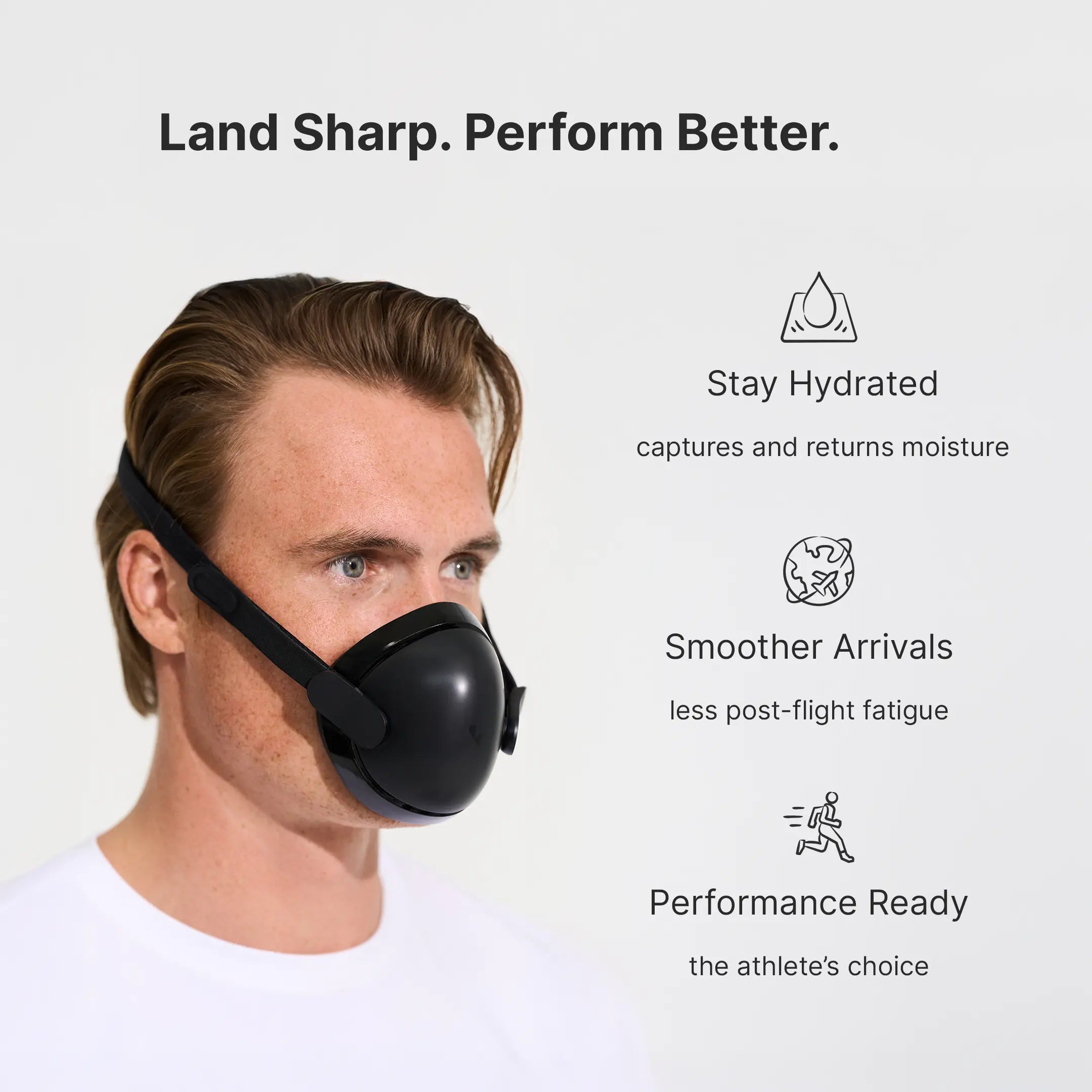
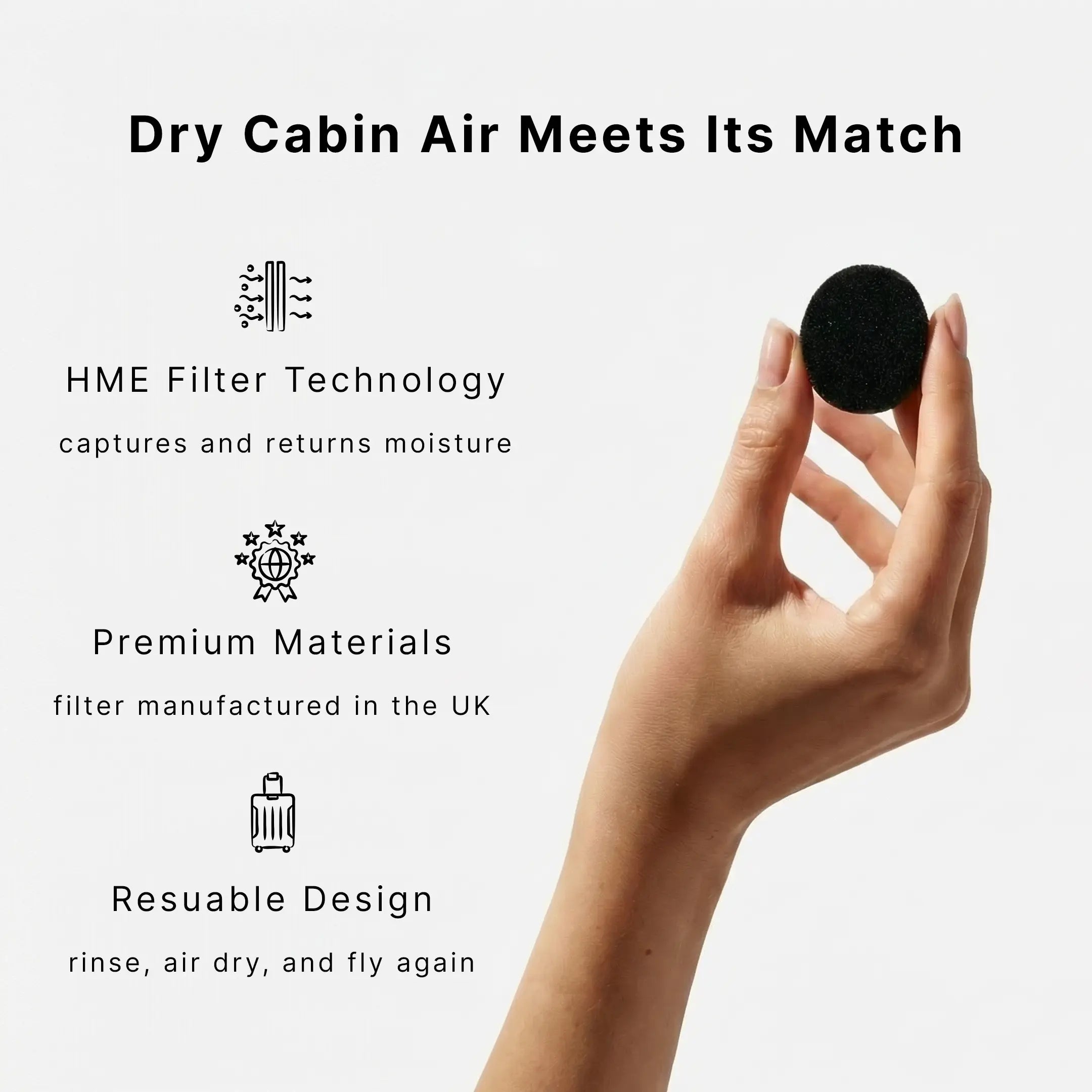
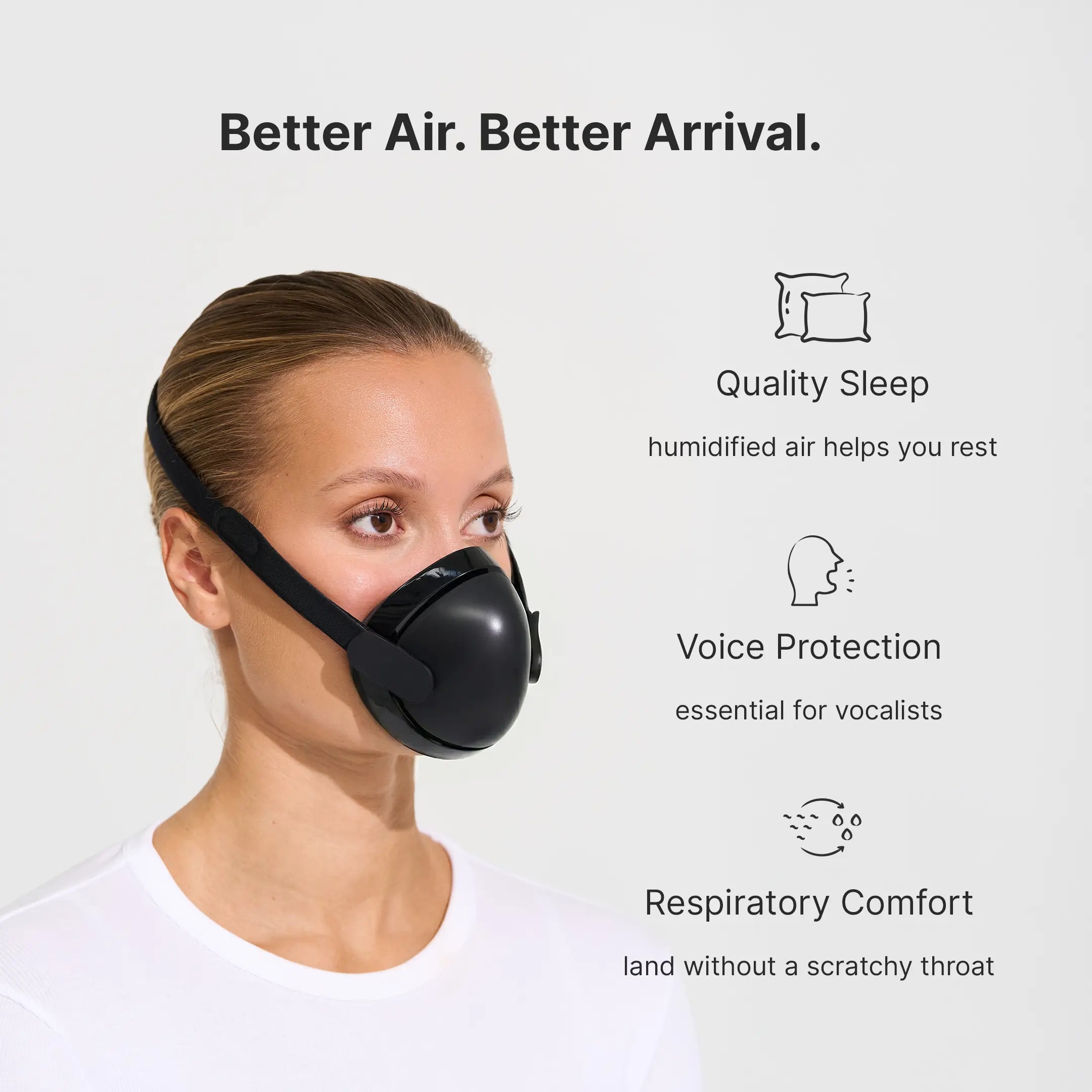
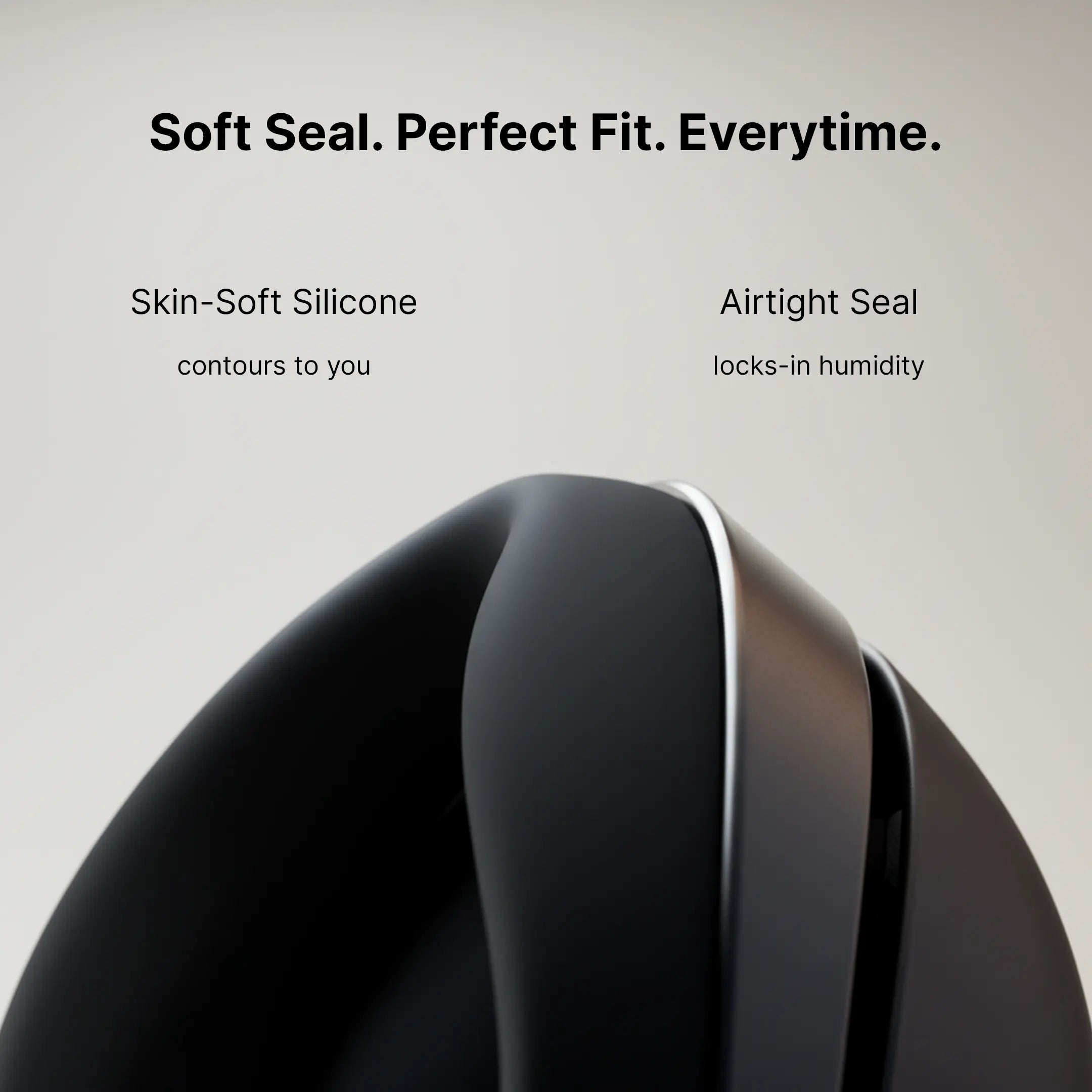
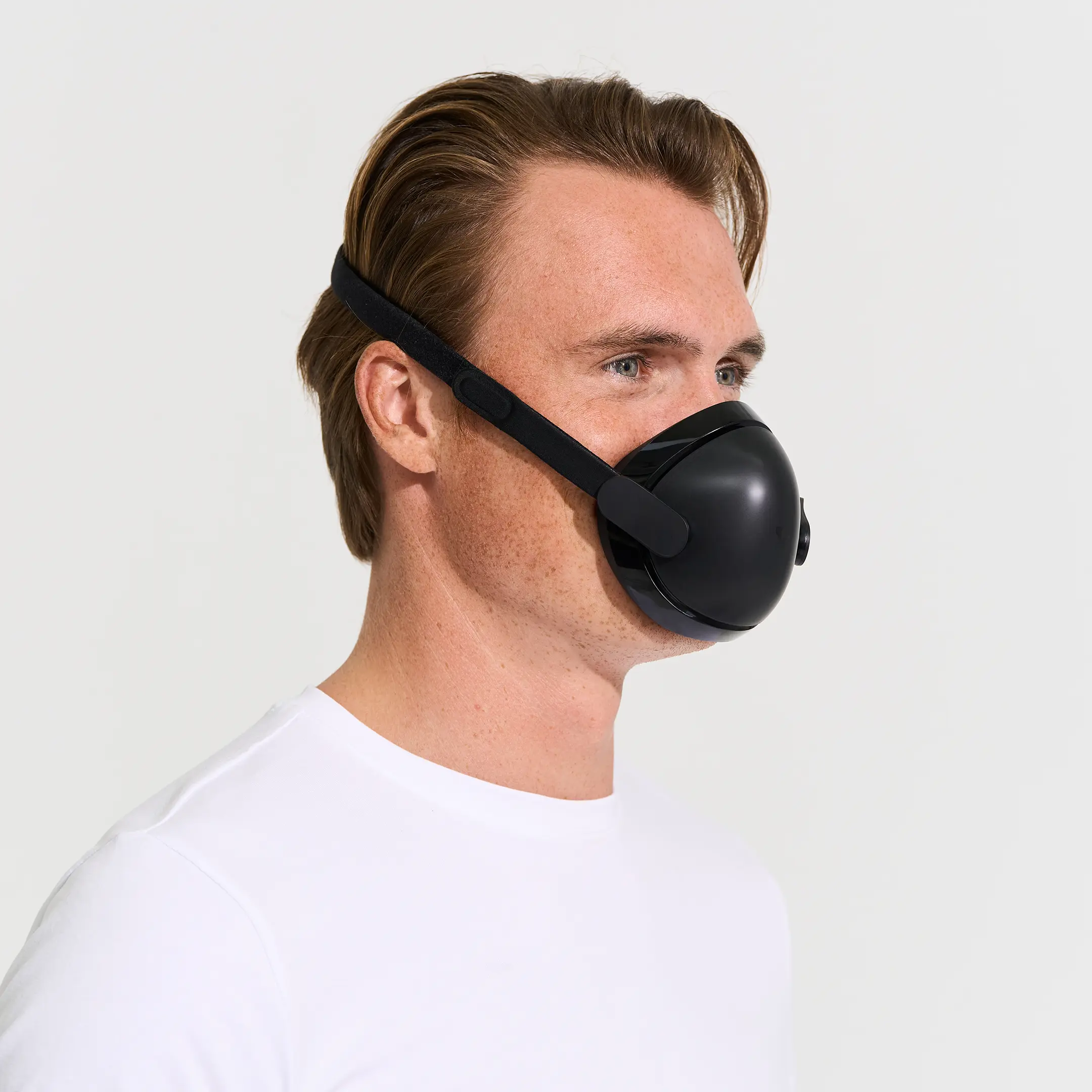
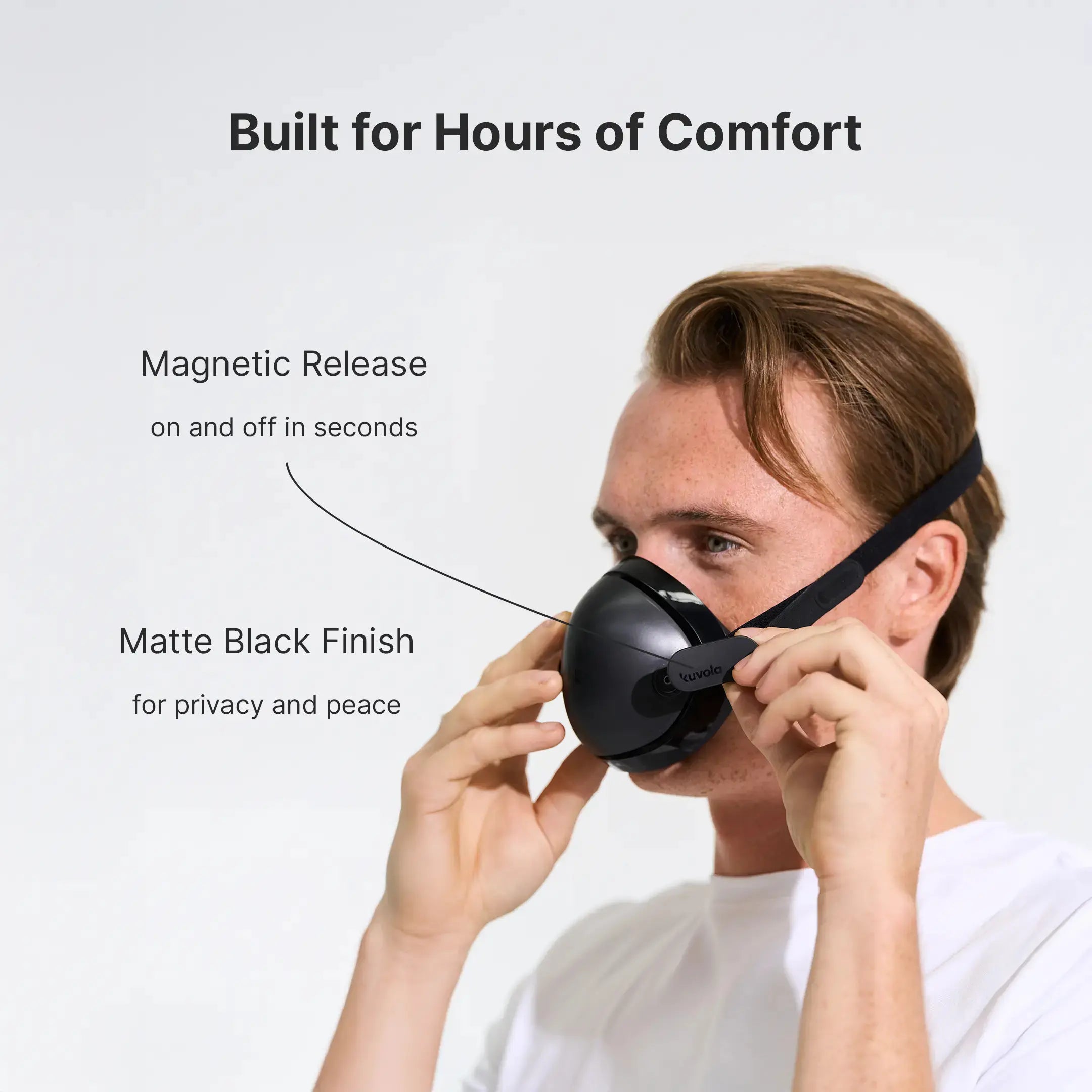
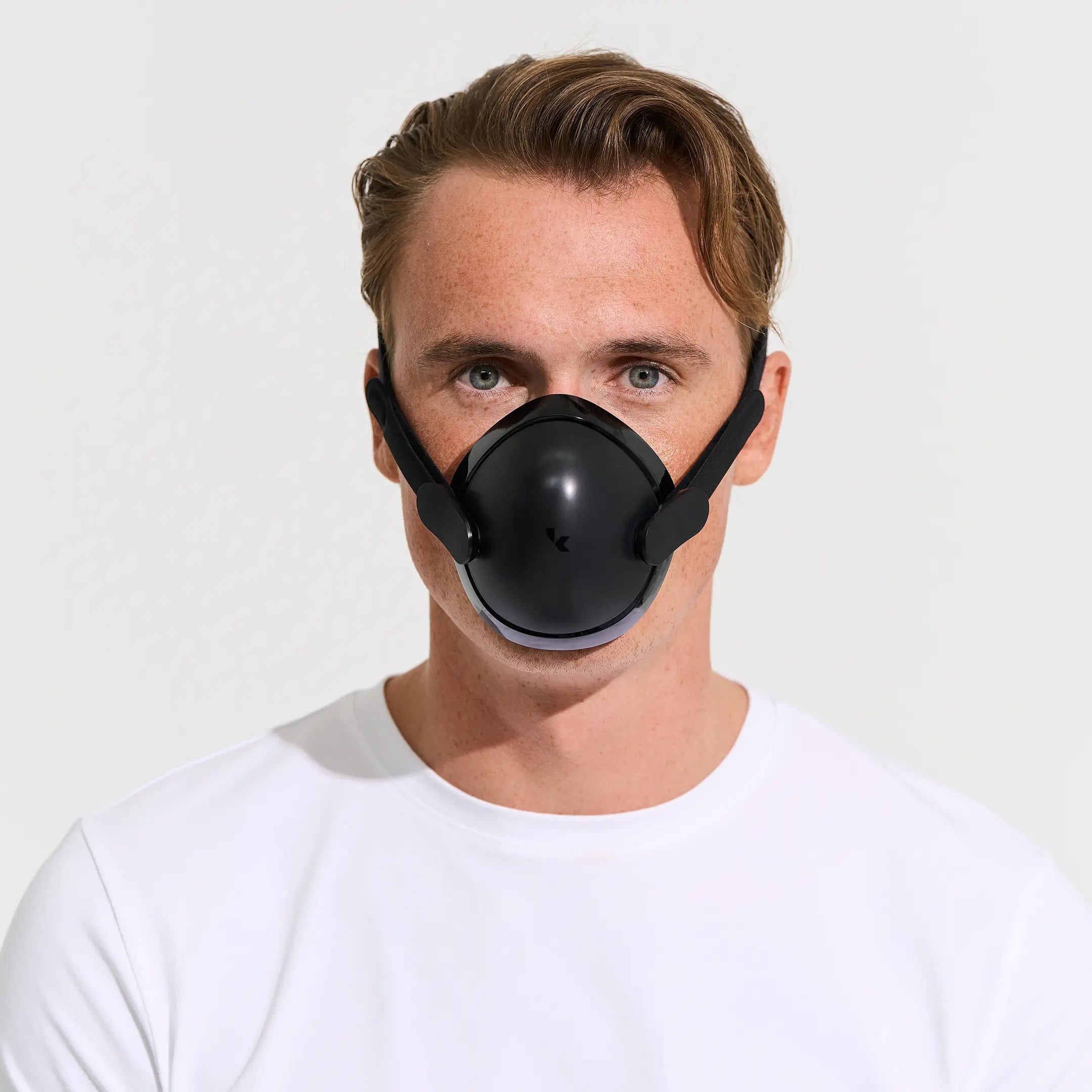
Kuvola built its humidifier mask around this exact gap. The filter captures moisture as you exhale and returns it to the fresh air you breathe in, using Heat and Moisture Exchange, the same class of technology used in respiratory care. No water tank, no batteries.
Kuvola also explores the underlying process in more depth in its guide to insensible water loss at altitude. Kuvola is a comfort product, not a medical device. Anyone with a persistent sore throat or a respiratory condition should speak to their doctor.
Photography: Adrien Olichon, Killian Pham, Francesco Ungaro, Jakub Żerdzicki via Unsplash.