Do Humidifier Masks for Flying Actually Work? An Honest Look
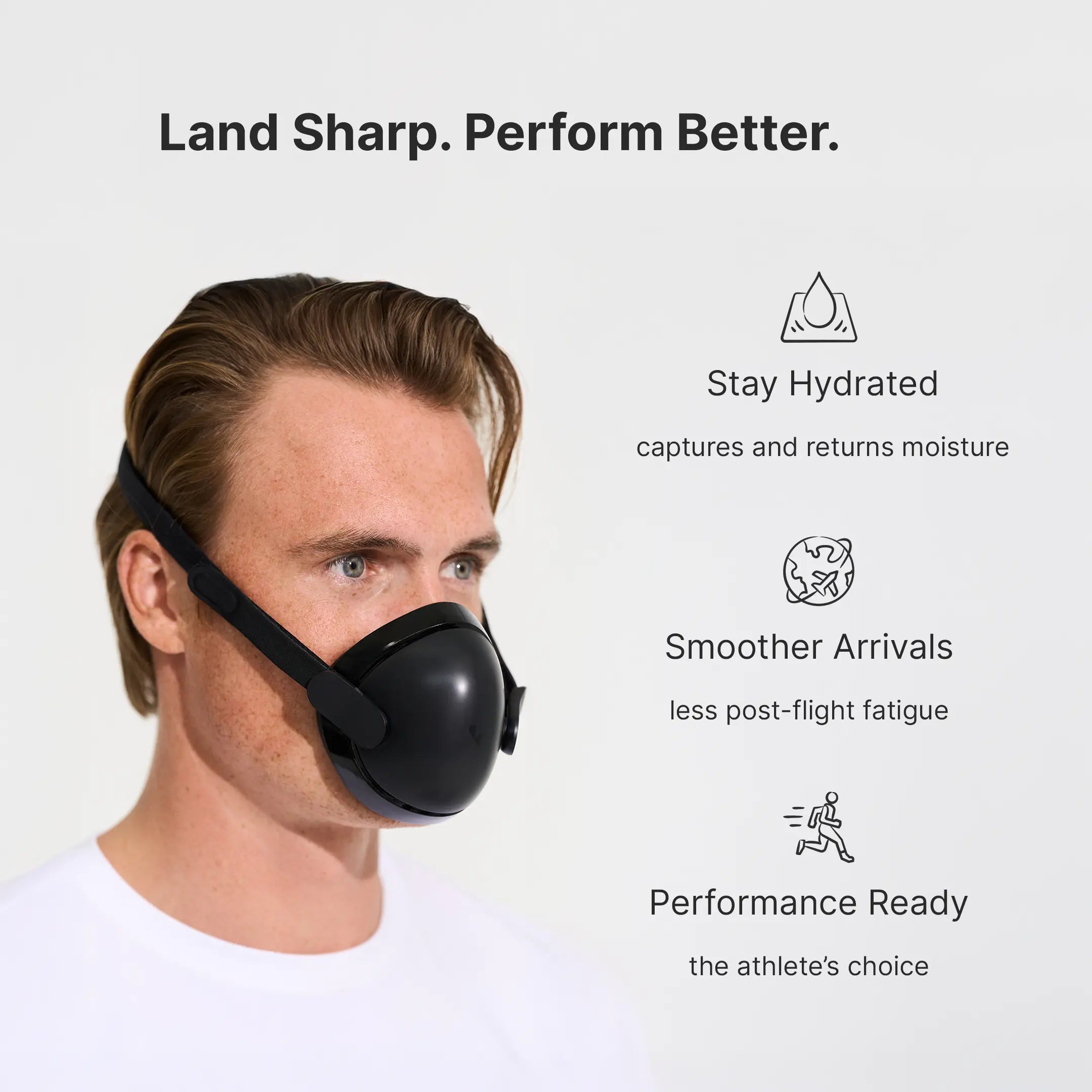
Yes, humidifier masks for flying work. A well-made mask raises the humidity of the air reaching the nose and throat, which eases dryness and irritation during a flight.
That narrow claim is worth stating plainly, because most pages on this topic either oversell the category or simply sell a product. This article covers what the technology does, what the research shows, and where the limits sit.
Key takeaways
- A humidifier mask recycles moisture from each exhale and returns it on the next breath.
- The technology is called heat and moisture exchange, or HME, and it needs no water or power.
- Research on humidified masks shows real improvement in dry nose and dry throat.
- It treats the airway only.
- A plain cloth or surgical mask has no HME element and only offers modest humidification.

What a humidifier mask for flying actually is
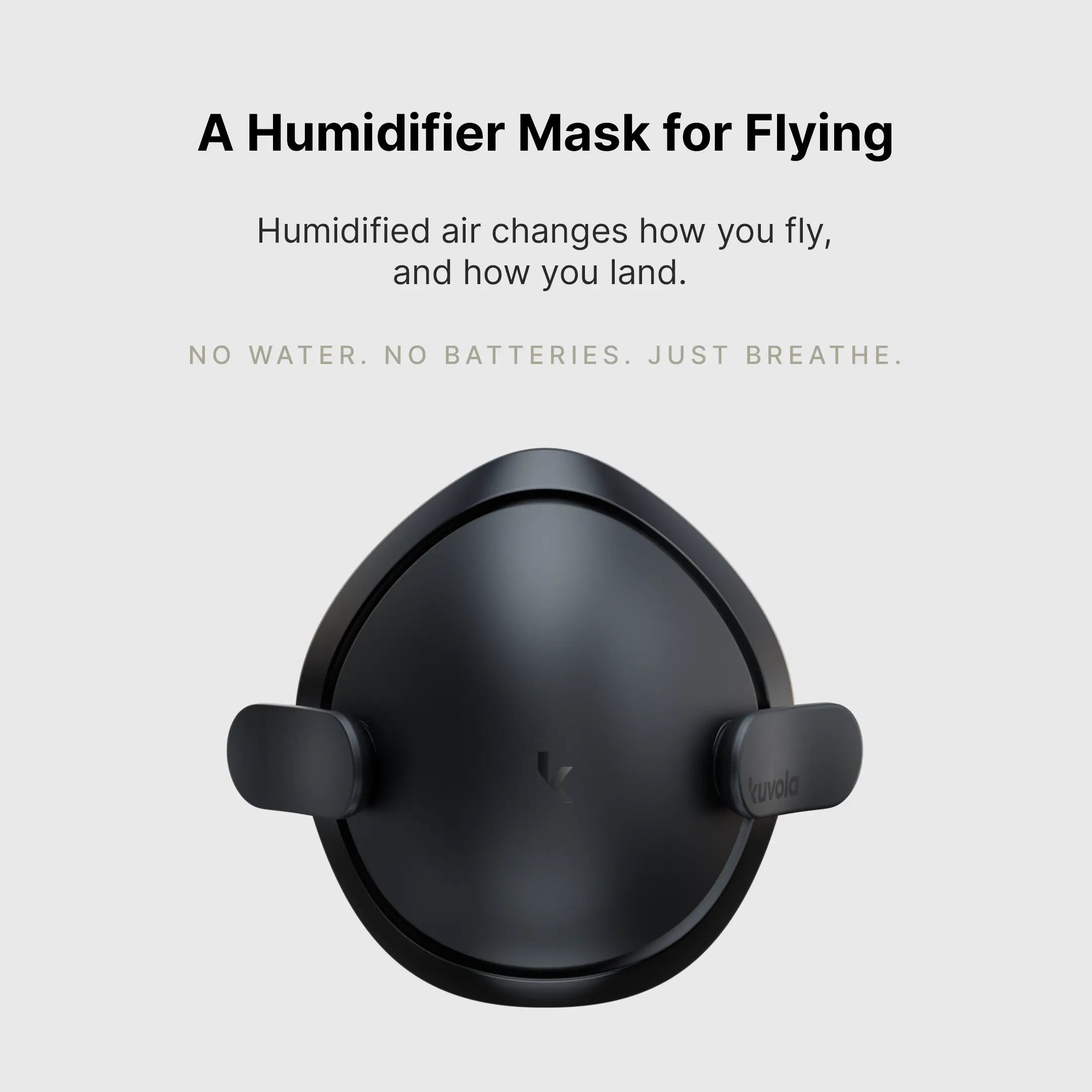
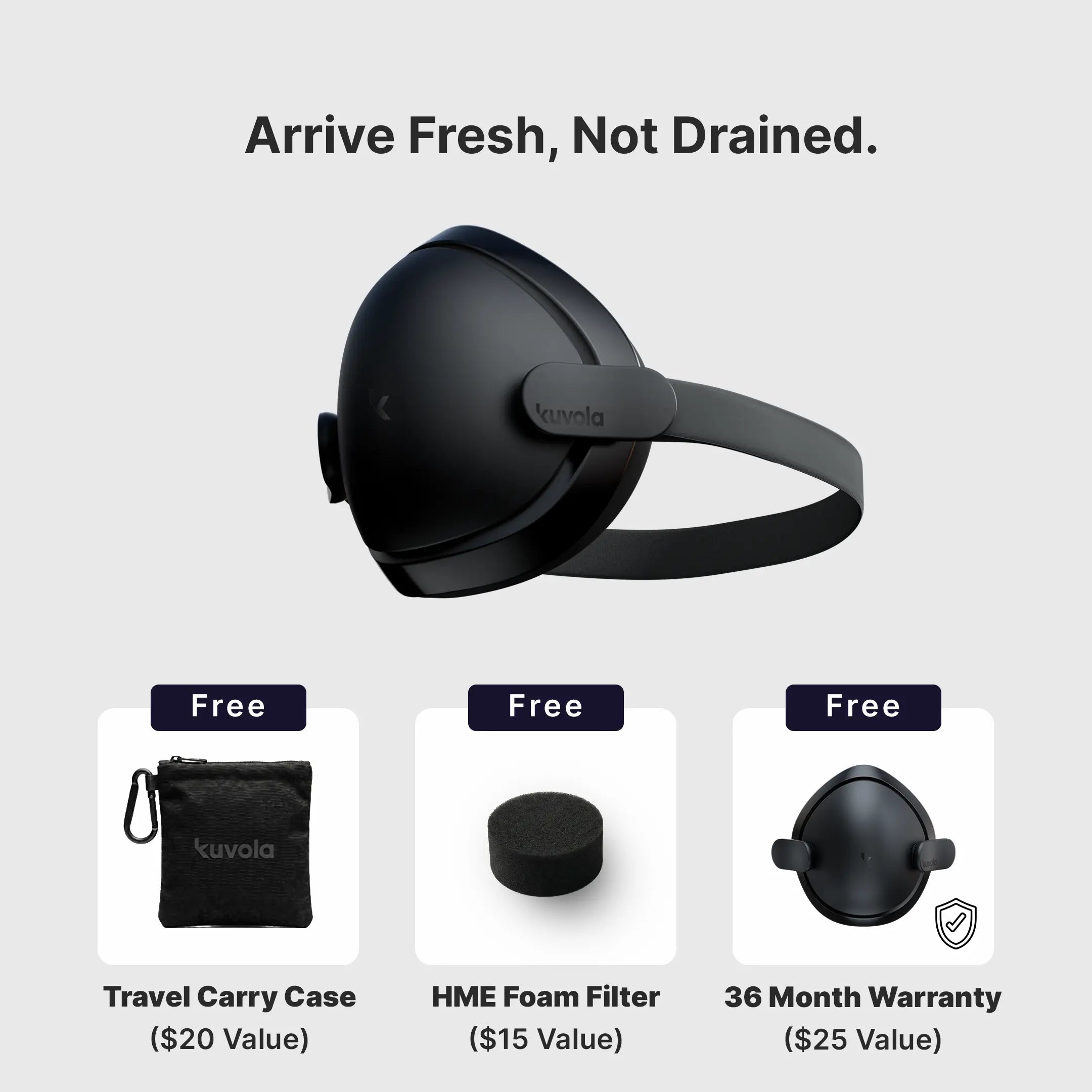
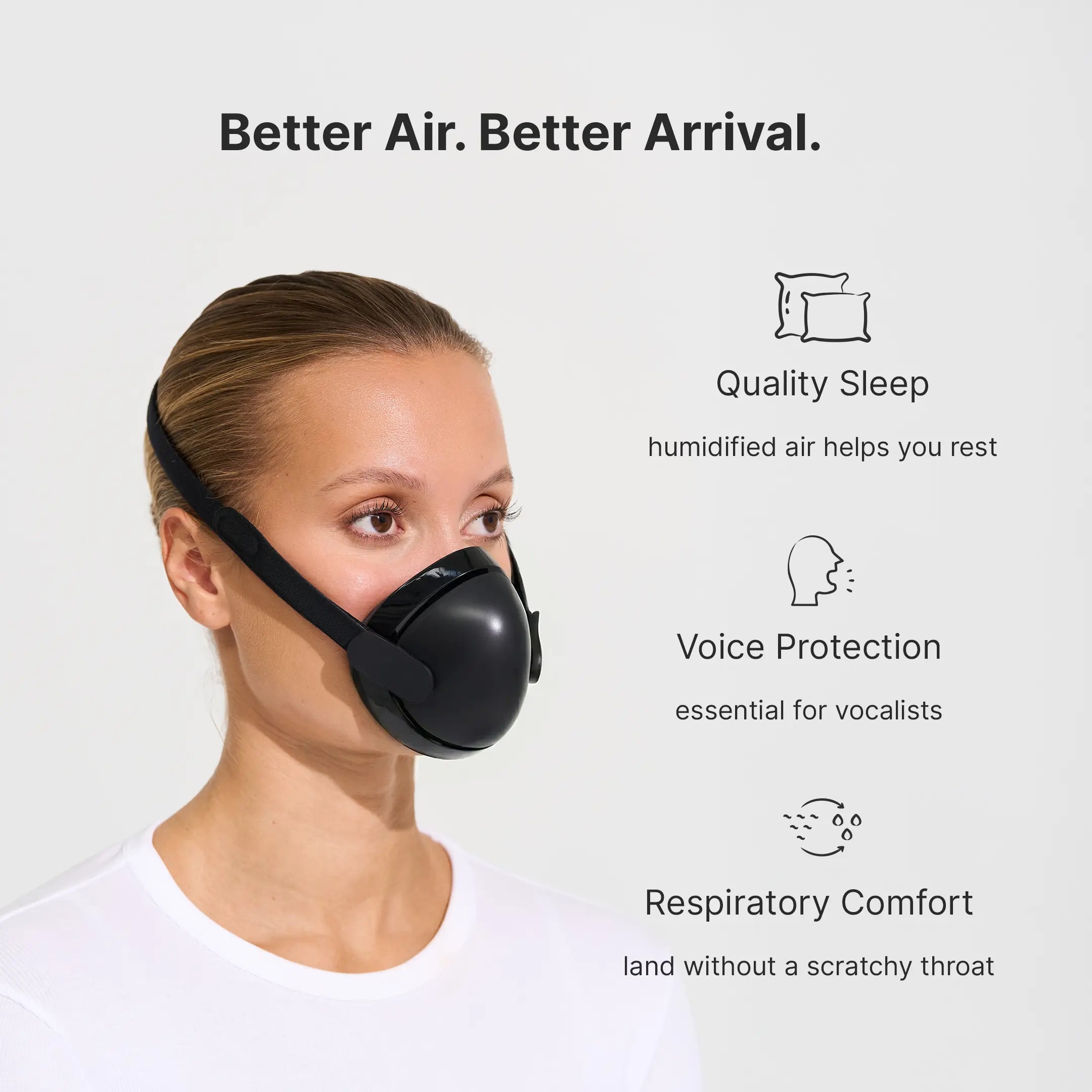
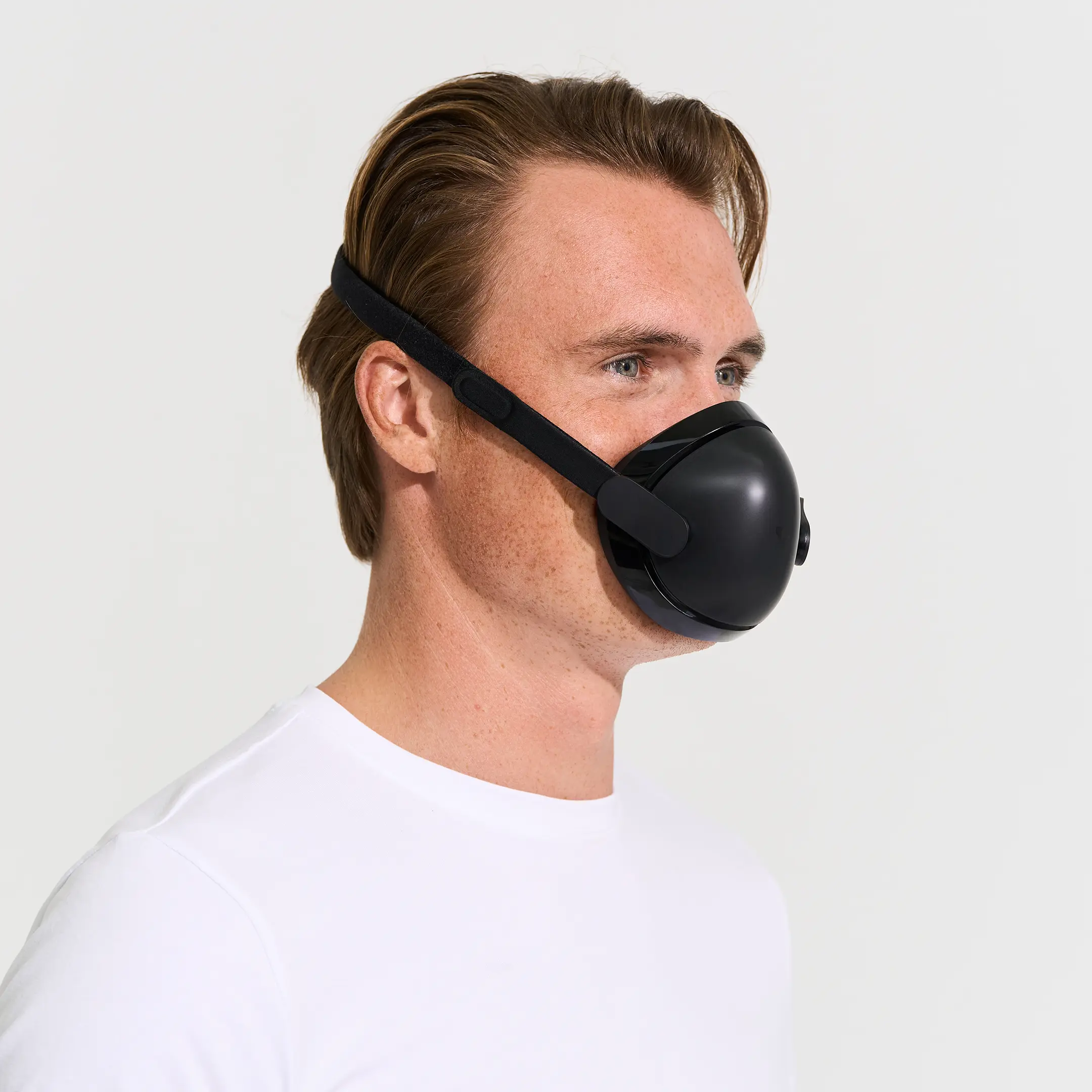
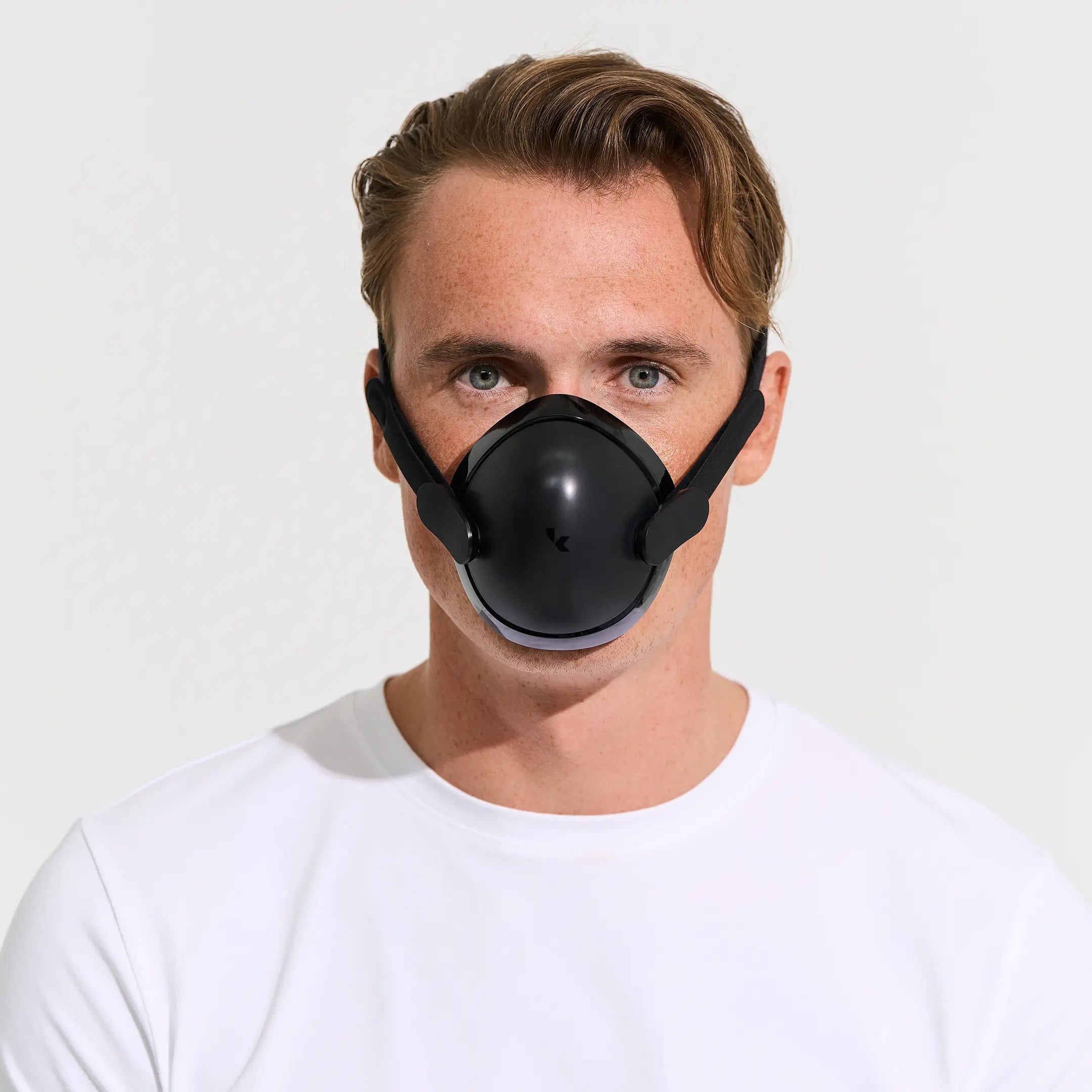
A humidifier mask is a mask built around a moisture-exchange filter. The filter is the whole product, and the mask is simply the way to hold it against the face. Nothing gets plugged in.
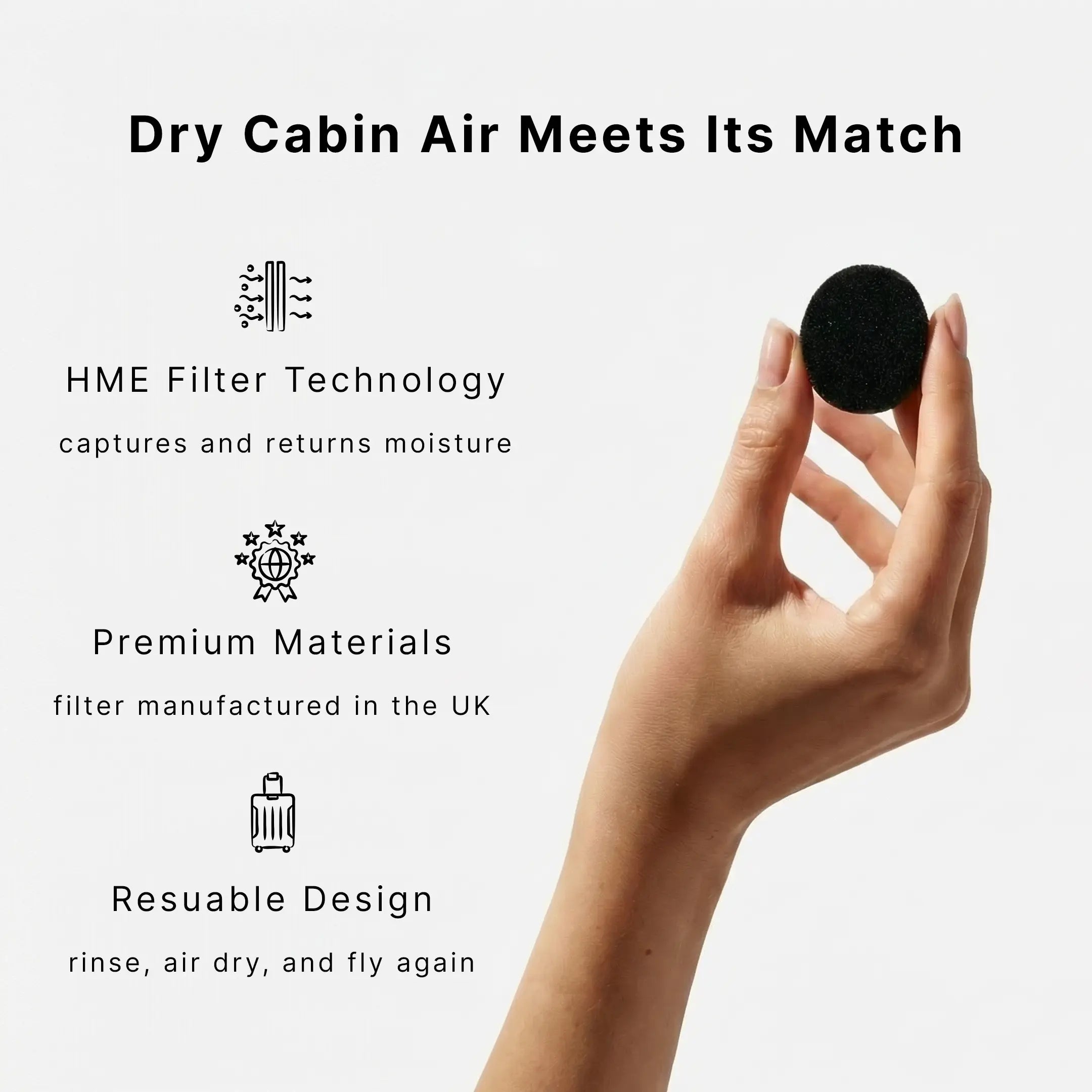
The class of technology is heat and moisture exchange, usually shortened to HME. It has been used in hospital respiratory care for decades, where it conditions the air reaching patients who breathe through a tube. The travel version borrows the same physics for a much smaller job.
The filter does not create moisture. It borrows moisture the body was about to lose anyway, then hands it back.
How heat and moisture exchange works
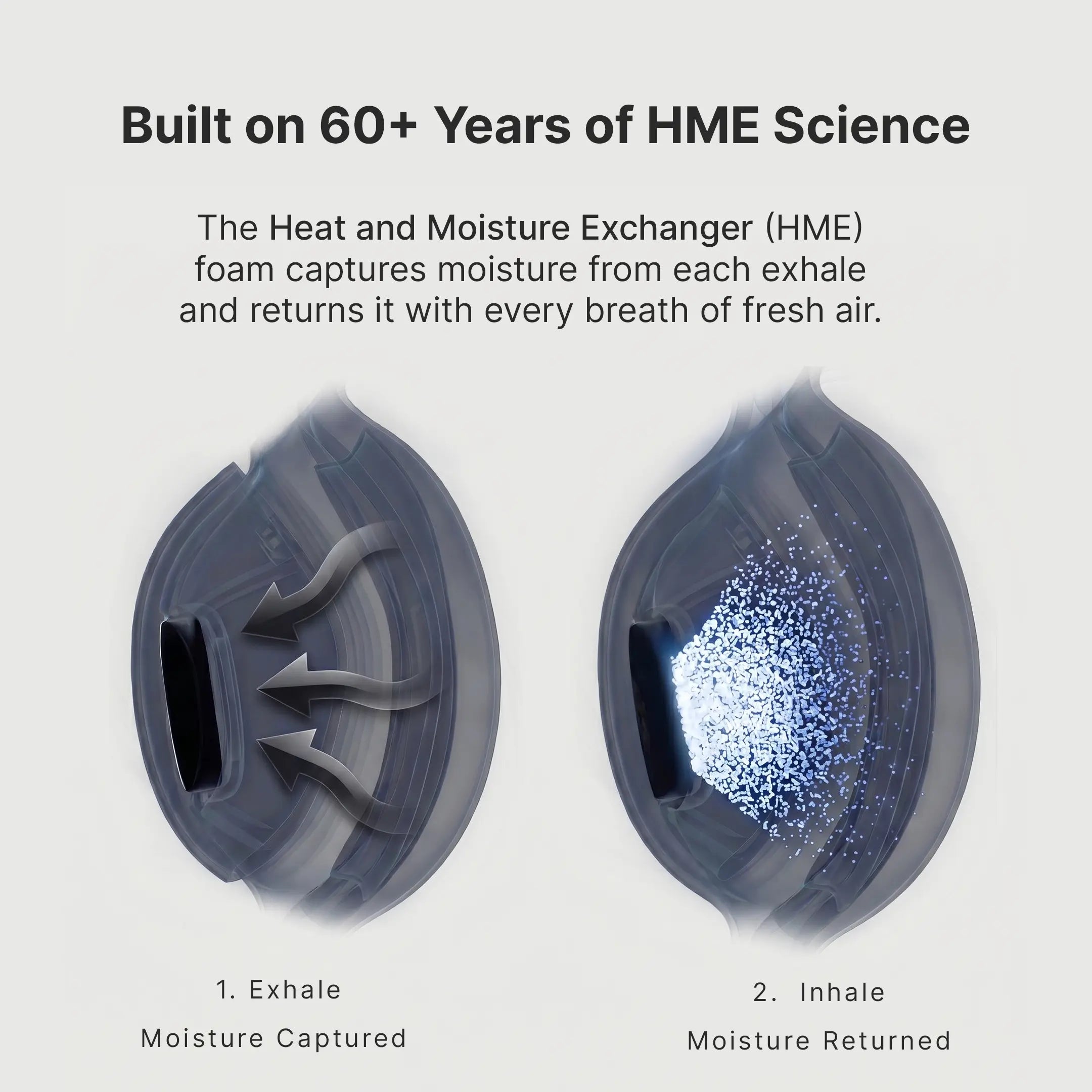
Every exhale carries warm water vapor out of the lungs. In a dry cabin that vapor is gone the moment it leaves the mouth. An HME filter catches it instead.
The filter sits at a lower temperature than the breath passing through it. Water vapor condenses on the filter material as the air leaves, and the filter warms and moistens. On the next inhale, dry cabin air passes back over that damp surface and picks the moisture up again.
The cycle repeats with every breath, which is the important part. There is no reservoir to run dry and no charge to run out. A study of HME devices in the Indian Journal of Critical Care Medicine found they held inspired air above 37 mg of water per liter, which is close to the level of a healthy nose.
Why cabin air needs the help
Cabin humidity at cruising altitude sits between 5% and 12%, according to the US National Research Council's review of the airliner cabin environment. The Sahara averages around 25%. A comfortable room sits at 40% to 50%.
Air that dry pulls water out of every wet surface it touches. The nose and throat are wet surfaces, and they give up moisture with each breath. Anyone curious about the mechanics can read more on why cabin air gets so dry in the first place.
The loss is small per breath and large per flight. On a long-haul route it adds up to a meaningful volume, which is covered in detail in the piece on how much moisture the airway loses on a long flight.

What the research actually shows
The best evidence comes from a 2019 trial published in PLOS One. Thirty-seven healthy volunteers wore either a humidification mask or a dummy mask, without knowing which, and rated how they felt.
The humidified mask improved almost every measure the researchers tracked. Volunteers reported less dry nose, less dry throat and less nasal obstruction, and their measured nasal resistance fell while breathing became slower and deeper.
One caveat matters. That study used a heated mask, while travel masks are passive and rely on body heat alone. The direction of the finding is sound, but a passive filter delivers a gentler effect than a powered one.
What a humidifier mask does not do
This is the part most product pages skip. A mask that humidifies inhaled air is doing one job, and several problems people blame on cabin air fall outside it.
| Flight complaint | Does an HME mask help? |
|---|---|
| Dry, scratchy throat | Yes, directly |
| Dry or blocked nose | Yes, directly |
| Hoarse or tired voice | Yes, directly |
| Dry, gritty eyes | No |
| Tight, dry skin | No |
| Overall body hydration | Somewhat. Decreases insensible water loss. |
| Jet lag | Indirectly. Dehydration exacerbates the effects of jet lag. |
| Catching a cold on board | Indirectly. Humidity preserves mucous membrane function. |
The mask covers the nose and mouth, so the eyes sit outside it and stay exposed to the dry cabin. Skin is the same story. Body hydration runs through the gut, not the airway, so water still needs drinking.
Being clear about this is not a weakness. It is the difference between a product that works as described and one that quietly disappoints.
Why a normal face mask will not do the job
A cloth or surgical mask traps a little warm air, and some people read that as humidification. It is not the same thing.
Those masks have no exchange medium, so there is nothing to hold moisture between breaths. Any warmth they capture leaks away within seconds. The moisture-exchange filter is the working part, and without one there is no meaningful effect.

How to tell a real one from a lookalike
The category has no agreed label, so plenty of ordinary masks get sold as humidifying. A few checks separate the real thing from the rest.
- The seller names the filter medium and says HME or heat and moisture exchange
- The filter is replaceable, because a permanent one is a hygiene problem
- There is no water tank, no battery and no charging cable
Who benefits most
Not every traveler needs one. The benefit scales with how long the flight is and how sensitive the airway already is.
- Long-haul travelers on flights over six hours, where exposure is longest
- Voice professionals such as singers, actors and broadcasters who work after landing
- Anyone with a sensitive airway who wakes up hoarse after flying
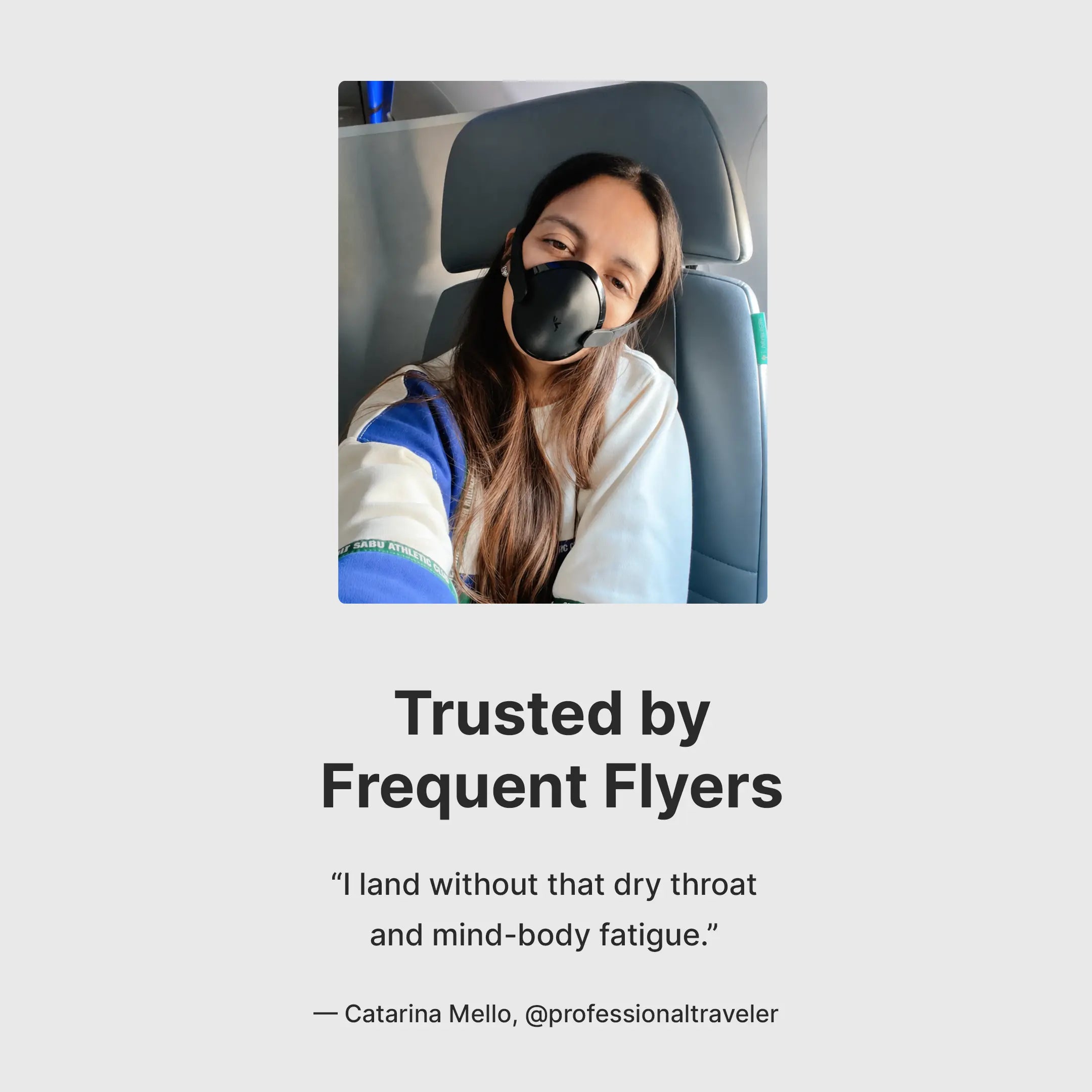
- Frequent flyers for whom the effect compounds week after week
On a two-hour hop the difference is small. Travelers who mostly fly short routes are unlikely to notice much, and there is no reason to pretend otherwise.
Frequently asked questions
Do humidifier masks for flying really work, or is it marketing?
The physics is real and so is the research behind it. A mask with a genuine HME filter raises the humidity of inhaled air and reduces dryness in the nose and throat.
Do I still need to drink water?
Yes. The mask reduces moisture lost through breathing, but it puts nothing into the bloodstream. Water, and food with water in it, remain the way to stay hydrated on a flight.
Will it help my dry eyes?
No. Eyes lose moisture to the open cabin, and a mask covering the nose and mouth does not reach them. Lubricating drops or a pair of glasses instead of contact lenses are the usual answers.
Can I sleep in one?
Most travelers can, and the airway benefit continues through the flight. Sleeping with the mouth open dries the throat fastest, so the mask often matters most while asleep. There is more on the same idea applied to sleep at home.
How long does a filter last?
Kuvola's filters are resusable and can be hand-washed, although some customers prefer to use new filters after several flights.
Is it comfortable to breathe through?
A well-designed filter adds very little resistance and most people stop noticing it within a few minutes. Anyone who finds breathing effortful with a mask on should take it off and speak to a doctor before trying again.
The honest summary
A humidifier mask solves one problem well. If flying leaves the throat raw and the nose blocked, it addresses the cause of both rather than the symptoms.
Those two complaints are covered in more depth in the guides to a nose that feels raw and crusted after landing and the sticky, cotton-mouth feeling that follows. Both trace back to the same dry air.
Kuvola's humidifier mask is built around an HME filter manufactured in The UK. There is no water tank, no battery and nothing to charge. It does the one job, and it does not claim the rest.
Kuvola is a comfort product, not a medical device. Travelers with asthma, a sinus condition, a respiratory illness or any concern about breathing on board should speak to their doctor first.
Photography: benjamin lehman, Alexander Schimmeck, Yue WU and Victor Rosario via Unsplash.