Dry Nose on a Plane: Why It Happens and What Actually Helps
A dry nose on a plane comes down to one thing: the air. At cruising height, cabin humidity sits between 5% and 12%, which is drier than the Sahara at around 25%. The nose has to add moisture to every breath, and at that dryness it simply cannot keep up.
The result is a tight, crusted feeling that builds over several hours, and now and then it ends in a nosebleed. The underlying cause is simple enough, and so are the things that genuinely help.

Key takeaways
- Cabin humidity sits between 5% and 12%, against 40% to 50% in a comfortable room.
- The nose warms and moistens every breath using water drawn from its own lining.
- Dry cabin air strips that water away faster than the body can put it back.
- Most travelers first feel the dryness three to four hours into a flight.
- Saline and gels treat the surface. Humidifying the air reduces the loss itself.
Why cabin air is this dry
Cabin air is drawn in from outside the aircraft at around 35,000 feet. Air that high holds almost no water vapor. It gets warmed and pressurized on the way in, but nothing along the way puts the moisture back.
Whatever humidity does exist in the cabin comes from the people in it, through breath, skin and drinks. Even on a full aircraft that leaves the air far drier than any room on the ground. This is where cabin air comes from and why it arrives so dry.
The nose is already a humidifier
Air reaching the lungs needs to be close to body heat and nearly full of moisture. The nose performs that work on every breath without pausing, and it is one of the least noticed jobs in the body.
The moisture comes from a thin fluid layer inside the nose. Researchers call it airway surface liquid, meaning the wet film that coats the airway. It sits on tiny hairs called cilia, which sweep trapped dust and germs back out.

Why the system runs short at altitude
Dry air takes much more water from that layer than damp air does. The body refills it from the tissue underneath, but at cabin humidity the demand outpaces the supply and the layer slowly thins.
Past a certain point the cilia can no longer sweep properly, and the lining begins to feel tight before it crusts. That is the dry nose most travelers notice somewhere over the ocean.
Why one nostril feels blocked
Most people breathe unevenly through their two nostrils without ever noticing. One side carries most of the airflow while the other recovers, and the body swaps them every few hours.
Researchers at Auckland University of Technology modeled why this happens. Their work on the purpose of the nasal cycle found that the busy side dries out while it conditions air. The resting side stays wet enough to keep clearing mucus.
The nose cannot humidify air and clear it at full strength at the same time. Alternating between the passages is how the body handles that conflict. Very dry cabin air pushes both jobs considerably harder.
When travelers start to feel it
Short hops rarely cause trouble. A published review of cabin humidity research found that the effects of low humidity are usually not noticeable below three to four hours. That matches what long-haul travelers describe.
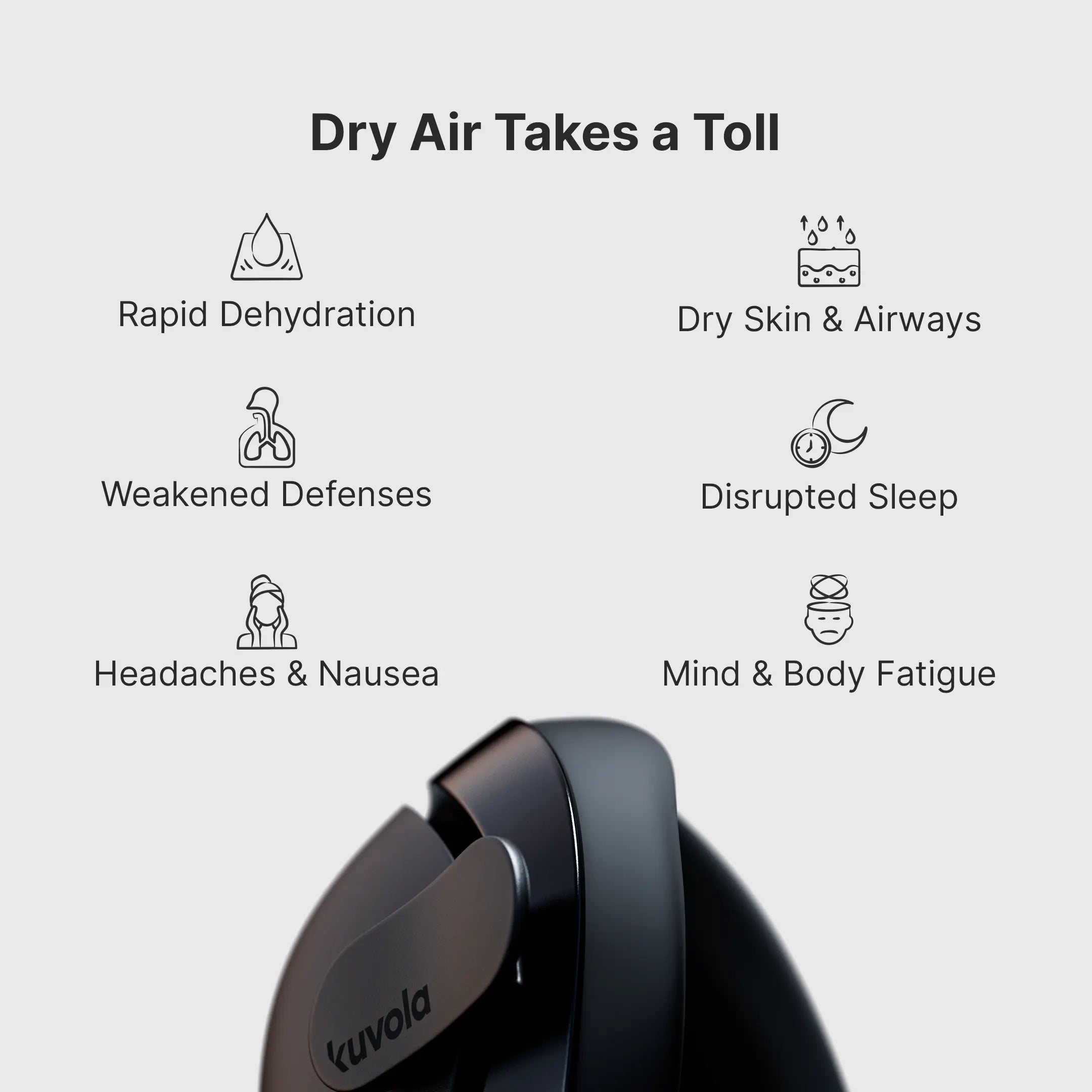
Past that point the feeling builds slowly, and a tight nose turns into visible crusting. Crusted lining can crack, and cracked lining is what bleeds.
The same thing is happening in the throat and mouth at once. It helps to know how much water the airways lose on a long flight, because the nose is only one part of a bigger picture.

What actually helps
Some remedies treat the surface directly, while others cut the moisture loss in the first place. Both approaches have a place, and they work well in combination.
| Approach | What it does | Best suited to |
|---|---|---|
| Saline spray or drops | Puts water straight onto the lining | Fast relief, repeated every few hours |
| Saline gel or barrier ointment | Slows water leaving the surface | Overnight flights and sleeping upright |
| Breathing through the nose | Keeps the humidifying system working | Anyone who drifts into mouth breathing |
| Humidifying the air you breathe | Cuts the moisture loss at source | Flights beyond about four hours |
| Drinking water | Supports the body as a whole | Useful, but not a full answer on its own |
That last point consistently surprises people. Water you drink is absorbed into the bloodstream, whereas the dryness is happening on a surface a few cells thick, driven by the air passing over it.
What does not help much
- Avoiding dairy. The belief that milk thickens mucus is not well supported.
- Opening the overhead vent. It moves more dry air across your face, not less.
- Drinking only when thirsty. Thirst lags behind the real losses on a long flight.
- Waiting until it hurts. A dry lining is far easier to protect than to repair.
Reducing the loss at source
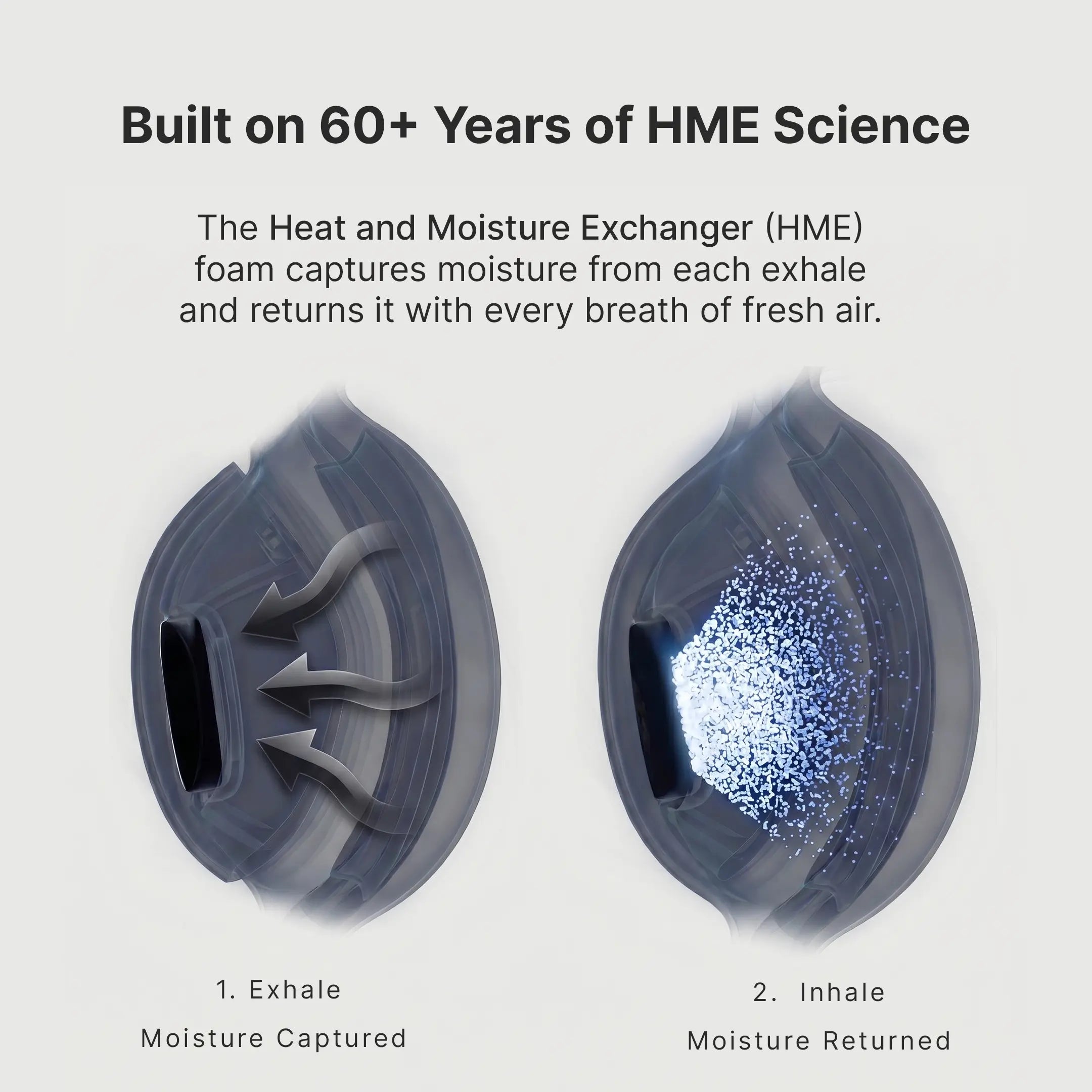
There is one more option, and it works on a different principle. Exhaled breath leaves the body warm and almost saturated with moisture, and in a normal cabin all of that water is lost for good.
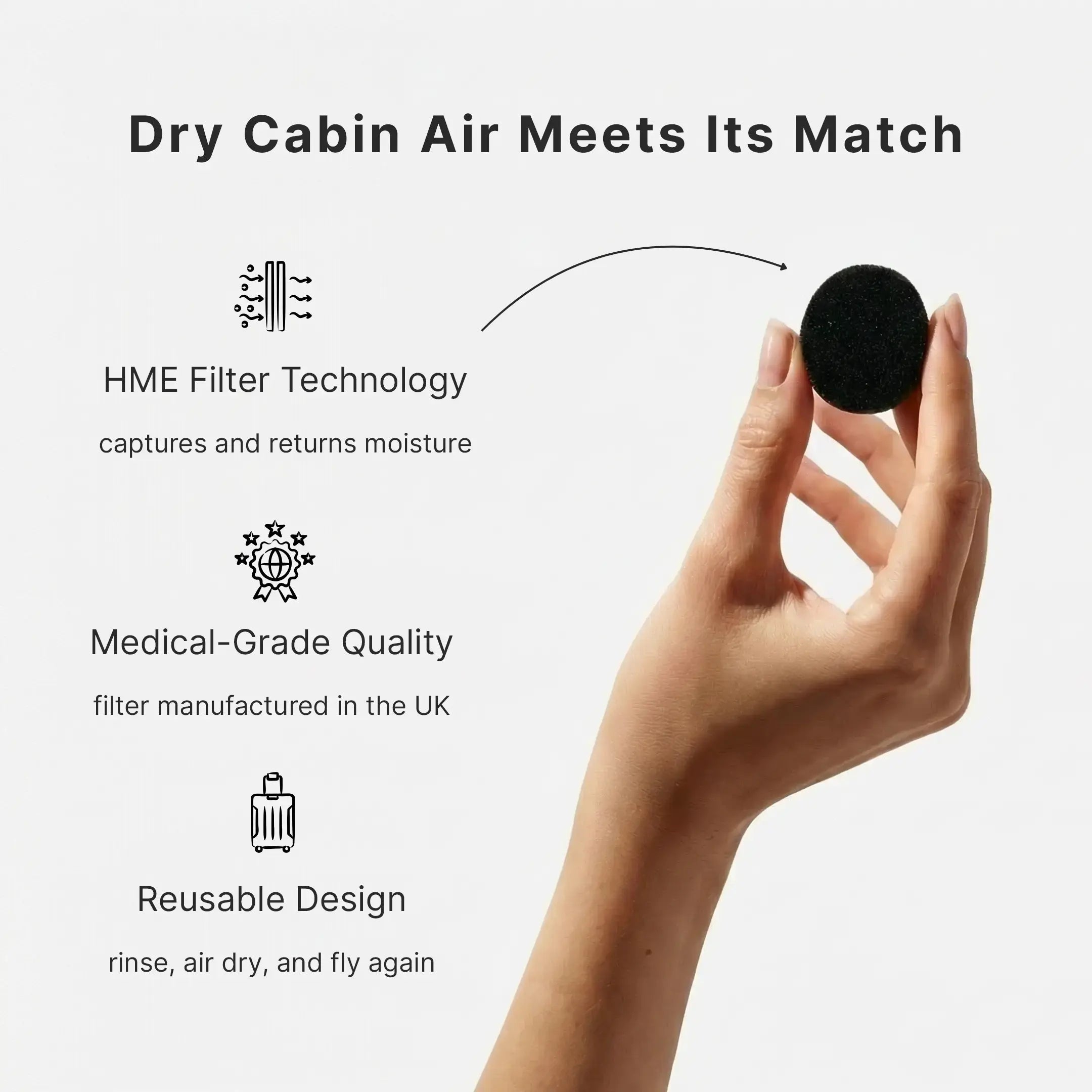
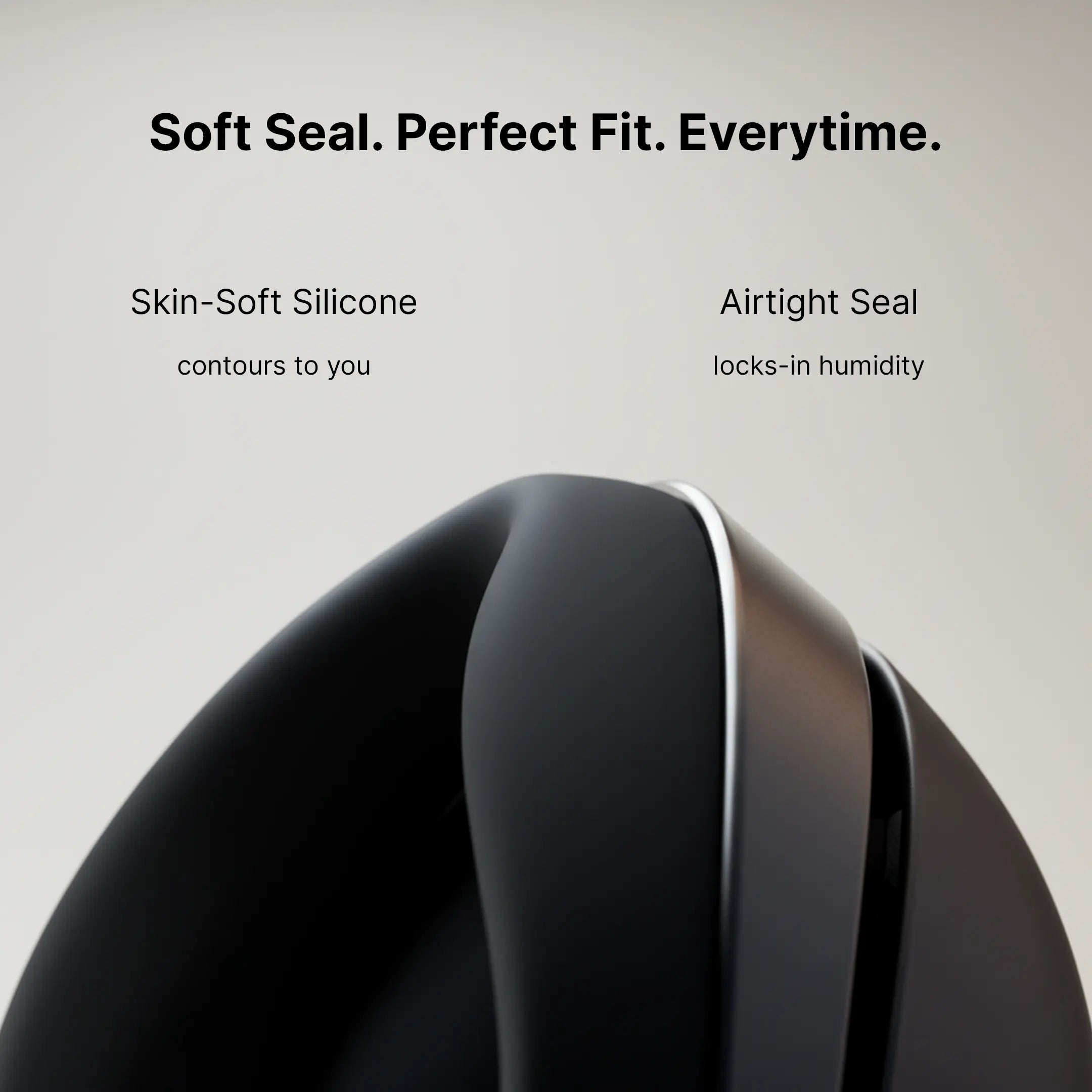
Heat and Moisture Exchange, shortened to HME, captures it instead. The same class of technology is used in medical breathing care to keep inhaled air moist. A filter holds the moisture from each exhale and hands it back on the next breath in.
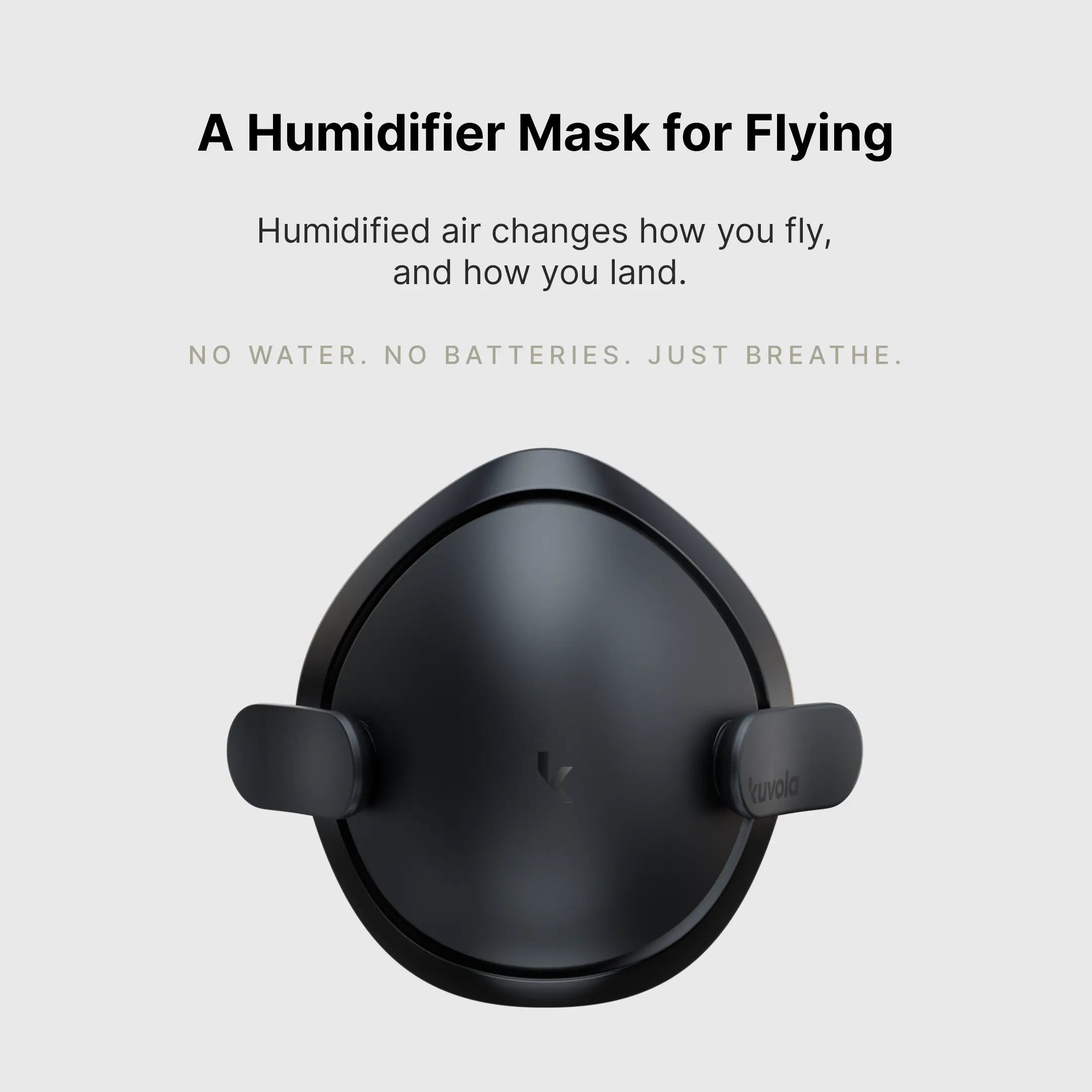
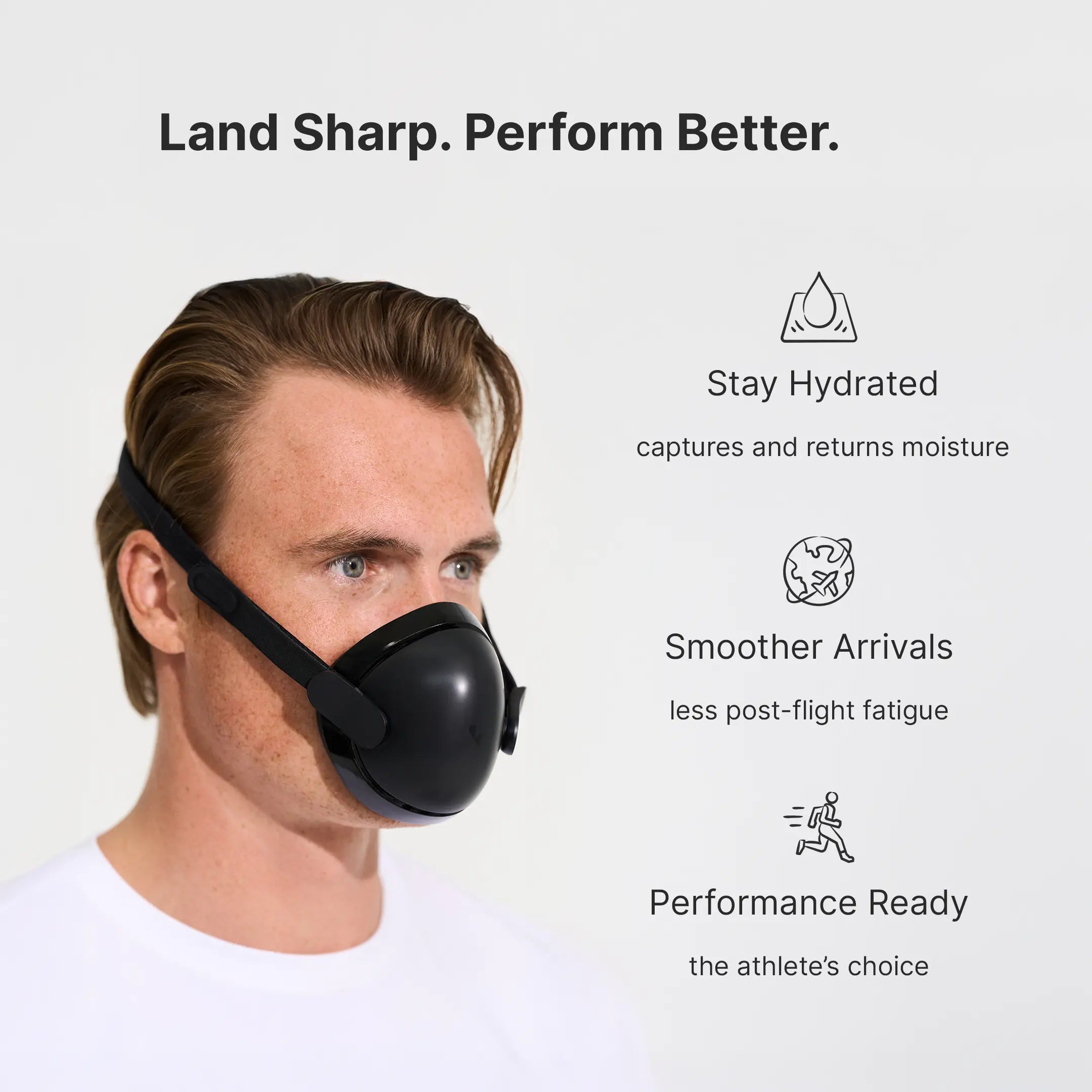
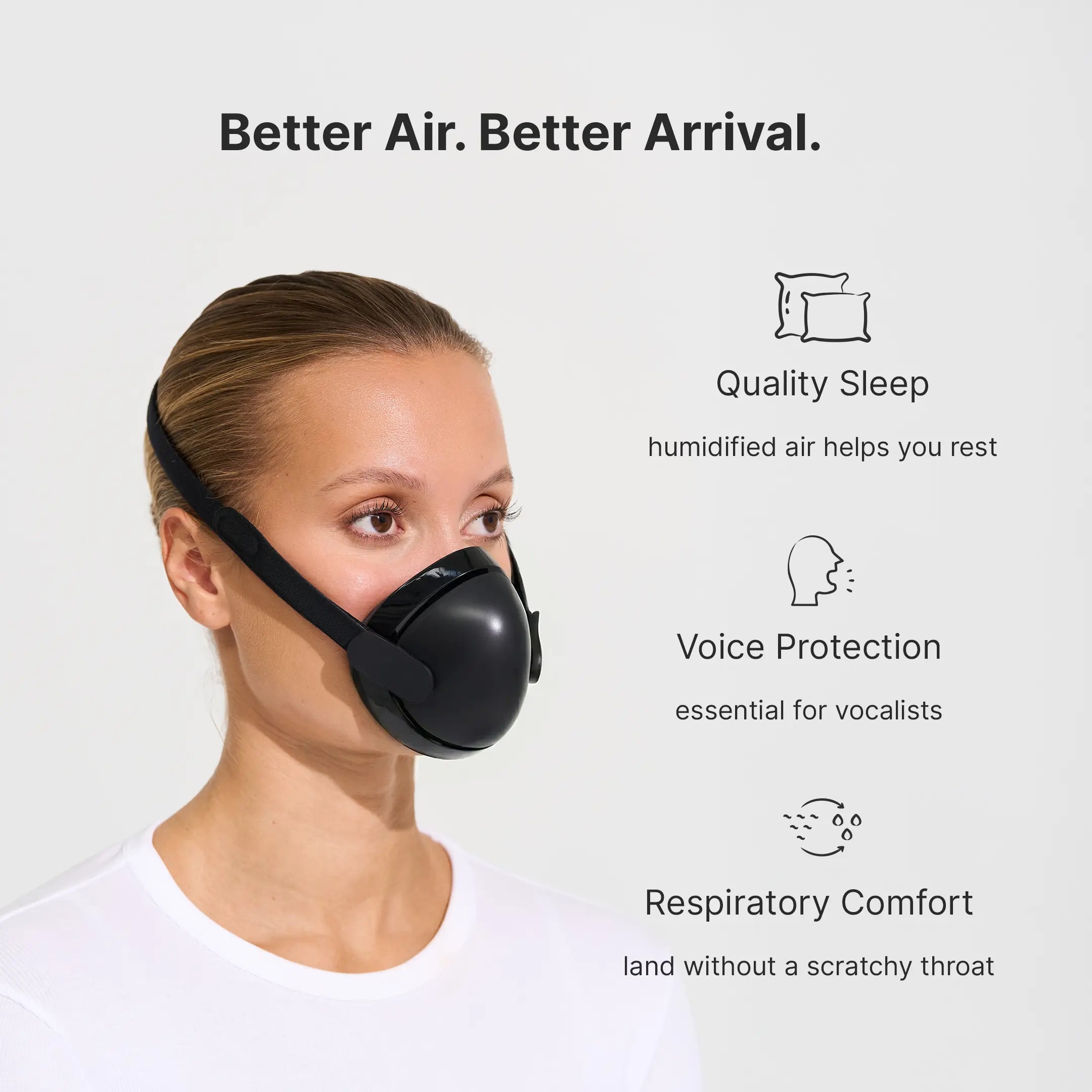
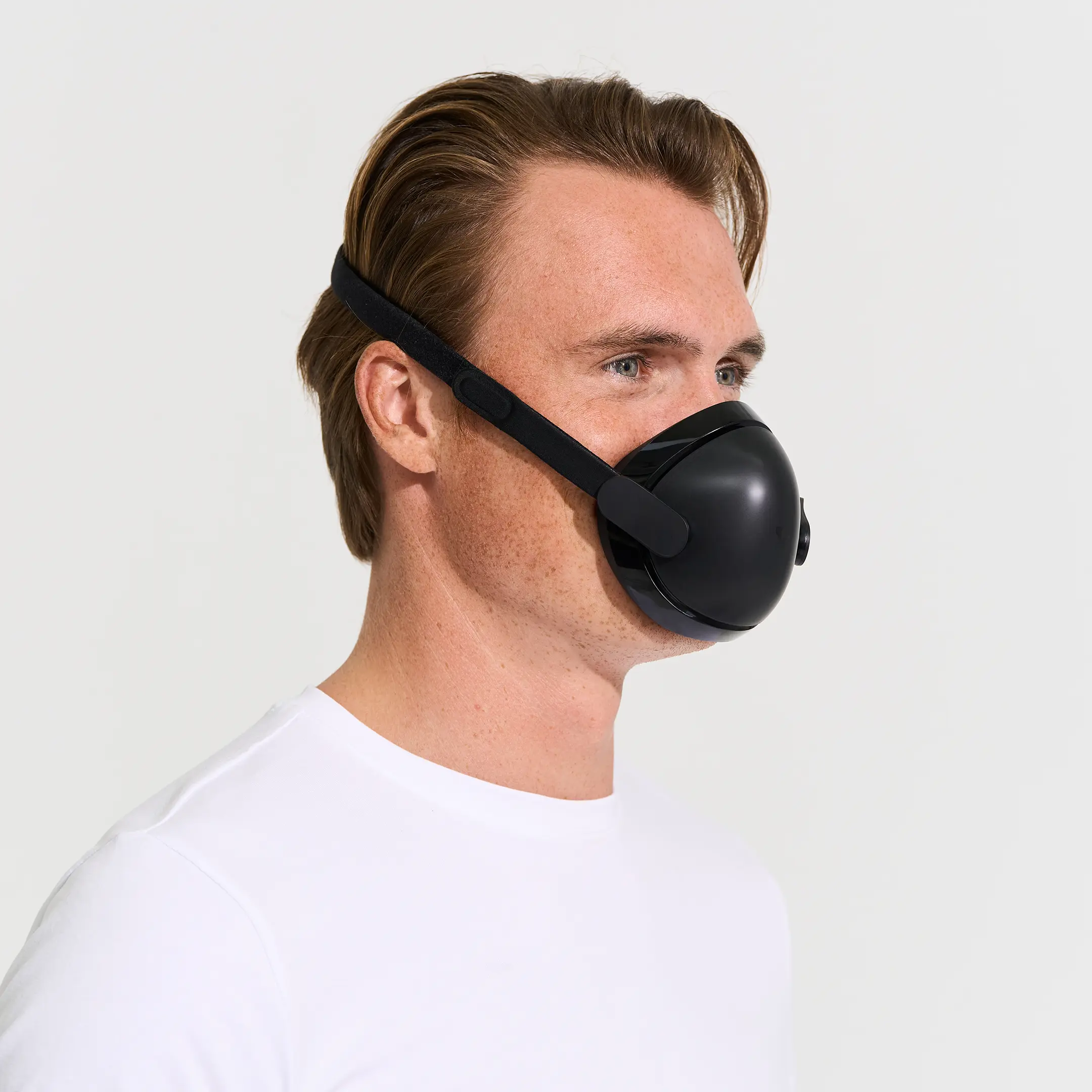
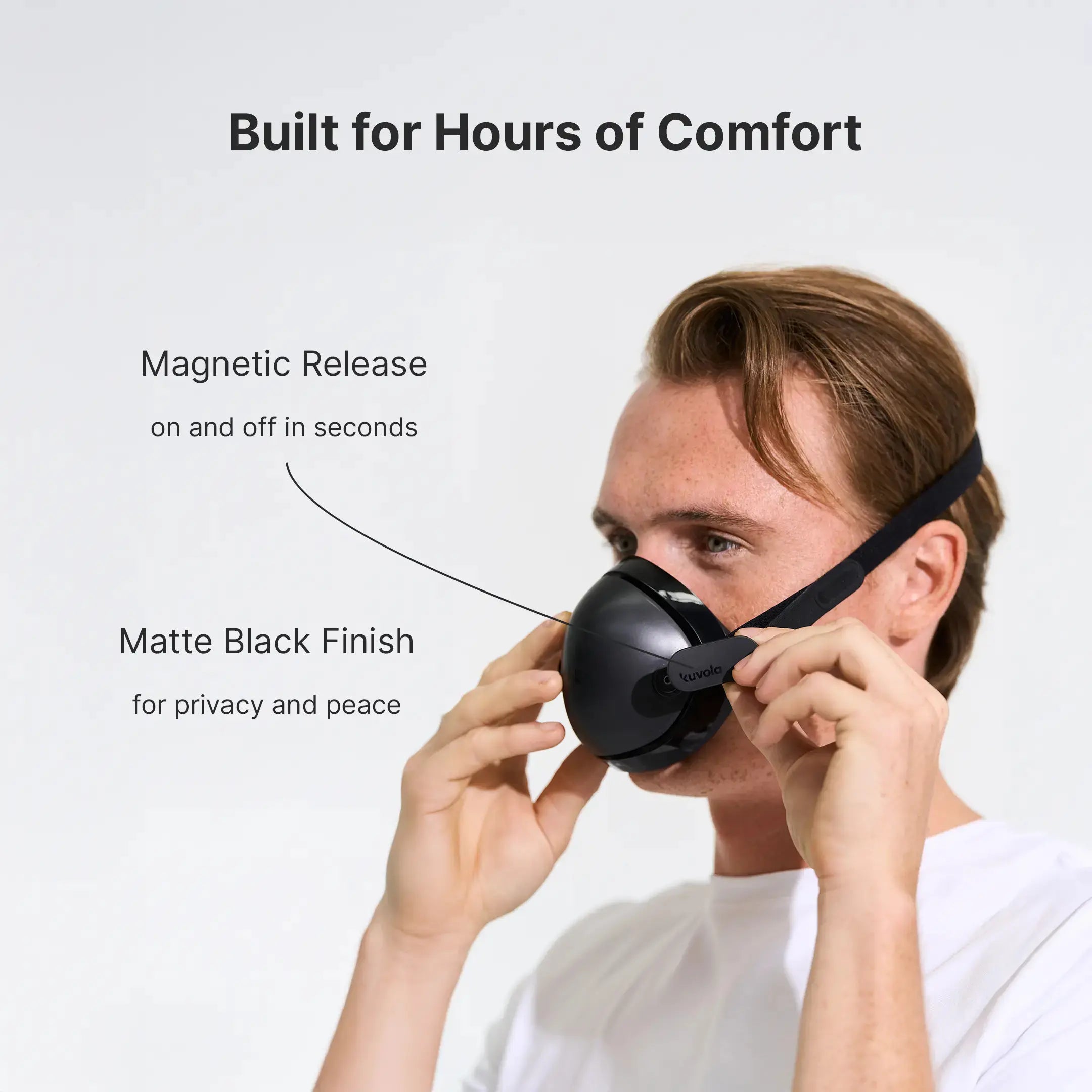
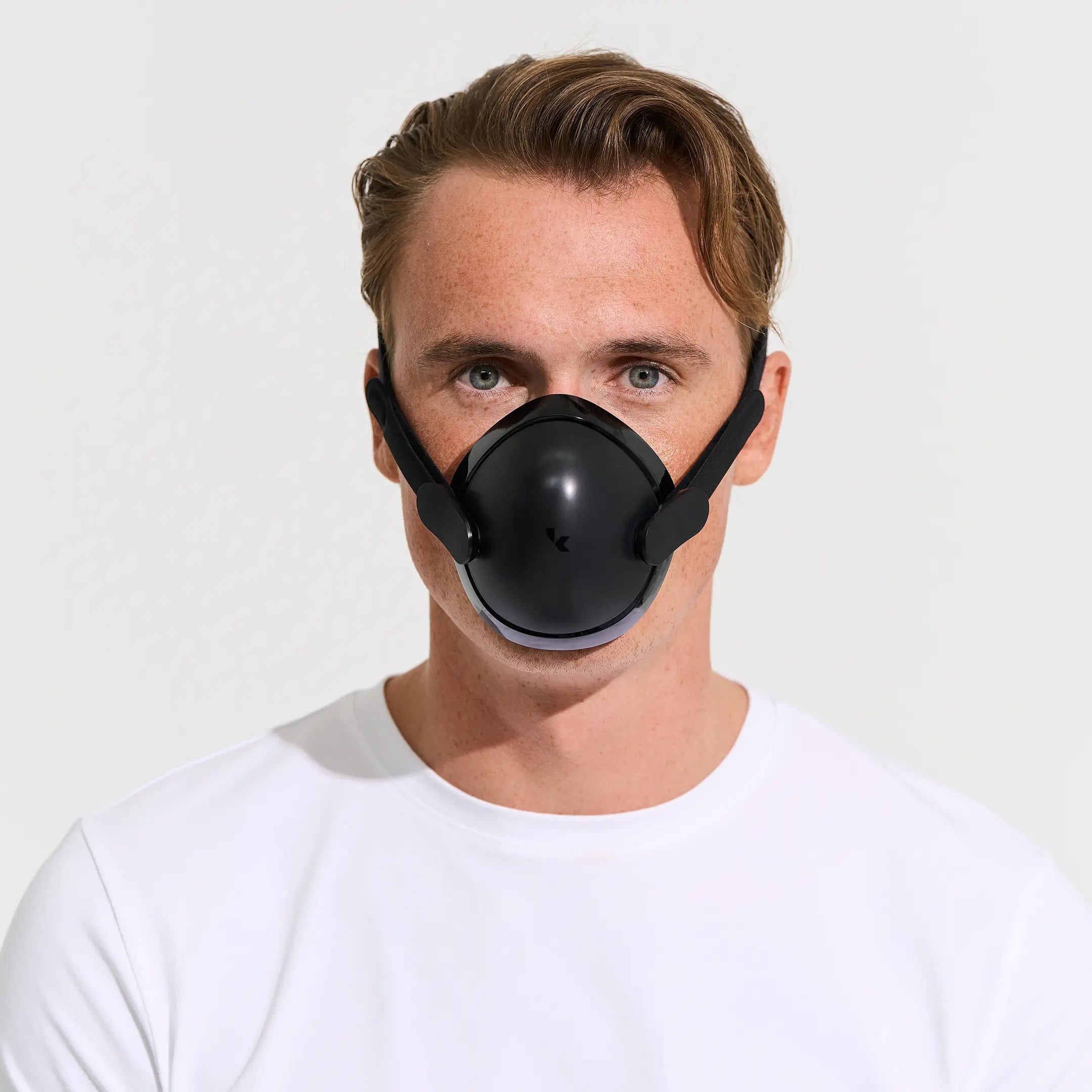
That is how the Kuvola humidifier mask works. There is no water reservoir, no batteries and no electronics involved. The same principle explains why dry air disrupts sleep in a similar way on the ground.
Who notices it most
Frequent long-haul travelers build up the effect across many flights rather than one. Anyone crossing the Atlantic or Pacific often tends to spot the pattern quickly.
Voice professionals are affected most, including singers, actors, broadcasters and voice coaches, whose working instrument depends on a well hydrated airway. For them, cabin air is a hazard of the job rather than a nuisance.
When to speak to a doctor
The majority of dry noses on aircraft are a comfort problem and nothing more serious. A minority are not, and frequent or heavy nosebleeds deserve proper medical attention.
The Cleveland Clinic lists dry air as a common cause of nosebleeds, alongside several others. Anyone with a nose or breathing condition should ask their doctor before a long flight, as should anyone taking blood-thinning medication.

Frequently asked questions
Why does my nose bleed after flying?
Hours of dry air thin the lining inside the nose until it cracks. The blood vessels there sit very close to the surface, so a small crack is enough to bleed. It often shows up after landing rather than during the flight.
Does drinking water stop a dry nose on a plane?
Not on its own, though it is still worth doing. The dryness in the nose is caused by air moving across a very thin surface layer. A surface problem needs something applied to that surface, or moister air to breathe.
Can saline spray be taken through airport security?
Yes, within the usual limits. Liquids in hand luggage must be 100ml or less and fit inside the clear bag. Saline sprays are widely sold at that size for this reason.
Why is one nostril more blocked than the other on a plane?
That is the nasal cycle, and it happens on the ground too. One passage carries most of the airflow while the other rests and clears mucus. Dry cabin air makes the difference much easier to feel.
Are long flights really worse than short ones?
Much worse. Cabin humidity research suggests the effects are usually not noticeable below three to four hours, after which the cumulative loss keeps building. That is why the science behind cabin dryness matters most on long-haul routes.
Before your next long flight
Pack saline, and use it before boarding rather than once the dryness has set in. Add a barrier gel if you plan to sleep, especially on an overnight sector.
Then consider the air itself, because every other remedy treats a symptom rather than the cause. Humidifying what you actually breathe addresses that cause, and across a ten-hour flight it is the difference you notice on arrival.
Travelers with a medical condition affecting the nose, sinuses or breathing should speak to their doctor before changing anything.
Photography: Kornél Máhl, Mahdi Mahmoodi, Waldemar Brandt, Alex Azabache via Unsplash.