Trockener Mund im Flugzeug: Warum es passiert und was hilft
Trockener Mund im Flugzeug ist kein Zufall. Er ist eine direkte Folge der Kabinenluft, die weniger Feuchtigkeit enthält als die meisten Wüsten. Die Luftfeuchtigkeit in Reiseflughöhe sinkt auf zwischen 5 % und 12 %, während der Körper am besten bei 40–50 % funktioniert.
Das Problem verschlimmert sich während des Schlafes. Die Kiefermuskulatur entspannt sich, der Mund fällt offen und trockene Kabinenluft strömt direkt über Zunge und Gaumen. Deshalb wachen so viele Reisende mitten im Flug mit einem Mund auf, der sich wie Schleifpapier anfühlt – und warum das Schlürfen von Wasser nur wenige Sekunden hilft.

Die wichtigsten Erkenntnisse
- Die Kabinenluft in Reiseflughöhe enthält zwischen 5 % und 12 % Feuchtigkeit – etwa ein Viertel dessen, was normale Innenluft normalerweise enthält.
- Mundatmung während des Schlafes ist der größte Auslöser für schweren trockenen Mund im Flugzeug.
- Wassertrinken hydriert den Magen, nicht die orale Schleimhautoberfläche, wo tatsächlich Feuchtigkeit verloren geht.
- Speichel tut weit mehr, als den Mund feucht zu halten – er schützt die Zähne, bekämpft Bakterien und unterstützt ein angenehmes Schlucken.
- Einfache Gewohnheiten an Bord können den Feuchtigkeitsverlust erheblich reduzieren, selbst auf Langstreckenflügen.
Warum Kabinenluft den Mund so schnell austrocknet
Im Reiseflug wird Außenluft durch die Triebwerke gesaugt, komprimiert, gekühlt und in die Kabine gepumpt. Dieser Prozess entzieht ihr fast das gesamte Wasser. Die Kabine ist am Ende trockener als die Sahara, die bei etwa 25 % liegt.
Speichel besteht hauptsächlich aus Wasser. In so trockener Luft verflüchtigt er sich schneller von Zunge, Wangen und Gaumen, als der Körper neuen produzieren kann. Die Speicheldrüsen versuchen, Schritt zu halten, aber die Rechnung geht bei 5–12 % nicht auf.
Das ist nicht dasselbe wie Durstgefühl. Durst bedeutet, dass das Blut Flüssigkeit benötigt. Trockener Mund bedeutet, dass das Gewebe selbst Wasser direkt an die Luft verliert – ein Prozess, der als insensible Wasserverlust bezeichnet wird.

Das Mundatmungsproblem: Warum Schlaf es verschlimmert
Die Nase filtert, wärmt und befeuchtet jeden Atemzug. Sie gewinnt auch etwa 30 % des Wassers in jedem Ausatmen zurück. Der Mund tut nichts davon.
Während des Schlafes sinkt der Muskeltonus und der Kiefer fällt offen. Die Atmung verlagert sich von der Nase zum Mund. Eine Studie im Journal of Physiology ergab, dass die Mundfeuchtigkeit nach zwei Stunden Mundatmung auf kaum nachweisbare Werte sank.
Im Flugzeug entsteht dadurch eine Rückkopplungsschleife:
- Die Kabinenluft ist bereits extrem trocken mit 5–12 % Luftfeuchtigkeit.
- Schlaf löst Mundatmung aus, die den eingebauten Luftbefeuchter der Nase umgeht.
- Trockene Luft strömt direkt über Zunge und Gaumen und lässt Speichel beim Kontakt verdunsten.
- Speicheldrüsen verlangsamen sich während des Schlafes, sodass die Ersatzfeuchtigkeit sinkt, gerade wenn der Bedarf steigt.
Deshalb kann ein fünfstündiger Tagesflug den Mund leicht austrocknen, während ein gleich langer Nachtflug ihn schmerzhaft ausgetrocknet zurücklassen kann.
Was Speichel tatsächlich bewirkt (und was ohne ihn passiert)
Speichel wird leicht als selbstverständlich angesehen – bis er fehlt. Er tut weit mehr, als den Mund feucht zu halten.
| Funktion | Was Speichel bewirkt | Was ohne ihn passiert |
|---|---|---|
| Schmierung | Überzieht Zunge, Wangen und Zahnfleisch | Gewebe kleben zusammen; Sprechen und Schlucken werden schwierig |
| Keimabwehr | Enthält Enzyme, die Bakterien bekämpfen | Bakterien vermehren sich schneller, was das Risiko von Mundgeruch erhöht |
| Zahnschutz | Blockiert Säure und baut Zahnschmelz wieder auf | Zahnschmelz wird schneller abgebaut |
| Geschmack | Löst Lebensmittelmoleküle auf, damit Geschmacksnerven sie erkennen können | Essen schmeckt dumpf oder metallisch |
| Verdauung | Beginnt den Abbau von Stärken | Die Verdauung beginnt später, im Magen |
Auf einem langen Flug bedeutet weniger Speichel weniger Komfort, einen schwächeren Zahnschutz und einen dumpferen Geschmack. Die Cleveland Clinic stellt fest, dass trockener Mund, rissige Lippen und trockene Haut zu den häufigsten Auswirkungen des Fliegens gehören.
Warum Wassertrinken nicht ausreicht
Wasser hilft bei der Art von Austrocknung, die sich als dunkler Urin, Müdigkeit und Kopfschmerzen zeigt. Es füllt Blut und Organe wieder auf. Aber es tut sehr wenig für den Mund selbst, wo der eigentliche Verlust stattfindet.
Ein Schluck befeuchtet den Mund für ein paar Sekunden. Dann geht er in den Darm und verteilt sich im Körper. Die Zunge ist fast sofort wieder trocken, weil die Ursache in der Luft liegt, nicht im Blut.
Aus demselben Grund stoppt mehr Wassertrinken den Feuchtigkeitsverlust in den Atemwegen nicht. Die Luft, die auf das Gewebe trifft, hat immer noch 5–12 %, sodass die Austrocknung weitergeht, egal wie viel Flüssigkeit im Magen ist.

Was wirklich hilft: Praktische Schritte für jeden Flug
Nicht jede Lösung funktioniert auf die gleiche Weise. Hier ist, was am meisten hilft, nach der Wirksamkeit geordnet, mit der jede einzelne die Ursache bekämpft.
Durch die Nase atmen
Dies ist der beste einzelne Schritt. Nasenatmung fügt der Luft Feuchtigkeit hinzu und reduziert den oralen Wasserverlust drastisch. Reisende, die im Schlaf zur Mundatmung neigen, können Kinnriemen oder Mundpflaster für den Schlaf ausprobieren – obwohl der Komfort variiert und jeder mit einer verstopften Nase auf das Pflastern verzichten sollte.
Befeuchten Sie die Luft, die Sie atmen
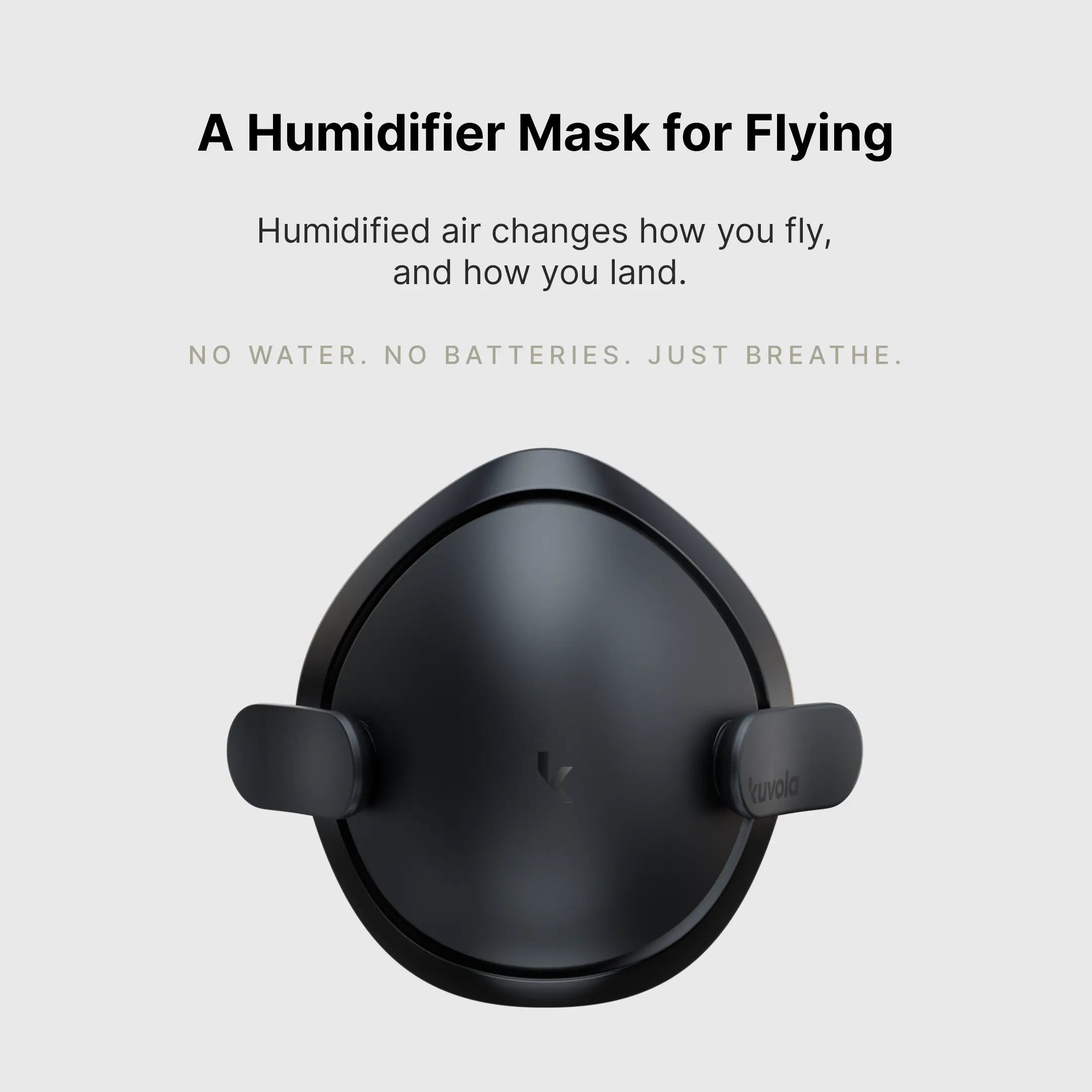
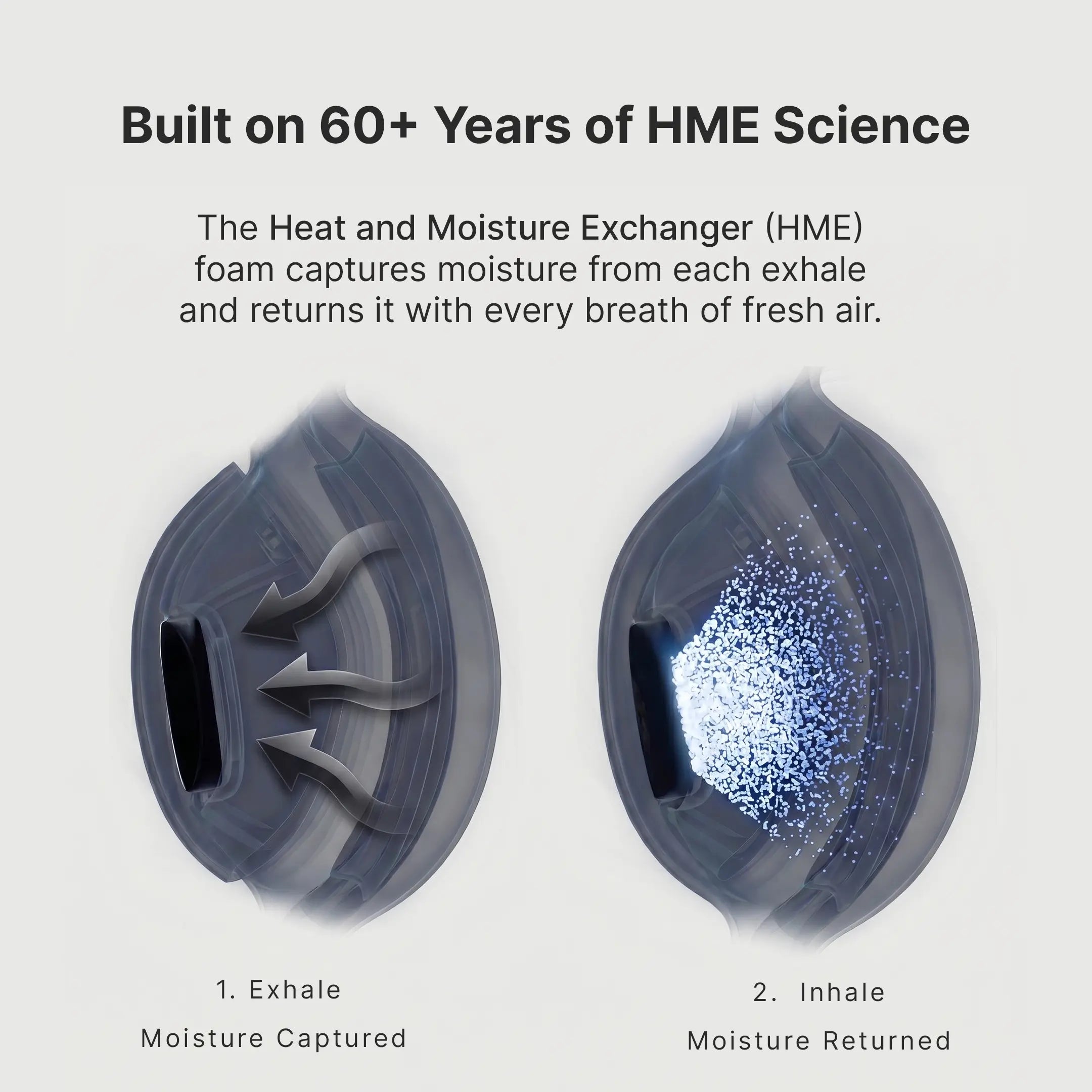
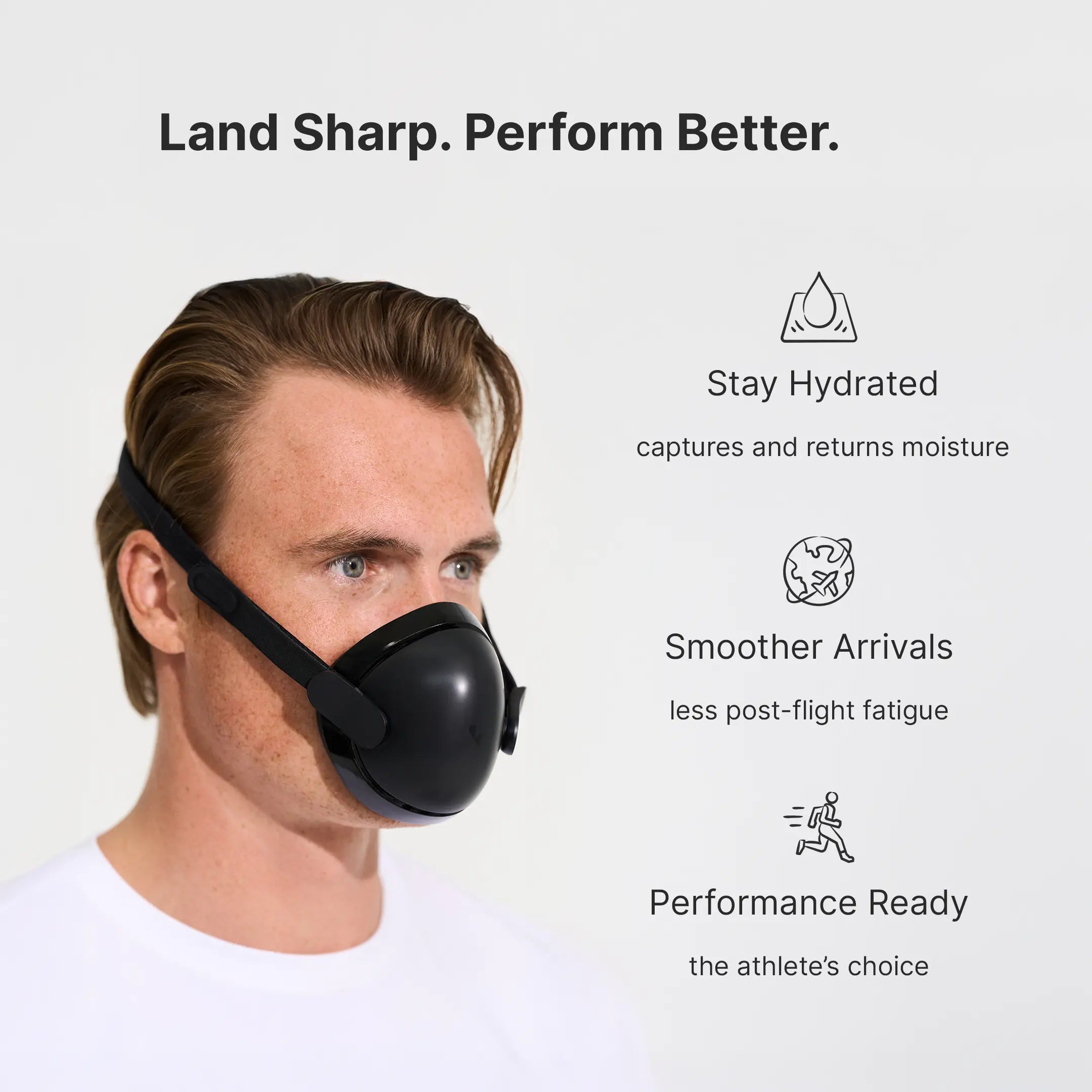
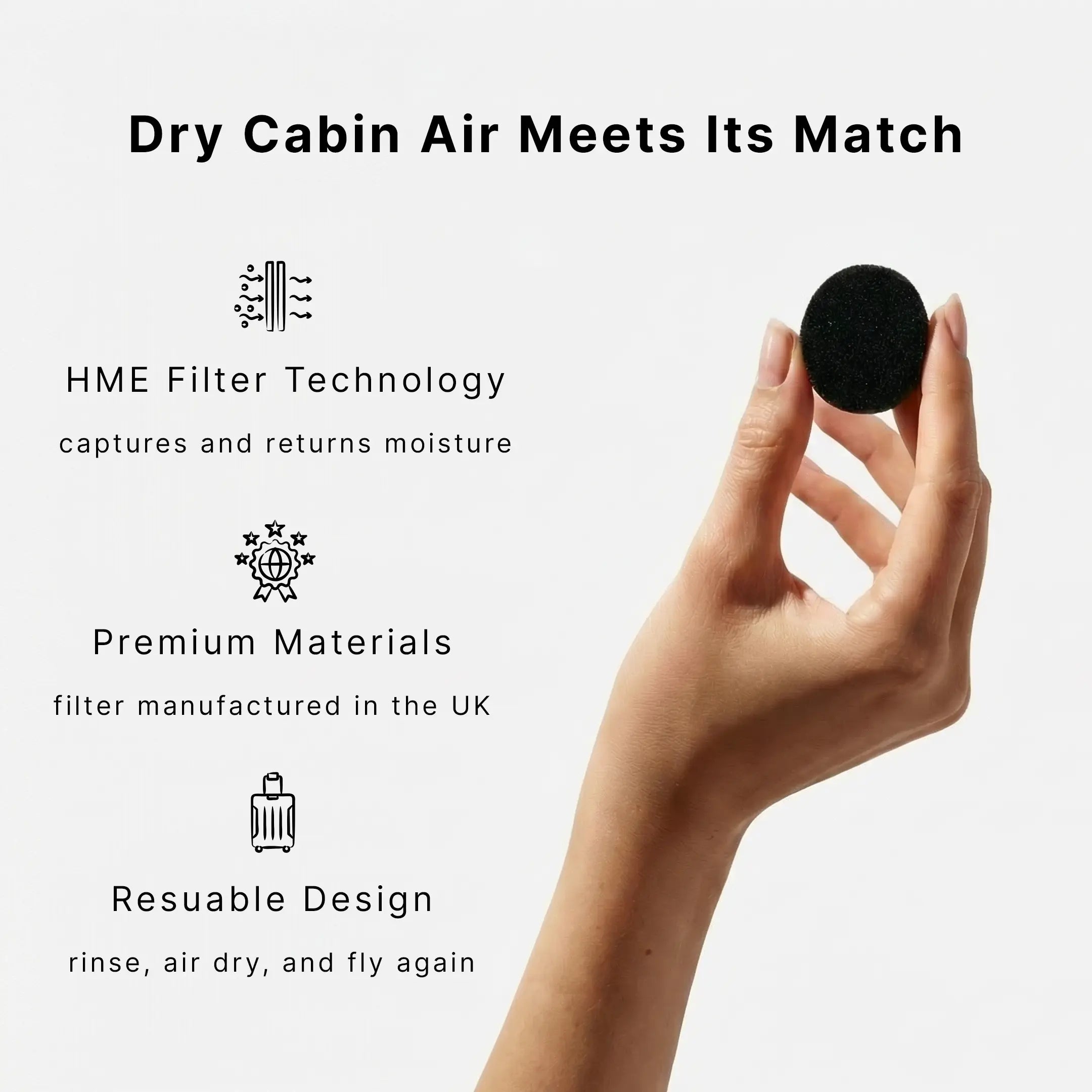
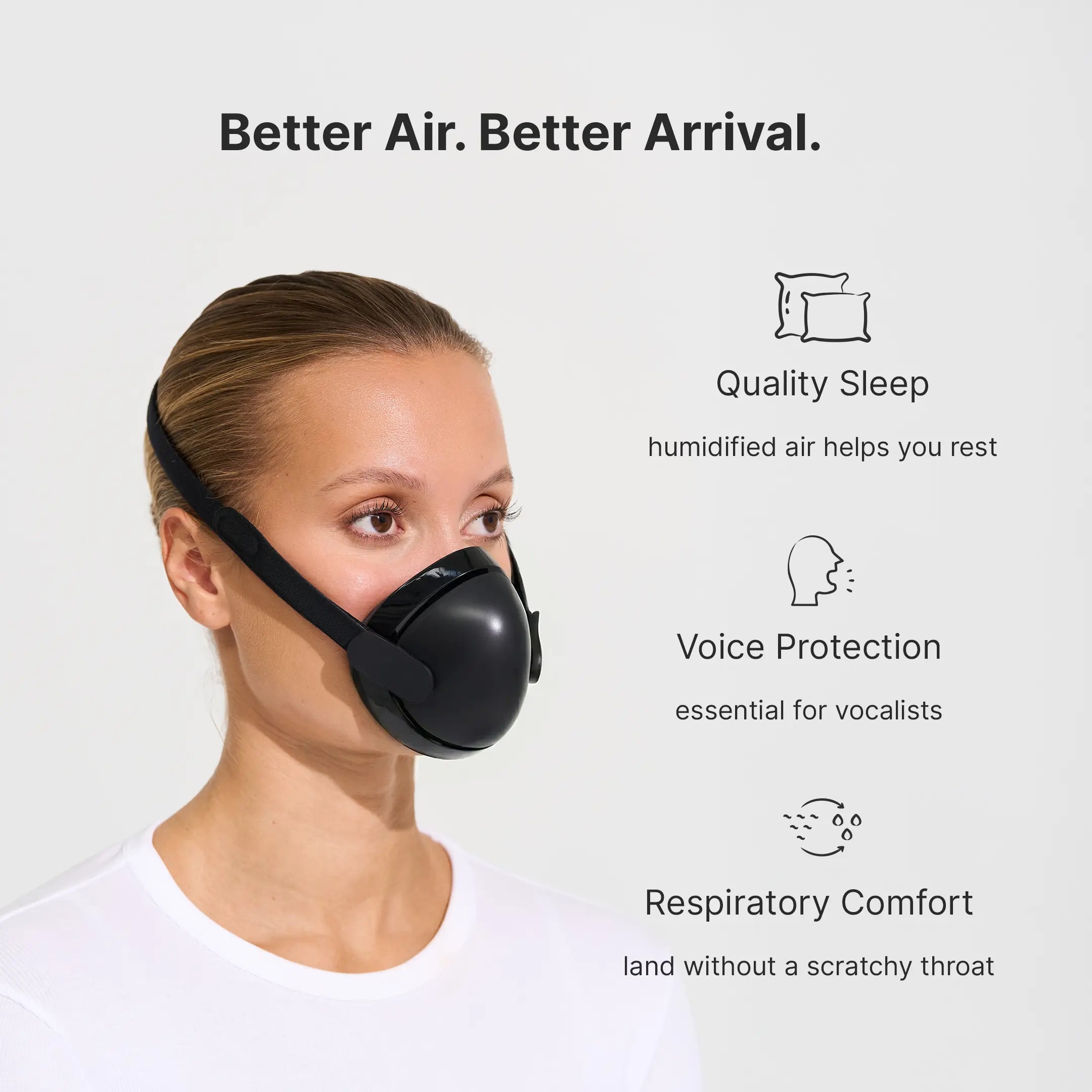
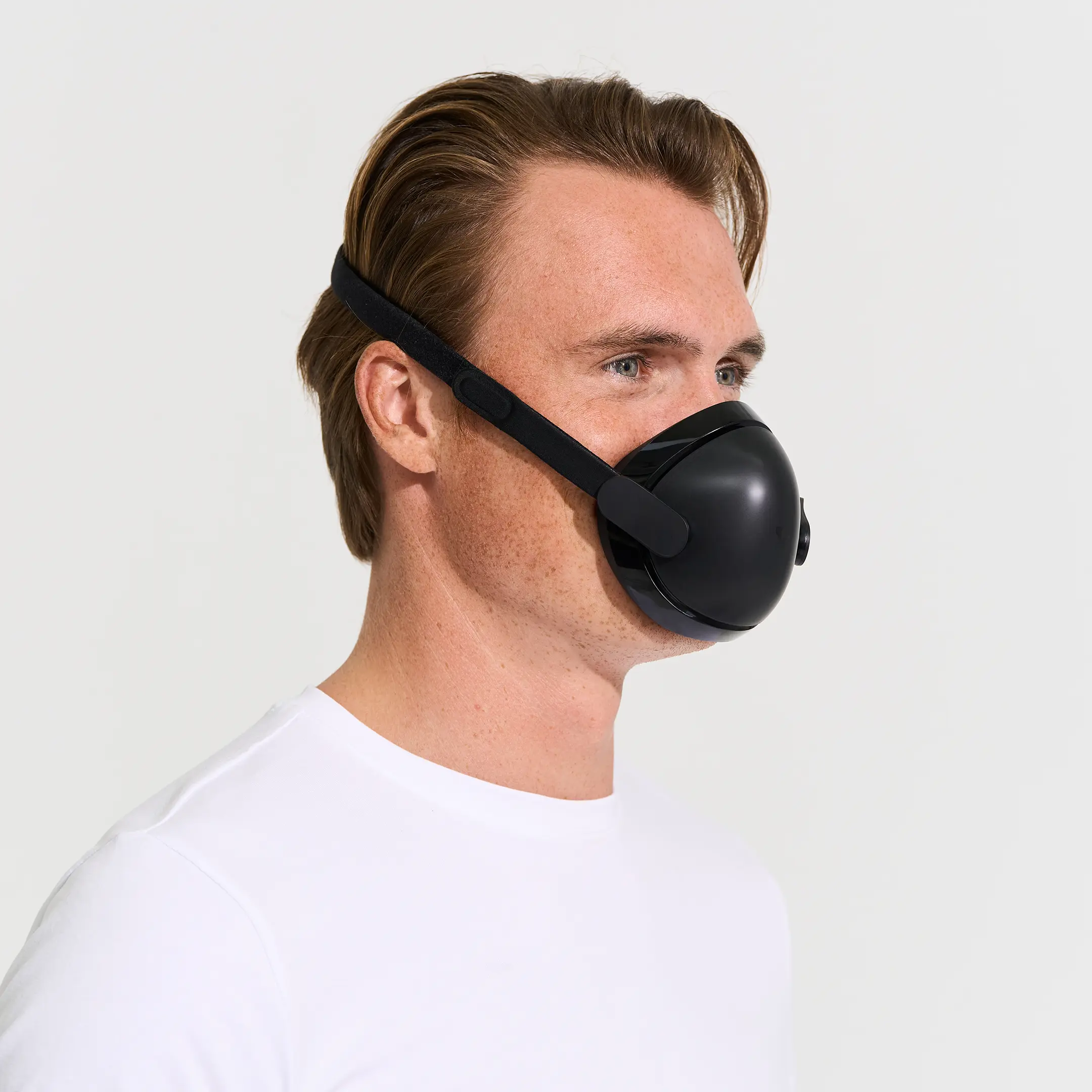
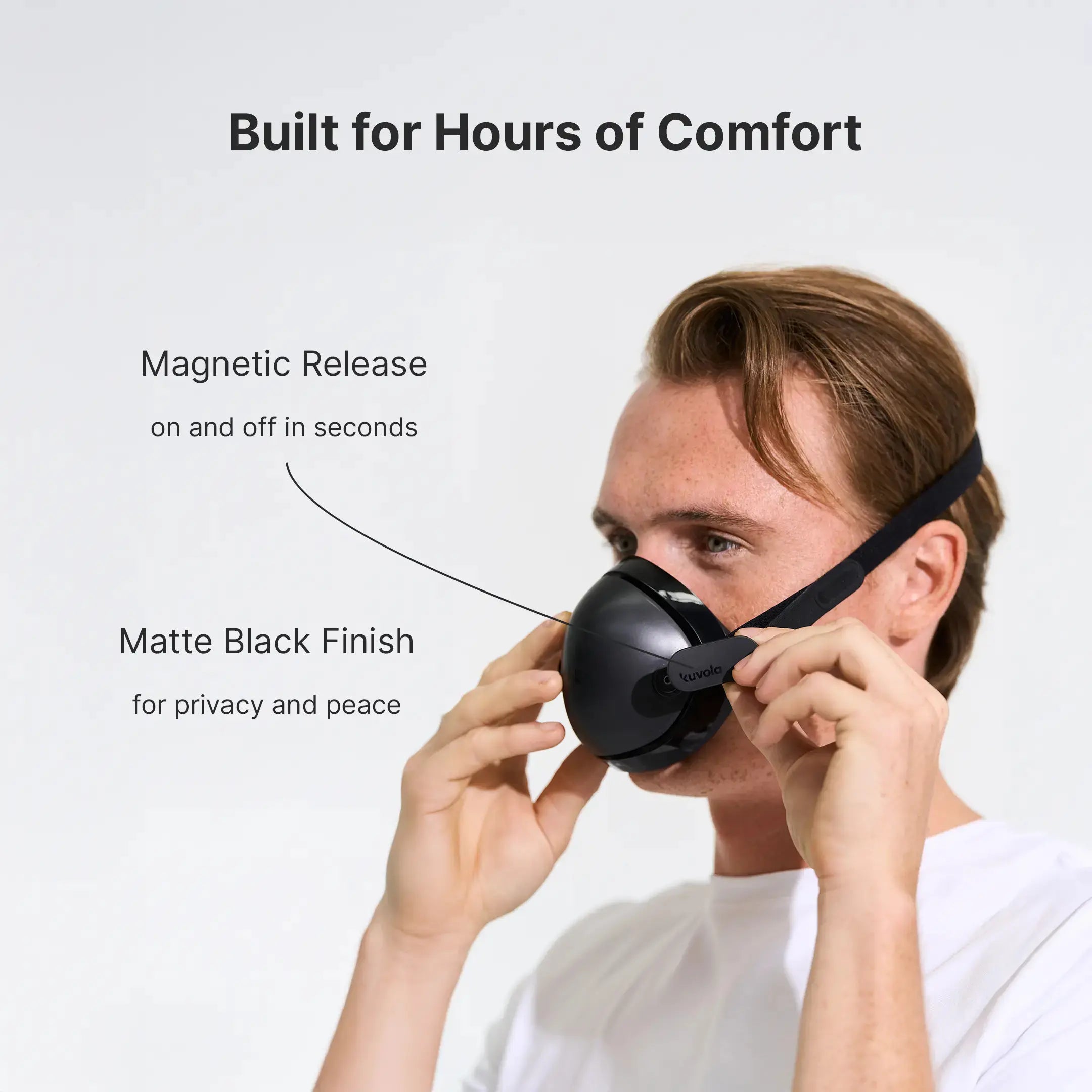
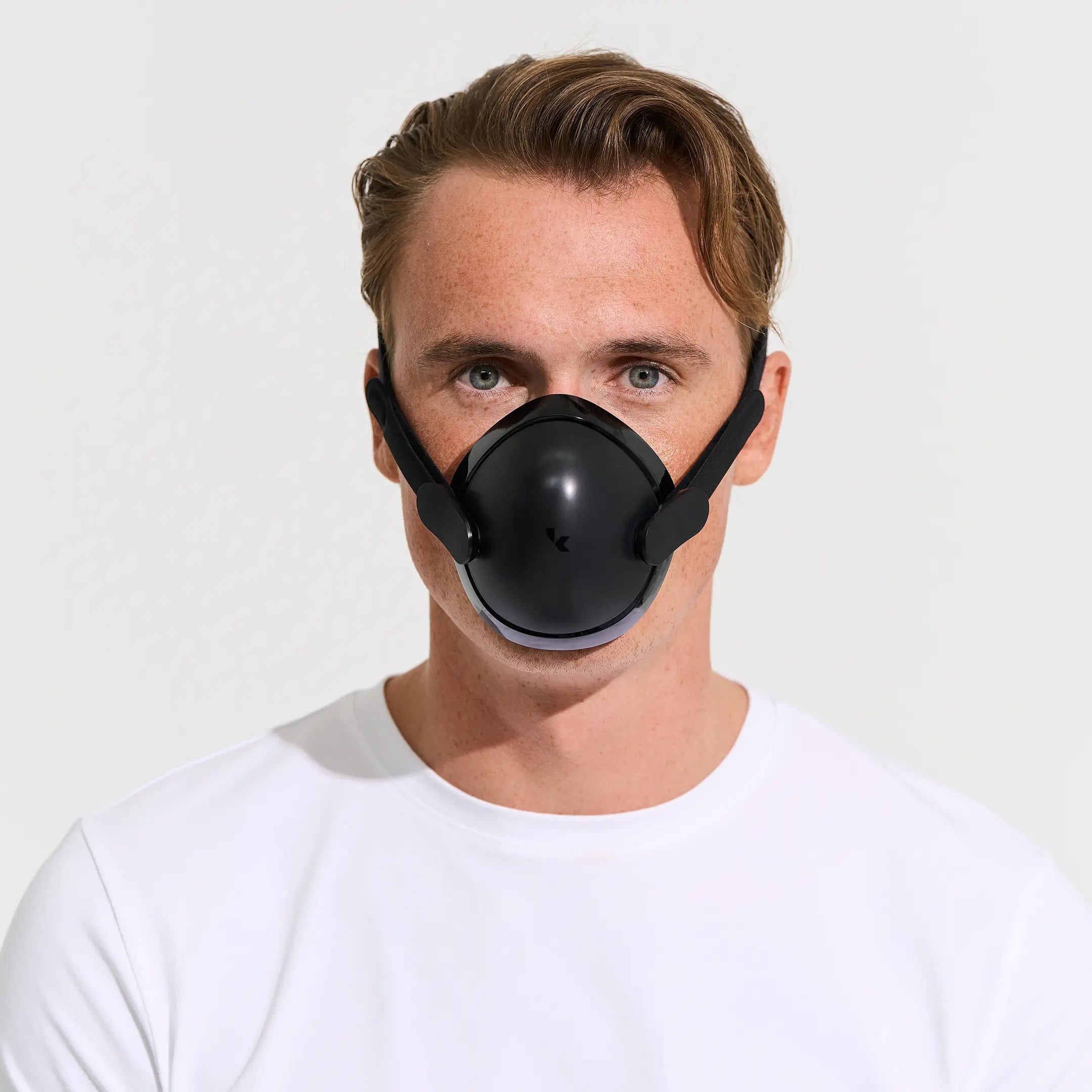
Eine Befeuchtungsmaske fängt die Feuchtigkeit aus jedem Ausatmen auf und führt sie dem nächsten Atemzug wieder zu. Die Methode wird Wärme- und Feuchtigkeitsaustausch (HME) genannt. Sie funktioniert durch Nase oder Mund und benötigt kein Wasser, keine Batterien oder Stecker.
Zuckerfreien Kaugummi kauen
Kauen regt die Speicheldrüsen an. Kaugummis mit Xylitol helfen auch, Bakterien zu bekämpfen. Dies funktioniert gut im Wachzustand, ist aber während des Schlafes, wenn trockener Mund am stärksten auftritt, nicht nützlich.
Vermeiden Sie Alkohol und Koffein vor und während des Fluges
Beide beschleunigen den Flüssigkeitsverlust. Alkohol entspannt auch die Muskeln, die den Mund während des Schlafes geschlossen halten, wodurch die Mundatmung wahrscheinlicher wird. Das Weglassen des Pre-Flight-Kaffees und des In-Flight-Weins eliminiert zwei Risikofaktoren auf einmal.
Verwenden Sie ein salzhaltiges Nasenspray
Eine feuchte Nasenschleimhaut erleichtert das Atmen durch die Nase während des gesamten Fluges. Ein einfaches Salzwasserspray, das vor dem Einsteigen und erneut während des Fluges verwendet wird, kann dazu beitragen, die Verlagerung zur Mundatmung zu verhindern, die einen schlimmen trockenen Mund verursacht.
Trinken Sie regelmäßig Wasser (aber verlassen Sie sich nicht nur darauf)
Wasser ist immer noch wichtig für die allgemeine Hydratation. Es geht nicht darum, das Trinken einzustellen – es geht darum zu wissen, dass Wasser allein ein Problem, das durch die Luft und nicht durch das Blut verursacht wird, nicht beheben kann. Kombinieren Sie es mit Maßnahmen, die den Mund selbst betreffen.
Wer ist am stärksten betroffen
Manche Reisende empfinden trockenen Mund stärker als andere. Kabinentrockenheit betrifft jeden, aber bestimmte Dinge erhöhen das Risiko.
- Reisende, die bestimmte Medikamente einnehmen: Erkältungsmittel, Blutdruckmedikamente und einige Stimmungsmedikamente führen trockenen Mund als Nebenwirkung auf. Kabinenluft verschlimmert dies.
- Mundatmer: Jeder, der gewohnheitsmäßig durch den Mund atmet – aufgrund von Allergien, einer verstopften Nase oder Schlafposition – verliert in großer Höhe schneller Feuchtigkeit.
- Ältere Erwachsene: Die Speichelproduktion neigt dazu, mit dem Alter abzunehmen, wodurch weniger Puffer vorhanden ist, bevor sich der Mund trocken anfühlt.
- Sprechberufler: Sänger, Schauspieler und Rundfunksprecher sind auf einen feuchten Mund angewiesen. Trockenheit verändert den Stimmklang und kann Schmerzen verursachen, die weit über die Landung hinaus anhalten.
Trockener Mund vs. trockener Hals: Was ist der Unterschied?
Beide kommen von der gleichen trockenen Kabinenluft, aber sie betreffen verschiedene Gewebe. Trockener Mund betrifft Zunge, Gaumen und Wangen – die Bereiche, in denen Speichel die Dinge feucht hält.
Ein Halskratzen im Flugzeug betrifft den Bereich hinter dem Mund. Der Hals ist auf eine dünne Schleimschicht, nicht auf Speichel, zur Befeuchtung angewiesen. Beide Probleme haben dieselbe Ursache und dieselbe Lösung: Die Luft befeuchten, bevor sie diese Gewebe erreicht.

Häufig gestellte Fragen
Warum wird mein Mund im Flugzeug so trocken, aber nicht in einem klimatisierten Büro?
Büroluft hat eine Luftfeuchtigkeit von etwa 30–40 %. Kabinenluft sinkt auf zwischen 5 % und 12 %. Dieser Unterschied bedeutet, dass Feuchtigkeit in großer Höhe um ein Vielfaches schneller aus dem Mund entweicht als in jedem normalen Innenraum.
Spielt die Länge des Fluges eine Rolle?
Ja. Der Feuchtigkeitsverlust nimmt mit der Zeit zu. Ein zweistündiger Flug kann leichte Trockenheit verursachen, aber ein zehnstündiger Nachtflug kann den Mund wund machen. Langstreckenflüge verschlimmern das Problem Stunde für Stunde.
Kann trockener Mund im Flugzeug meinen Zähnen schaden?
Weniger Speichel über einen längeren Zeitraum erhöht das Risiko von Säureabnutzung und Bakterien. Ein einziger Flug verursacht wahrscheinlich keinen dauerhaften Schaden, aber Vielreisende, die bei jeder Reise trockenen Mund bekommen, sollten dies mit einem Zahnarzt besprechen.
Ist trockener Mund im Flugzeug ein Zeichen von Dehydrierung?
Nicht immer. Wenig Flüssigkeit im Blut und ein trockener Mund sind miteinander verbunden, aber nicht dasselbe. Ein Reisender kann viel Wasser trinken und trotzdem einen trockenen Mund haben, weil die Kabinenluft dem Gewebe schneller Feuchtigkeit entzieht, als der Speichel sie ersetzen kann.
Soll ich ein Mundspray oder eine Befeuchtungsmaske verwenden?
Sie wirken auf unterschiedliche Weise. Ein Spray spendet kurzfristig Feuchtigkeit für den Mund – hilfreich, aber es verflüchtigt sich schnell. Eine Befeuchtungsmaske behandelt die Ursache, indem sie der Luft selbst Feuchtigkeit zuführt, sodass der Verlust mit jedem Atemzug verlangsamt wird.
Für Nachtflüge bietet eine Maske längere Linderung. Für kurze Tagesflüge kann ein Spray ausreichen.
Fotos von Yue WU, Alexander Schimmeck, Dan Gold und manu schwendener auf Unsplash.