Vocal humidifiers: what they actually do for your voice (and what they don't)
If you rely on your voice for a living — singing, acting, broadcasting, coaching — you've heard it a thousand times: drink more water. Good advice. But it only solves half the problem.
Your vocal folds sit behind a closed airway. Nothing you swallow touches them. Water enters your bloodstream and eventually, over one to three hours, works its way to your tissues through systemic hydration. But the thin mucous layer coating your vocal folds — the layer that lets them vibrate smoothly and without strain — dries out from the air you breathe. Not from the inside.
A vocal humidifier addresses the surface directly.

What a vocal humidifier actually does
A vocal humidifier adds moisture to the air before it reaches your airways. Instead of breathing dry ambient air that pulls moisture off your vocal fold surfaces with every inhale, you breathe air that already carries water vapor.
Two broad types exist:
Room humidifiers raise the humidity of an entire space. Set one up in your bedroom or rehearsal room and let it run. Cool mist models use ultrasonic vibration; warm mist models heat water into steam. Both get the job done. You're aiming for 40–50% relative humidity, the range where your airways stay comfortable.
Personal steamers deliver warm, humidified air directly through a mask or mouthpiece for 10–15 minutes. They give your vocal folds a concentrated dose of surface hydration. Some models use distilled water, others add saline.
A room humidifier is a background tool — good for sleeping and long rehearsal days. A personal steamer is more targeted, best used before or after heavy voice use. Different problems, different tools.

What the research says
The science on vocal fold hydration has gotten sharper over the past two decades. It consistently points in one direction: surface hydration matters more than most people in vocal professions realize.
Dry air measurably increases the effort it takes to speak or sing. Sivasankar and Fisher published a study in the Journal of Voice (2002) showing that just 15 minutes of mouth breathing in dry conditions raised phonation threshold pressure — the minimum air pressure needed to get your vocal folds vibrating. Dry air makes your voice work harder to produce the same sound.
Humidification reverses that effect. Erickson-Levendoski, Sundarrajan, and Sivasankar (2014) tested what happens when you re-humidify the airways after a dehydration challenge. Subjects breathed dry air through their mouths for two hours, simulating heavy voice use in low humidity. Phonation threshold pressure climbed during the dry period. After humidification treatment, it dropped back toward baseline.
Dry air slows your body's first line of respiratory defense. Salah and colleagues (1988) measured nasal mucociliary clearance under different humidity conditions. At normal room humidity (40–43%), clearance took about 12 minutes. After 30 minutes of breathing dry air, that jumped to over 18 minutes. Your airways literally slow down when they're dry.
And drinking water doesn't fix surface dryness. A 2012 study in Auris Nasus Larynx found that systemic hydration did not restore nasal airway function after dry air exposure. The moisture your airways lose comes off tissue surfaces, and the only effective way to replace it is through the air you breathe.
This last point tends to surprise people. We assume hydration is hydration. But there's a real difference between what happens in your bloodstream and what's happening on the millimeter-thin mucous layer where your voice lives.

Who needs a vocal humidifier most
Anyone who uses their voice heavily benefits. But some groups have a more pressing case.
Singers and performers put their vocal folds under sustained, high-intensity use. Dry folds don't vibrate as freely, which means more effort, faster fatigue, and increased risk of strain. Touring musicians also deal with wildly inconsistent environments — dry hotel rooms, air-conditioned venues, overnight flights.
Voice actors and broadcasters often work in climate-controlled studios where humidity drops below comfortable levels. Hours of continuous voice work in 25–30% humidity takes a quiet toll until the voice starts breaking up.

Teachers and lecturers talk for hours in classrooms with forced-air heating or cooling. Teachers report voice problems at nearly twice the rate of the general population, according to a 2017 review in Journal of Voice.
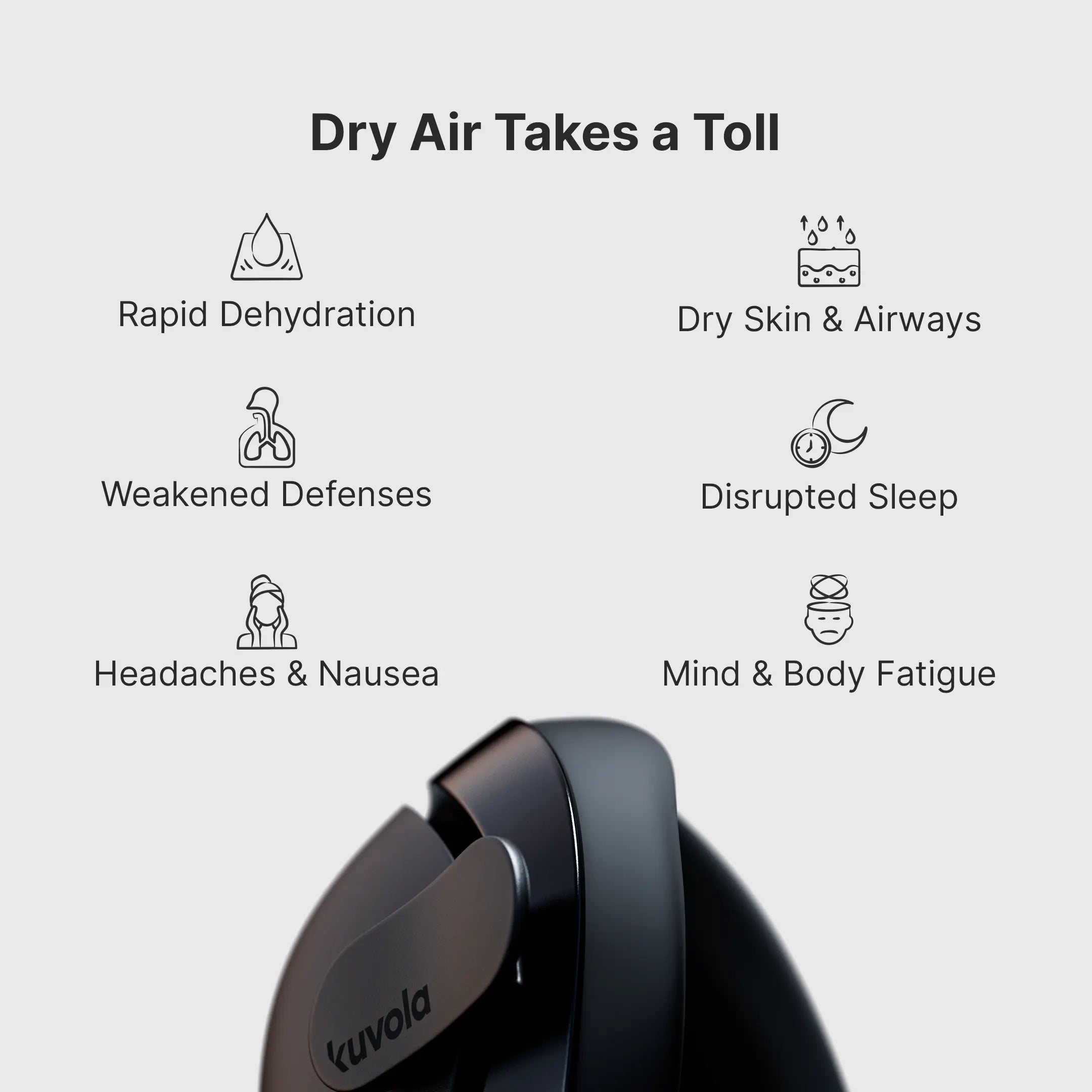
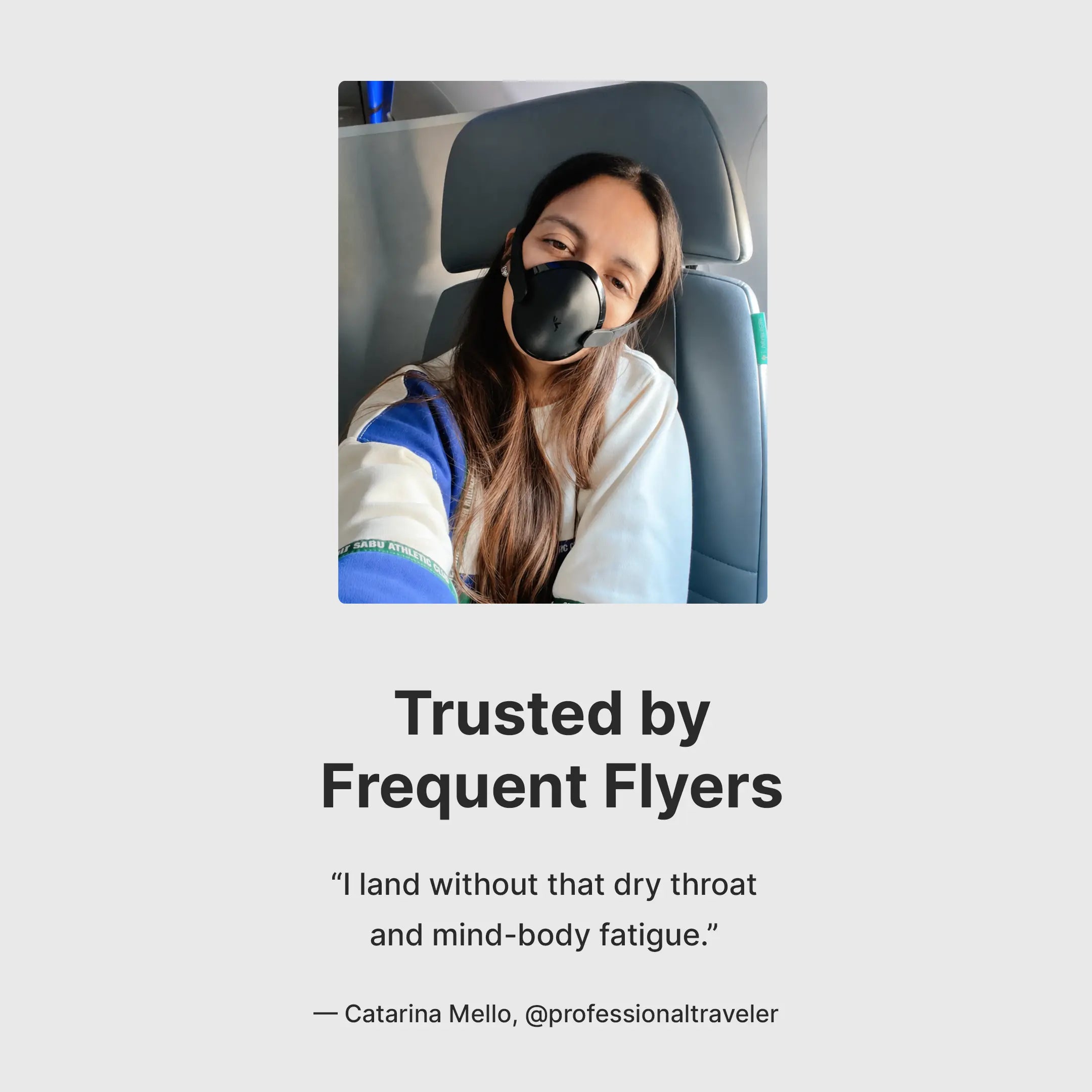
Frequent flyers spend hours in airplane cabins where humidity sits between 5–12%. Every breath at altitude pulls moisture from throat, nose, and vocal folds. For a singer flying to a gig, or a presenter heading into a day of talks, the timing is terrible.
How to pick the right one
The right choice depends on where you need the humidity.
For your home or studio: A cool mist room humidifier works well for overnight use or long practice sessions. Get one with a built-in hygrometer so you can keep the room at 40–50%. Clean it regularly — standing water in a humidifier tank grows mold and bacteria, which creates a different set of airway problems entirely.
For pre-performance prep: A personal steam inhaler delivers targeted hydration in 10–15 minutes. The MyPurMist and Vicks Personal Steam Inhaler are both popular with vocal professionals. Use distilled water. Keep the temperature moderate — steam that's too hot causes thermal irritation, which defeats the purpose.
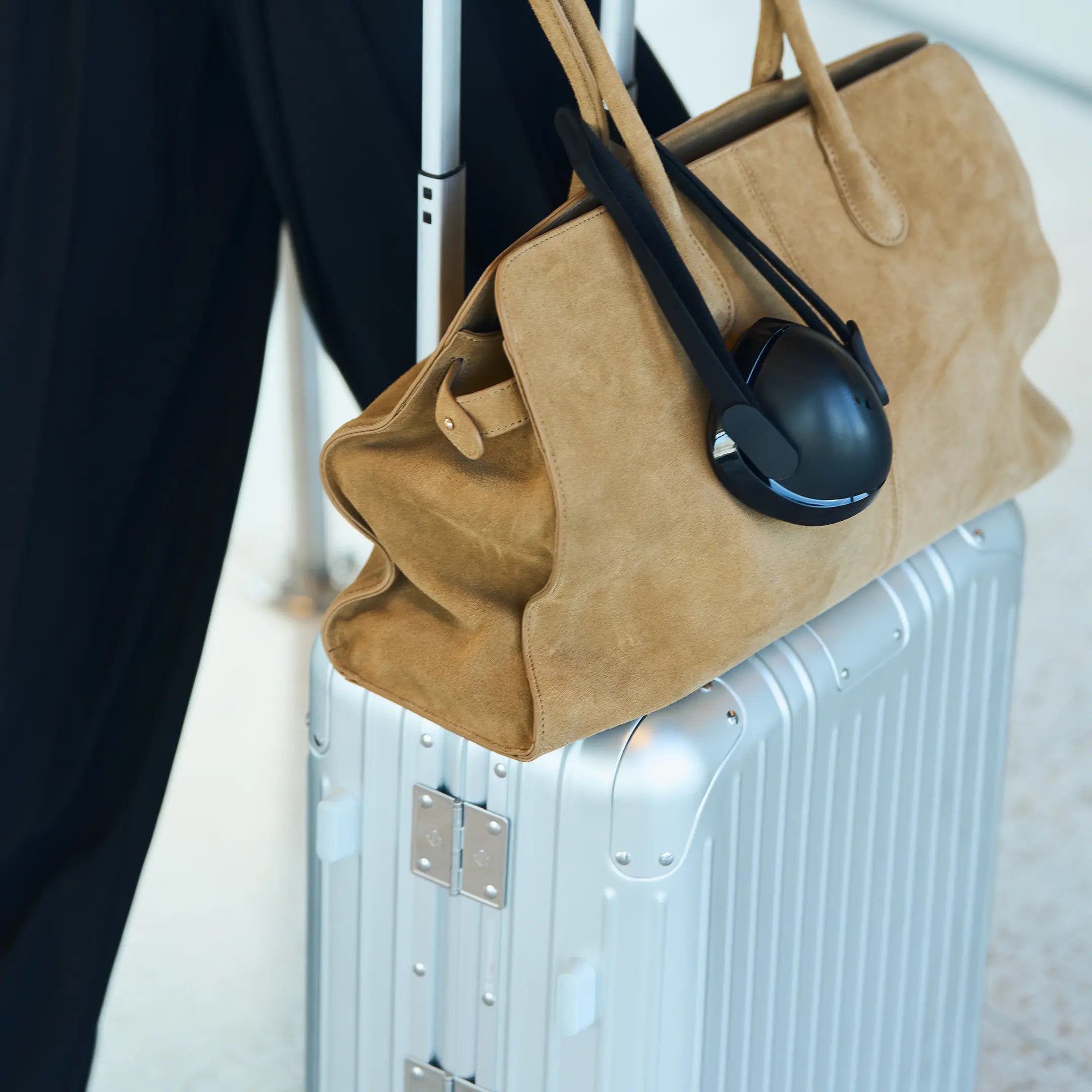
For travel: Here's where things get harder. Room humidifiers are bulky. Personal steamers need water and a power outlet. And the environment where your voice takes the biggest beating — the airplane cabin — is the one place where traditional humidifiers can't follow.
Cabin air runs at 5–12% humidity. You're sitting there for hours, breathing air that strips moisture from your airway surfaces with every breath. Water from the drink cart helps systemically, but the research is clear: it doesn't address the surface drying where vocal fold function is affected.
Taking vocal hydration on a plane
Kuvola was built for this specific gap.
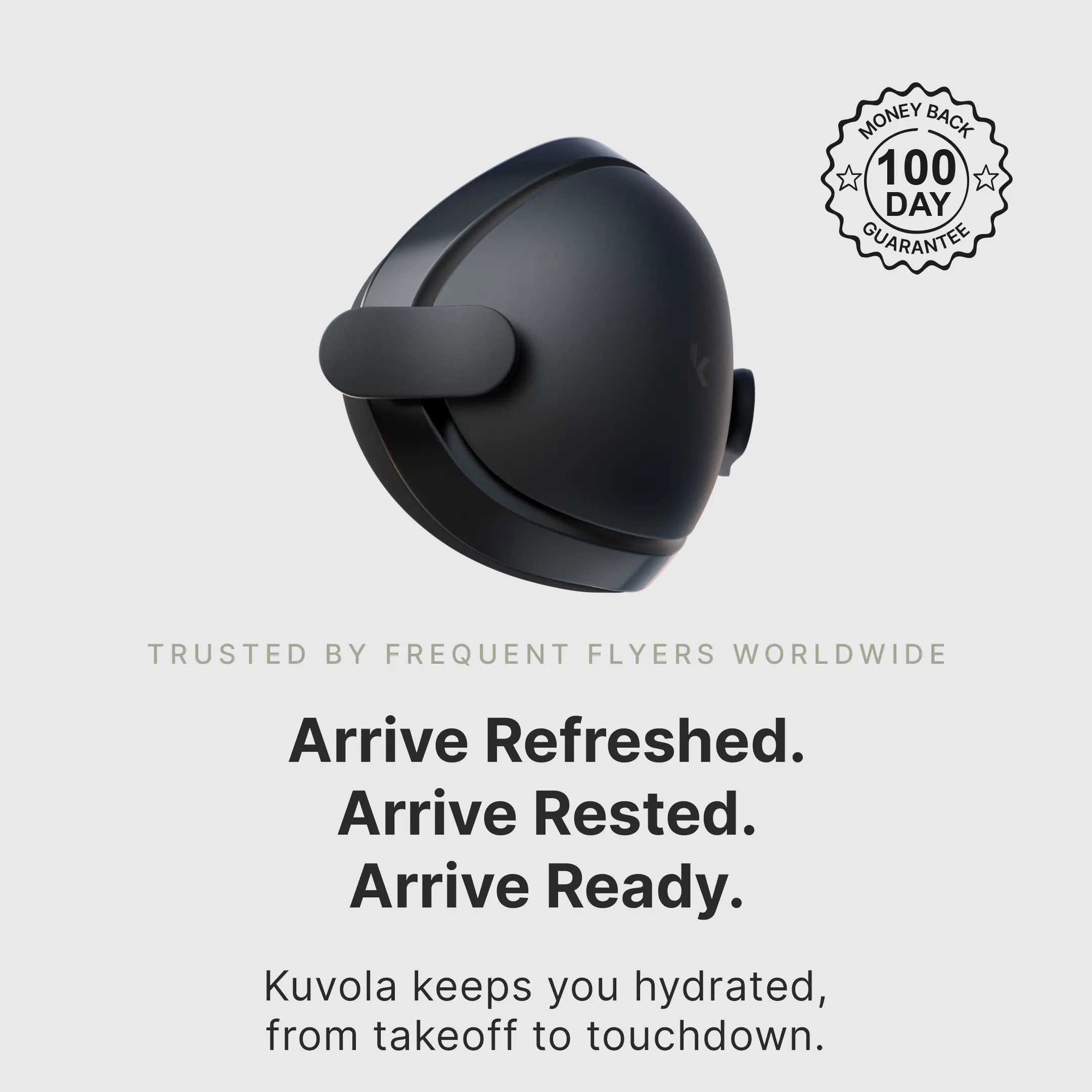
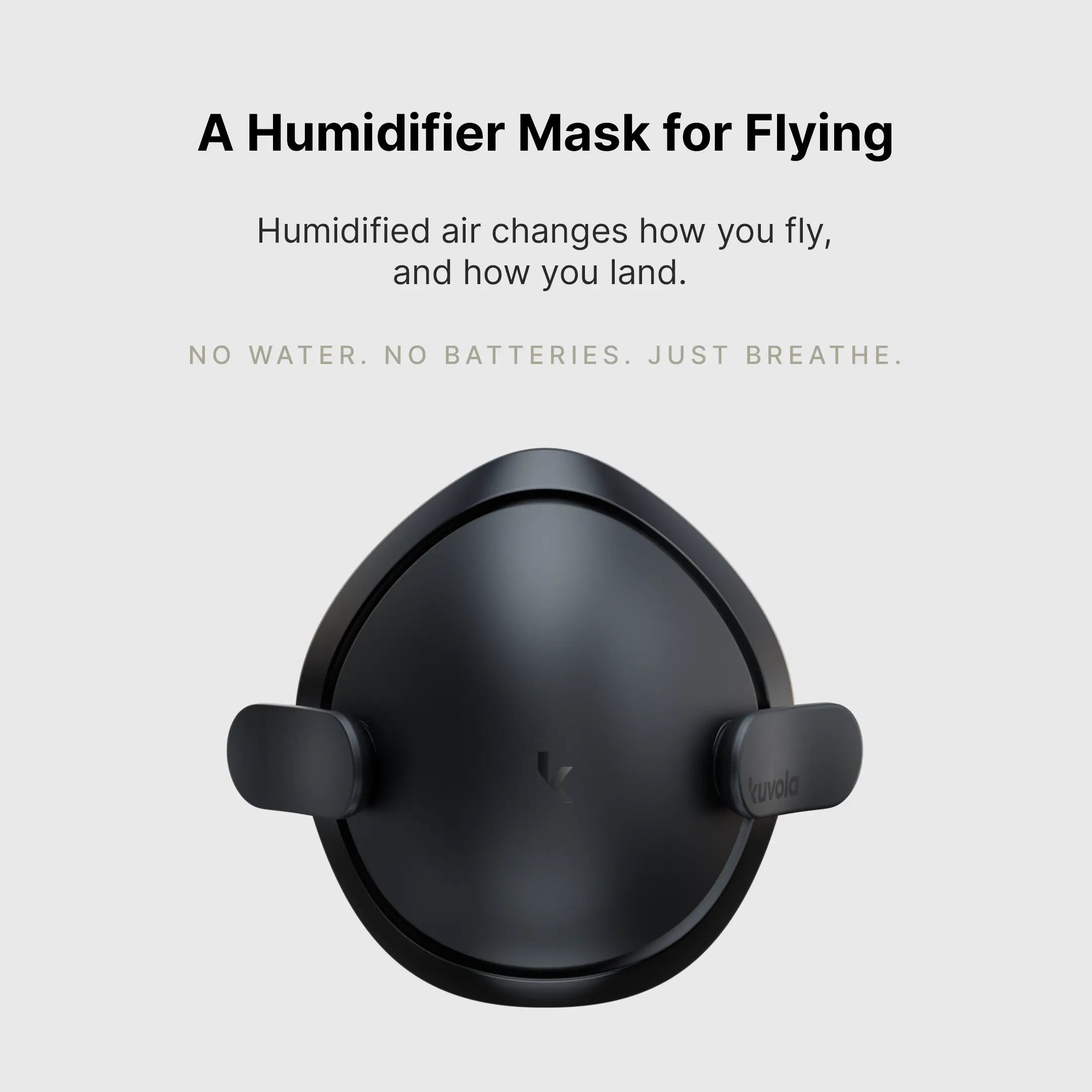
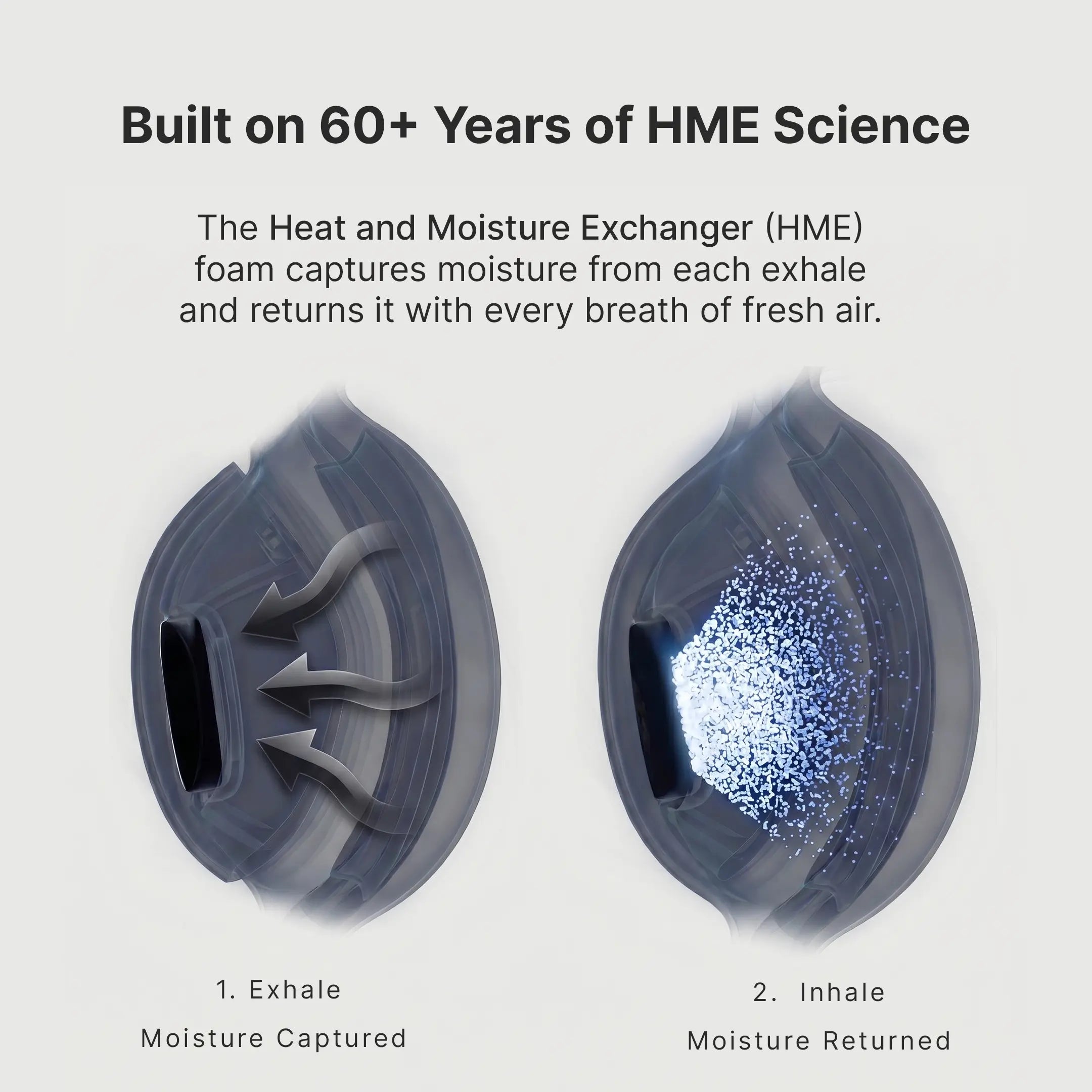
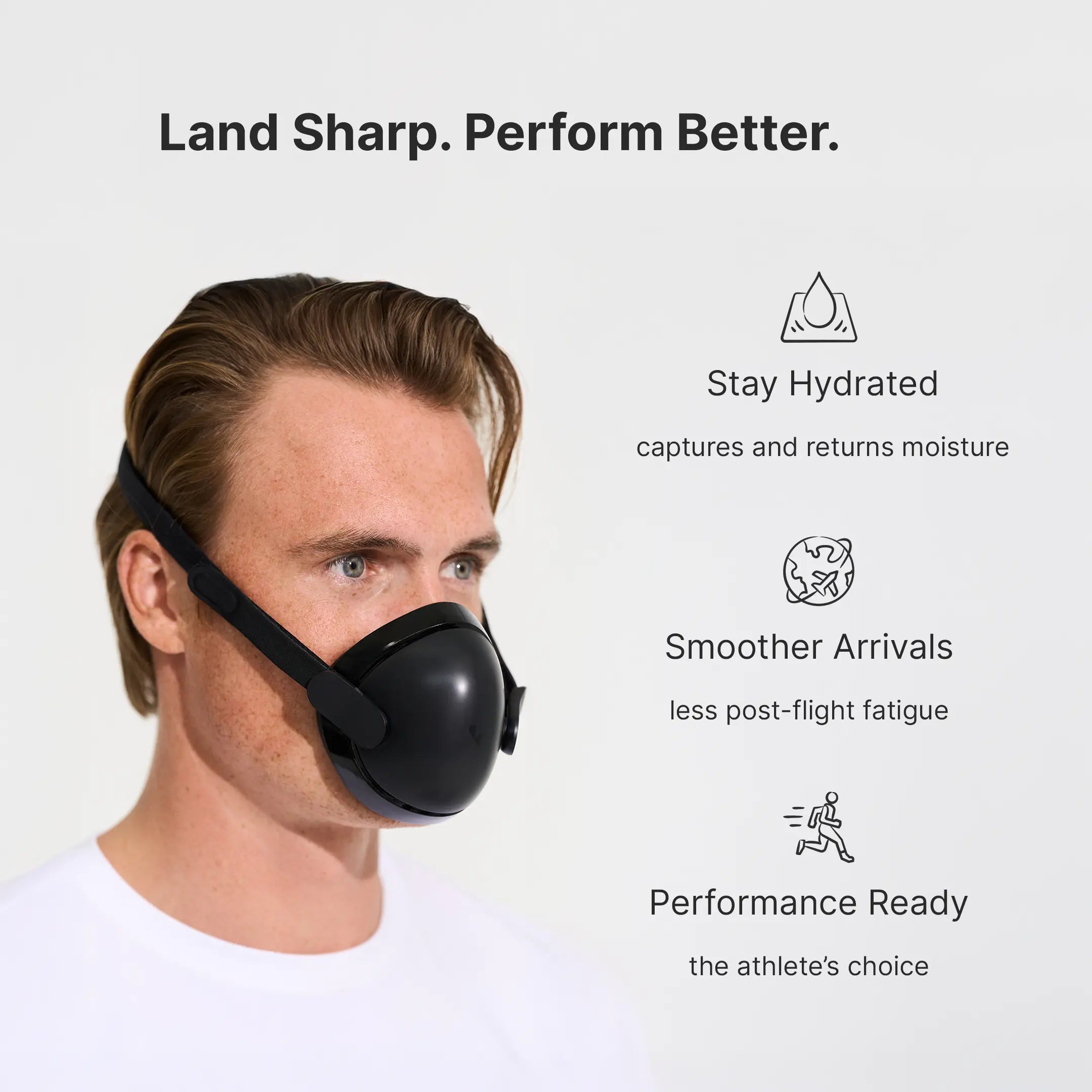
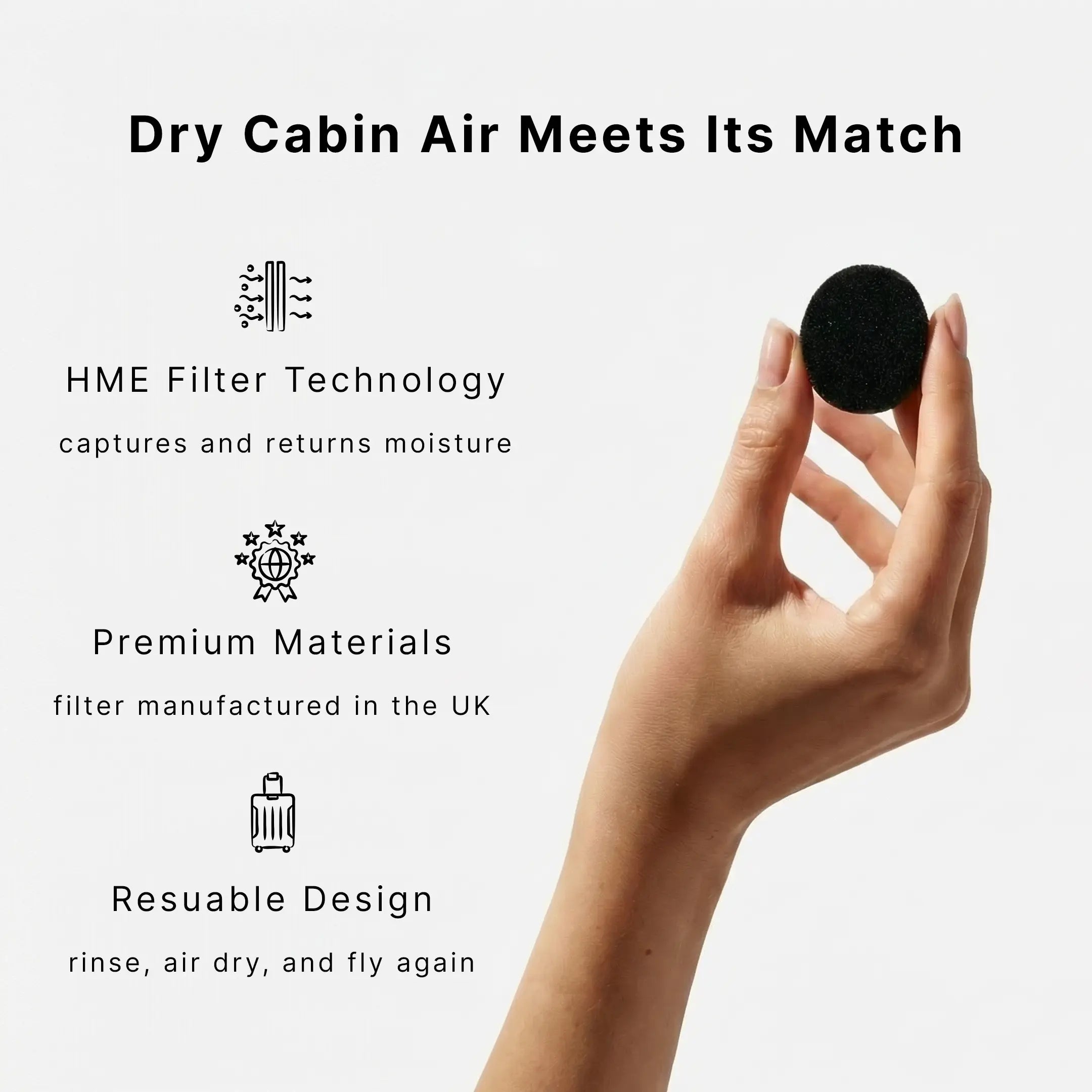
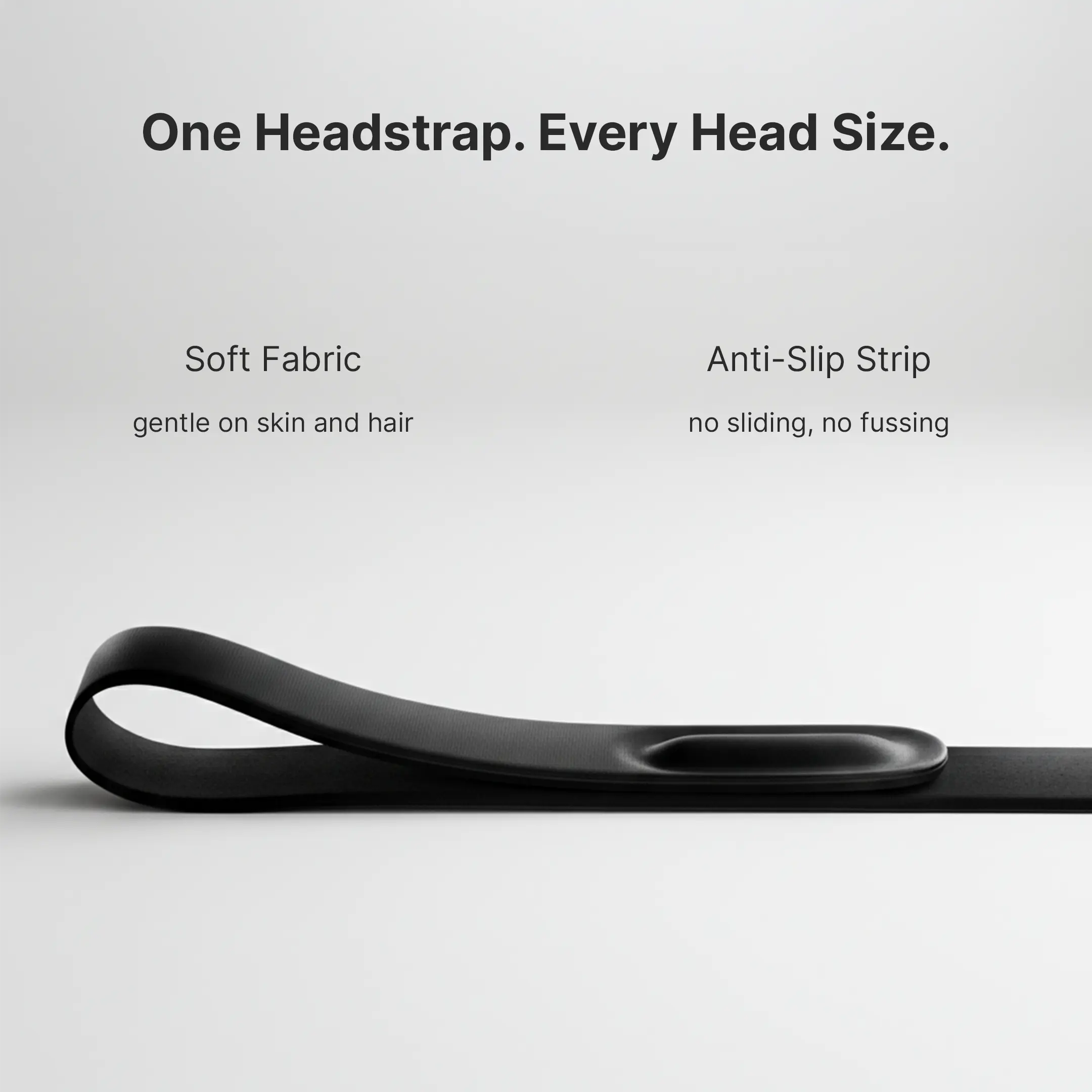
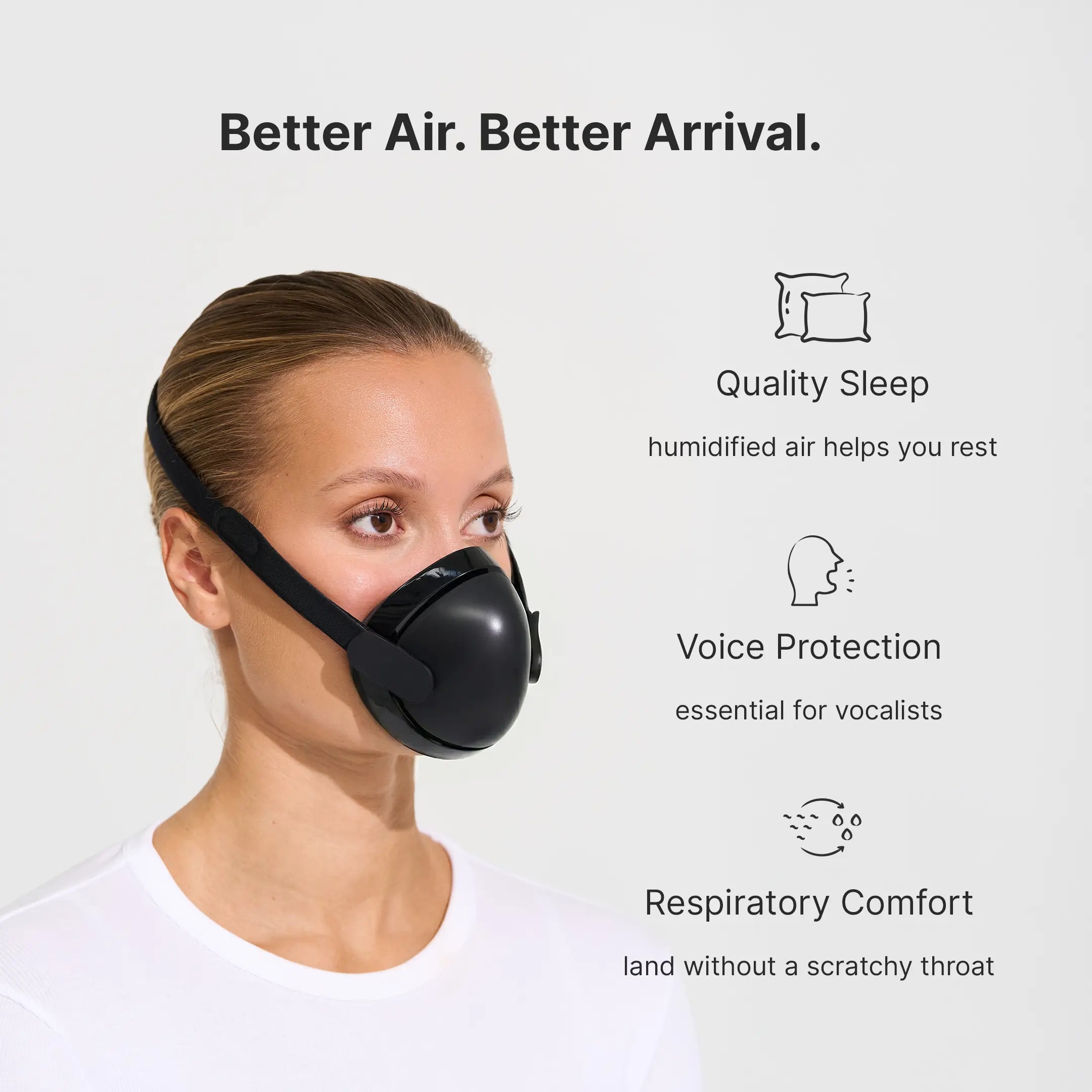
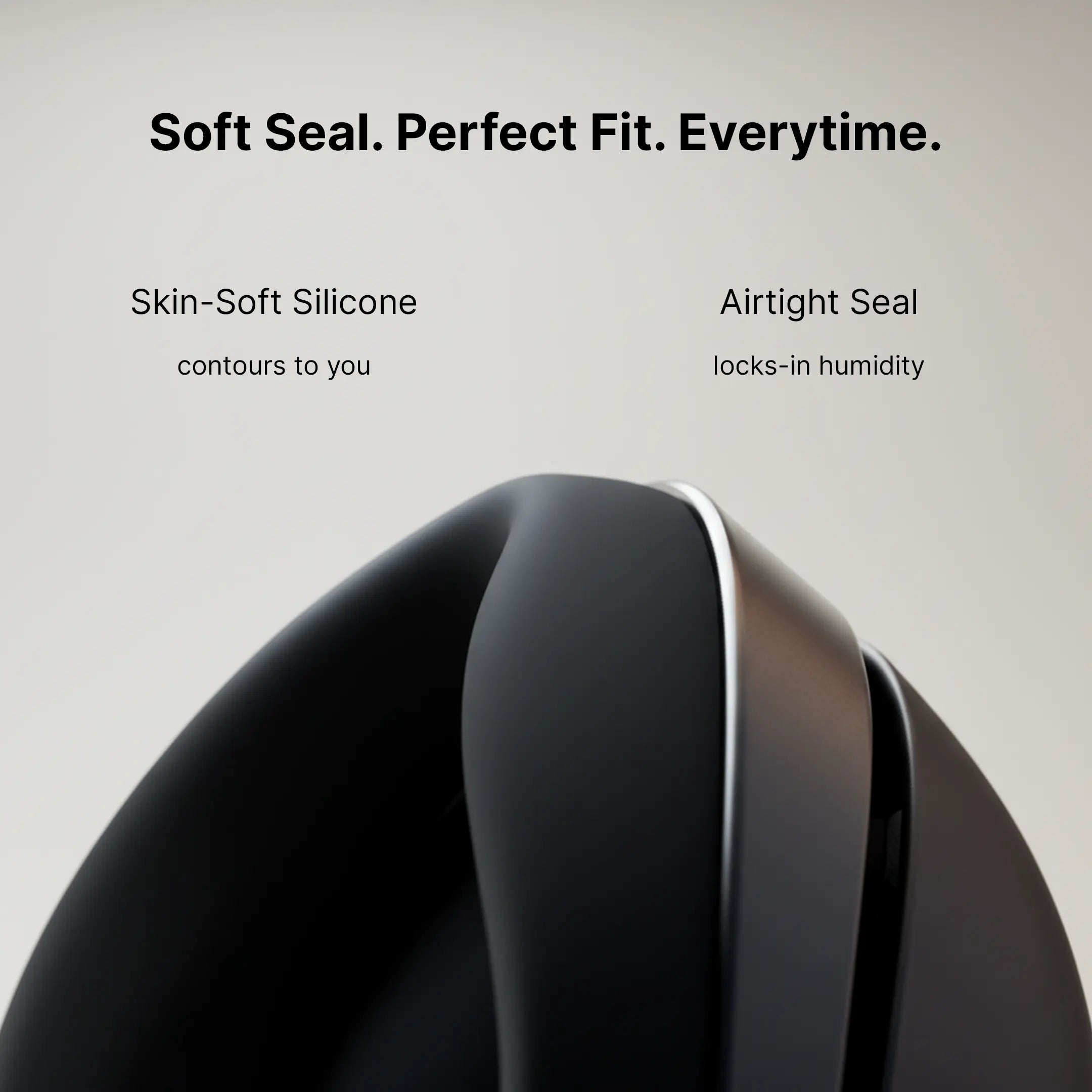
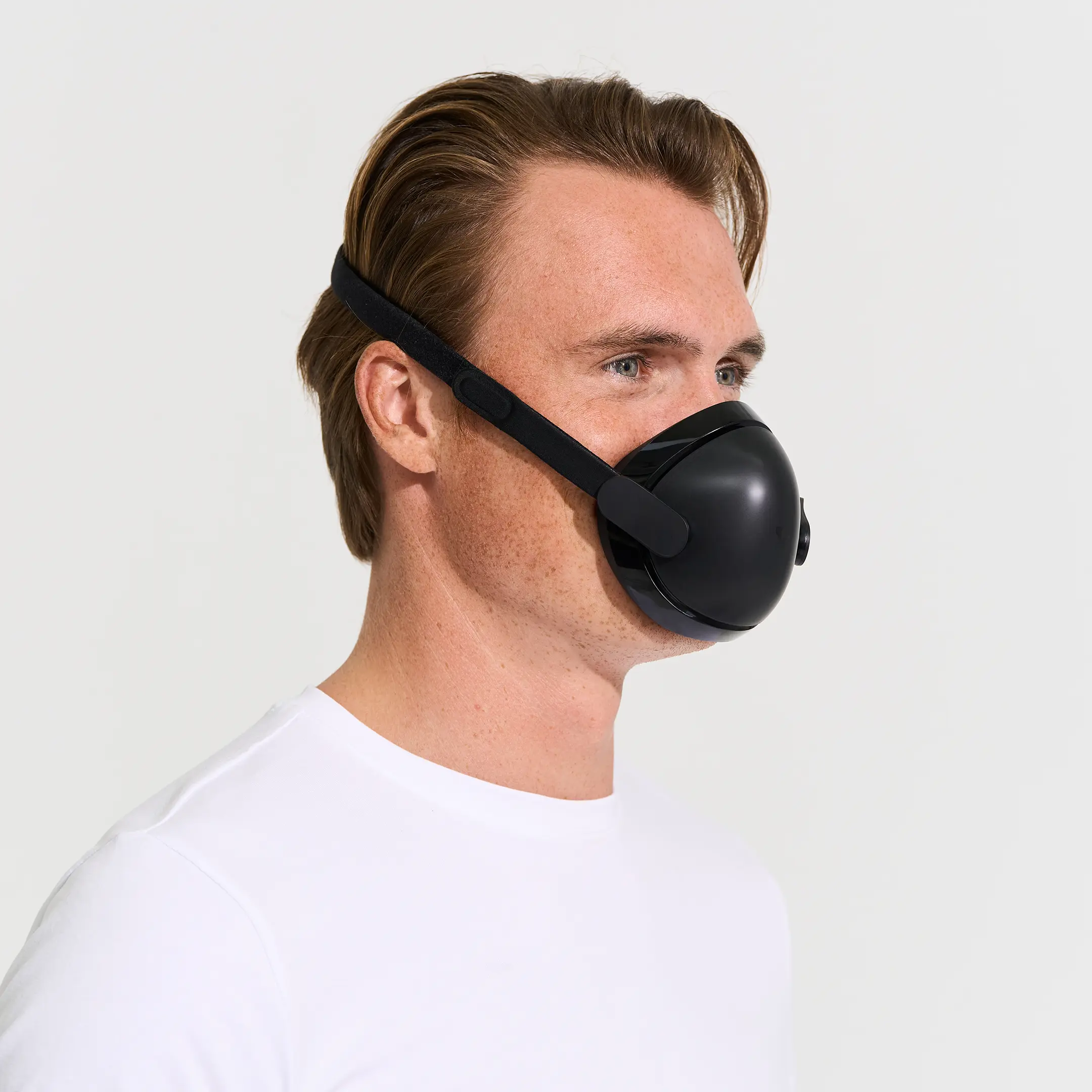
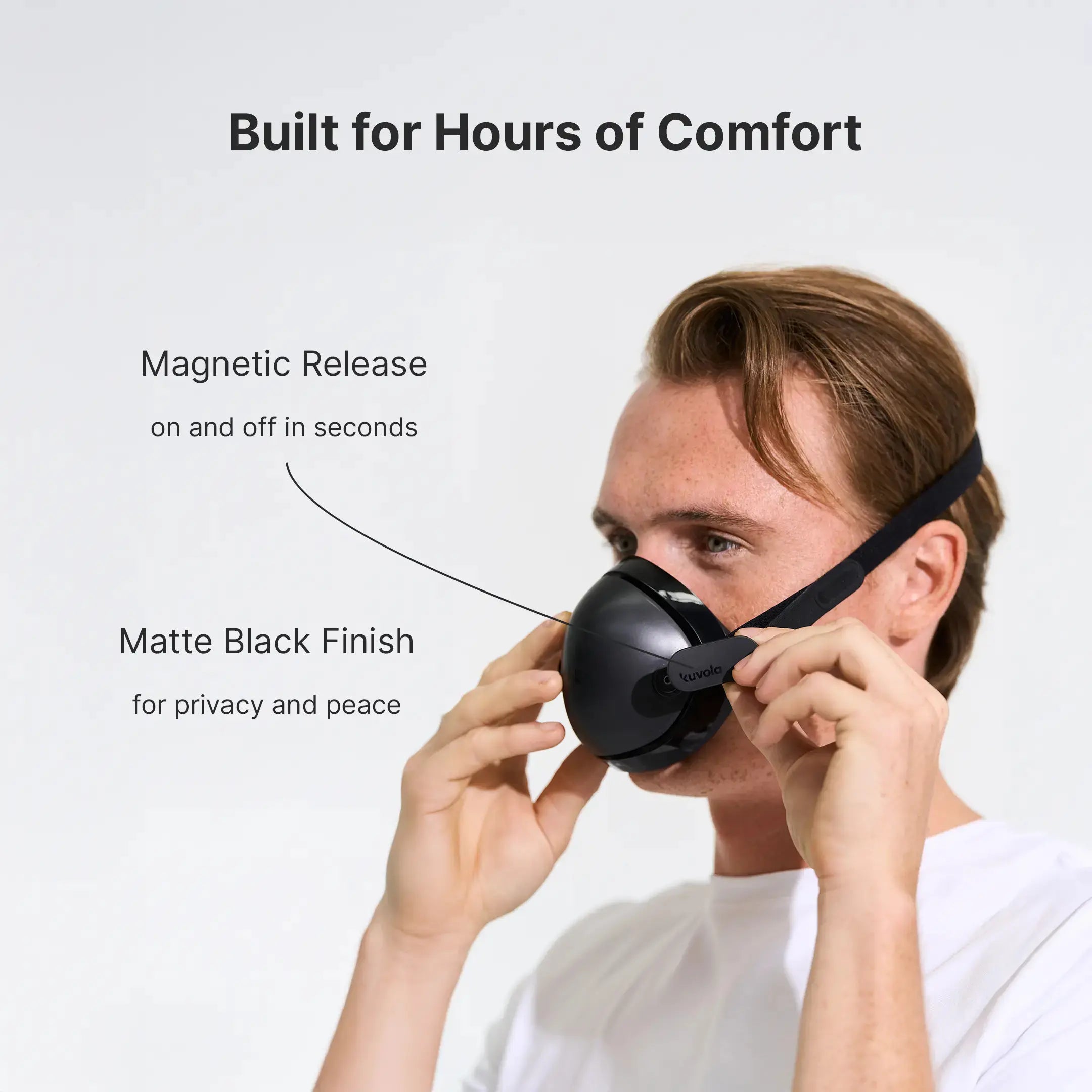
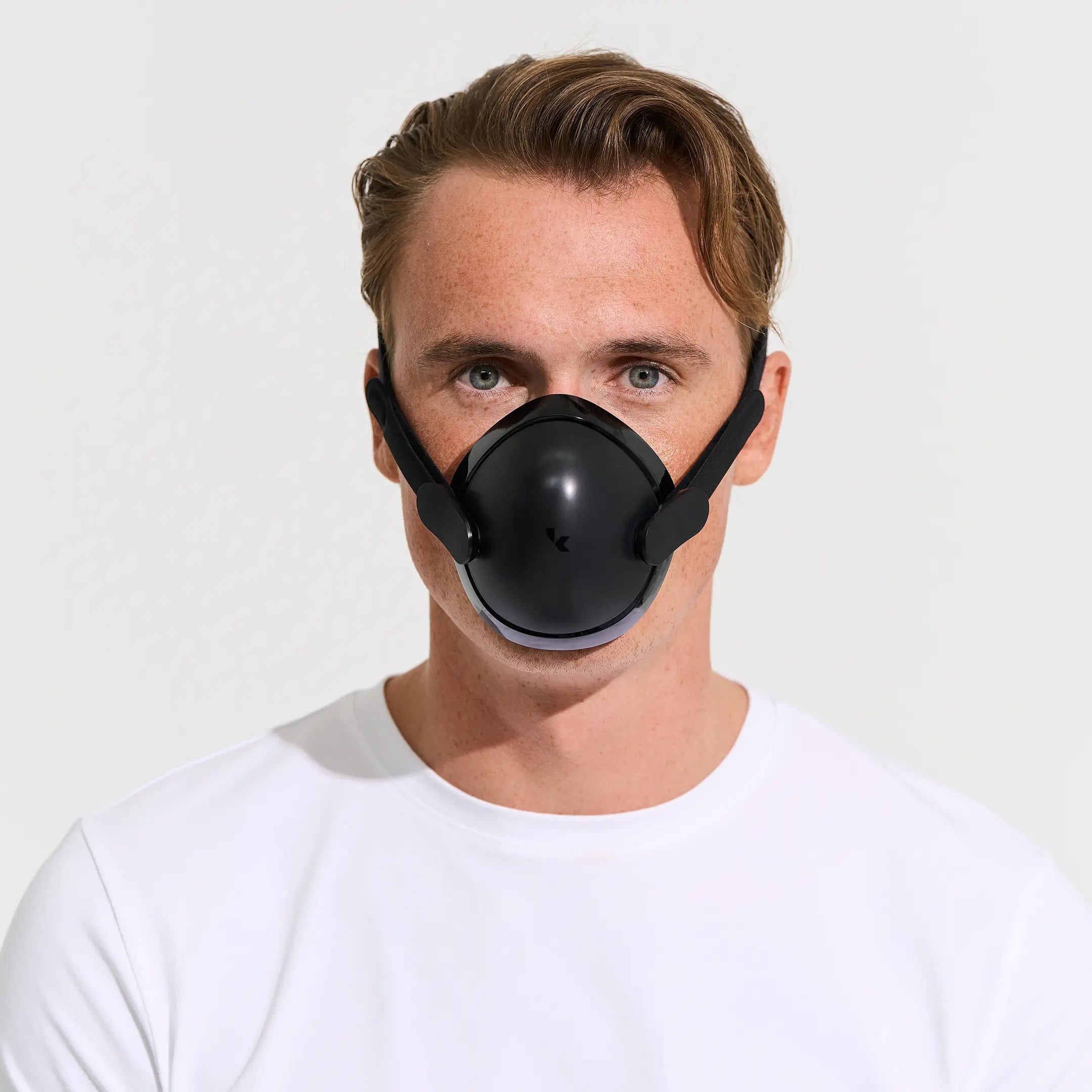
It's a humidifier mask designed for air travel. Inside is a heat and moisture exchange (HME) filter — the same class of technology used in hospital respiratory care — that captures moisture from your exhaled breath and returns it to the fresh air you inhale. No water tanks, no batteries, no electronics.
For anyone who depends on their voice, the logic tracks with the research: surface hydration protects vocal fold function, drinking water alone doesn't deliver it at the airway level, and a room humidifier can't come into the cabin with you. Kuvola works passively while you rest, so you land with your airways in better condition than if you'd left them to the cabin air.
It doesn't replace your home humidifier or your pre-show steaming routine. It covers the gap those tools can't reach — the hours in dry cabin air between takeoff and landing.
Bottom line
Surface hydration and systemic hydration are two different things. The research is consistent: the moisture layer on your vocal folds dries out from the air you breathe, and humidified air is the most direct way to protect it.
If you already own a room humidifier and a steamer, you're covering two out of three environments — home and venue. The third one, air travel, is still the gap most voice professionals leave open.
Sources:
- Sivasankar, M. & Fisher, K.V. (2002). Oral airway drying and phonation threshold pressure in healthy speakers. Journal of Voice, 16(2), 172–181.
- Erickson-Levendoski, E., Sundarrajan, A., & Sivasankar, M. (2014). Reducing the negative vocal effects of superficial laryngeal dehydration with humidification. Annals of Otology, Rhinology & Laryngology, 123(9), 631–636.
- Salah, B., et al. (1988). Nasal mucociliary transport in healthy subjects is slower when breathing dry air. European Respiratory Journal, 1(9), 852–855.
- Auris Nasus Larynx (2012). Effects of systemic hydration on nasal airway function after dry air exposure.