Warum trocknet Klimaanlage den Hals aus? Die Wissenschaft dahinter (und was wirklich hilft)
Sie wachen in einem Hotelzimmer mit kratzendem Hals auf. Oder Sie verbringen acht Stunden im Büro und Ihre Stimme ist um 17 Uhr weg. Oder Sie steigen nach einem langen Flug aus und fühlen sich, als hätten Sie Watte gekaut.
Der gemeinsame Nenner ist die Klimaanlage.
Die meisten Menschen schieben es auf „trockene Luft“ und belassen es dabei. Aber es gibt eine spezifische Kette von Ereignissen, die in Ihrem Körper jedes Mal abläuft, wenn Sie klimatisierte Luft atmen. Das Verständnis dessen verändert die Art und Weise, wie Sie über das Problem denken.
Wie Klimaanlagen der Luft Feuchtigkeit entziehen
Klimaanlagen kühlen nicht nur die Luft. Sie entfeuchten sie auch.
Wenn warme Luft über die Verdampferschlangen des Klimageräts strömt, fällt sie unter ihren Taupunkt. Wasserdampf kondensiert an den Schlangen und fließt ab. Die Luft, die auf der anderen Seite herauskommt, ist kühler, aber auch deutlich trockener.
Das Ergebnis: Die Luftfeuchtigkeit in klimatisierten Räumen kann auf 30 % oder weniger sinken. In Flugzeugkabinen sinkt sie auf 5-12 %.
Die EPA und ASHRAE empfehlen eine Raumluftfeuchtigkeit zwischen 40-60 % für den Komfort und die Gesundheit der Atemwege. Unter 40 % beginnen die Probleme.

Was bei geringer Luftfeuchtigkeit mit Ihren Atemwegen passiert
Ihre Atemwege sind mit einer dünnen Flüssigkeitsschicht ausgekleidet, der sogenannten Airway Surface Liquid (ASL). Sie erfüllt zwei Funktionen: Sie hält Ihr Gewebe feucht und unterstützt die mukoziliäre Clearance – den Prozess, bei dem winzige haarähnliche Strukturen, die Zilien, Schleim, Partikel und Krankheitserreger aus Ihren Lungen nach oben und nach außen befördern.
Wenn Sie trockene Luft atmen, verdunstet diese Flüssigkeitsschicht.
Eine Studie von Salah et al. aus dem Jahr 1988, veröffentlicht im European Respiratory Journal, ergab, dass sich die mukoziliäre Clearance nach nur 30 Minuten Trockenatmung um etwa die Hälfte verlangsamte. Dreißig Minuten. Das ist ein Meeting. Ein Arbeitsweg. Die Zeit, die man braucht, um in ein Flugzeug einzusteigen.
Eine Studie der Johns Hopkins University aus dem Jahr 2025, veröffentlicht in Communications Earth & Environment, ging noch weiter. Forscher setzten menschliche Tracheal-Bronchialzellen Luft mit verschiedenen Feuchtigkeitsgraden (95 %, 60 % und 30 % relative Luftfeuchtigkeit) aus. Bei 30 % verdünnte sich die Schleimschicht signifikant, und die Zellen begannen, entzündliche Marker freizusetzen – TNF-α, IL-33 und IL-6. Trockene Luft trocknete nicht nur die Atemwege aus. Sie löste eine Immunantwort aus.
Das trockene Gefühl im Hals ist ein echtes physiologisches Ereignis
Das kratzige, raue Gefühl im Rachen ist nicht nur Unbehagen. Es ist Ihre Schleimhaut, die schneller Feuchtigkeit verliert, als Ihr Körper sie ersetzen kann.
Und hier ist der Teil, den die meisten Menschen übersehen: Wassertrinken hydriert Ihre Atemwegsoberflächen nicht direkt. Eine 2012 in Auris Nasus Larynx veröffentlichte Studie ergab, dass orale Hydration die Funktion der Nasenschleimhaut unter trockenen Bedingungen nicht wiederherstellte. Die Feuchtigkeit auf Ihren Atemwegsoberflächen kommt aus Ihrem Gewebe, nicht aus Ihrem Magen. Wassertrinken ersetzt die gesamte Körperflüssigkeit, aber es bringt keine Feuchtigkeit auf die Oberfläche Ihres Rachens oder Ihrer Nasengänge innerhalb eines nützlichen Zeitraums zurück.
Deshalb können Sie den ganzen Tag in einem klimatisierten Büro Wasser trinken und haben am Nachmittag immer noch einen trockenen, gereizten Hals. Das Problem ist nicht die Hydration. Es ist die Luft.

Es geht über das Unbehagen hinaus
Trockene Atemwege sind nicht nur lästig. Sie machen Sie anfälliger.
Eine Studie von Kudo et al. aus dem Jahr 2019, veröffentlicht in den Proceedings of the National Academy of Sciences (PNAS), setzte Mäuse in Umgebungen mit geringer Luftfeuchtigkeit dem Influenzavirus aus. Die Mäuse in trockener Luft zeigten eine beeinträchtigte mukoziliäre Clearance, geschwächte antivirale Abwehrmechanismen und eine reduzierte Gewebereparatur im Vergleich zu Mäusen in normaler Luftfeuchtigkeit. Sie wurden kränker, schneller.
Eine Übersicht von Wolkoff aus dem Jahr 2018 im International Journal of Hygiene and Environmental Health untersuchte die breitere Evidenz. Das Fazit: Geringe Raumluftfeuchtigkeit ist mit Augenreizungen, Atemwegssymptomen, erhöhter Virusüberlebensrate in der Luft und höheren Raten von Atemwegsinfektionen und Arbeitsausfällen verbunden.
Eine Übersicht aus dem Jahr 2023 in derselben Zeitschrift bestätigte dies und stellte fest, dass die Befeuchtung der Raumluft auf 40-60 % akute Symptome, Arbeitsproduktivität und Infektionsresistenz sowohl bei Influenza als auch bei COVID-19 verbesserte.
Die Quintessenz ist schwer zu übersehen. Wenn die Luftfeuchtigkeit unter 40 % fällt, beginnen die Abwehrsysteme Ihrer Atemwege zusammenzubrechen.
Flugzeugkabinen sind die schlimmste Version davon
Wenn klimatisierte Büros schlecht sind, sind Flugzeugkabinen eine andere Kategorie.
Die Kabinenfeuchtigkeit in Reiseflughöhe liegt zwischen 5-12 %. Eine in Building and Environment veröffentlichte Studie dokumentierte die spezifischen Symptome: Mund- und Lippentrockenheit (26 % der Passagiere), verstopfte Nase (18,9 %), Halsschmerzen (7 %) und Husten (10,8 %).
Eine Studie mit 3.630 Flugpassagieren ergab, dass eine trockene, verstopfte Nase die am häufigsten gemeldete Beschwerde war. Nicht Turbulenzen. Nicht die Beinfreiheit. Trockene Luft.

Im Gegensatz zu einem Büro können Sie nicht einfach nach draußen gehen. Ein Langstreckenflug schließt Sie 8, 10, 15 Stunden lang in dieser Umgebung ein. Ihre Atemwegsoberflächen verlieren die ganze Zeit Feuchtigkeit, und es gibt keinen Ausweg.
Dies ist besonders wichtig für Menschen, die auf ihre Stimme angewiesen sind. Eine Untersuchung von Sivasankar und Fisher (2002) zeigte, dass bereits 15 Minuten Mundatmung unter trockenen Bedingungen den Phonationsschwellendruck – die minimale Anstrengung, die zur Stimmbildung erforderlich ist – messbar erhöhten. Befeuchtete Luft kehrte den Effekt um. Tanner et al. (2014) bestätigten dies.
Wenn Sie singen, auftreten, schauspielern oder beruflich sprechen, ist trockene Kabinenluft nicht nur unangenehm. Sie ist ein Berufsrisiko.
Was tatsächlich hilft (und was nicht)
Wassertrinken hilft Ihrem Körper, aber nicht direkt Ihren Atemwegsoberflächen. Bleiben Sie hydriert. Erwarten Sie aber nicht, dass Wasser allein das Problem des trockenen Halses löst. Orale Hydratation und Hydratation der Atemwegsoberflächen sind getrennte Mechanismen (wieder diese Studie aus dem Jahr 2012 in Auris Nasus Larynx).
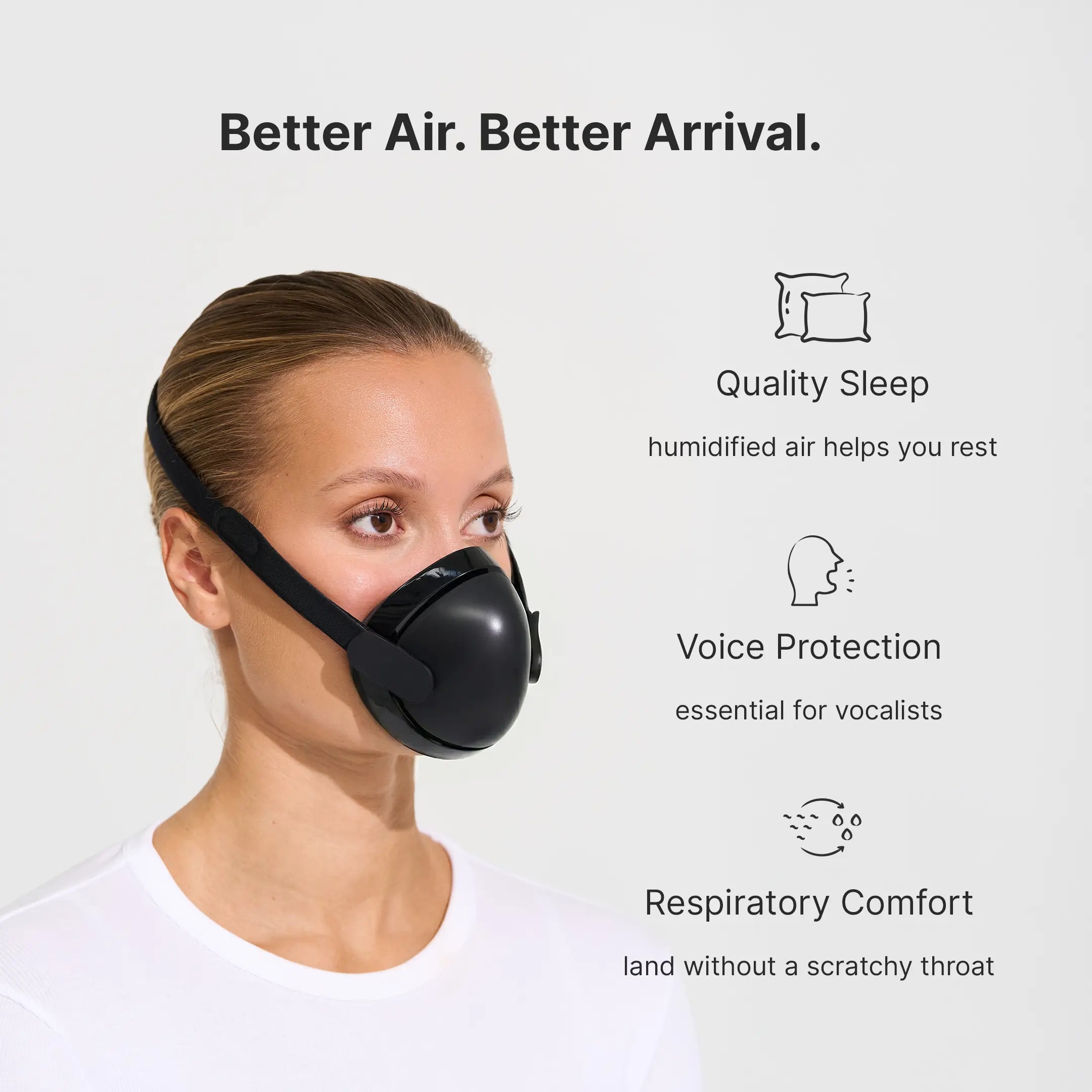
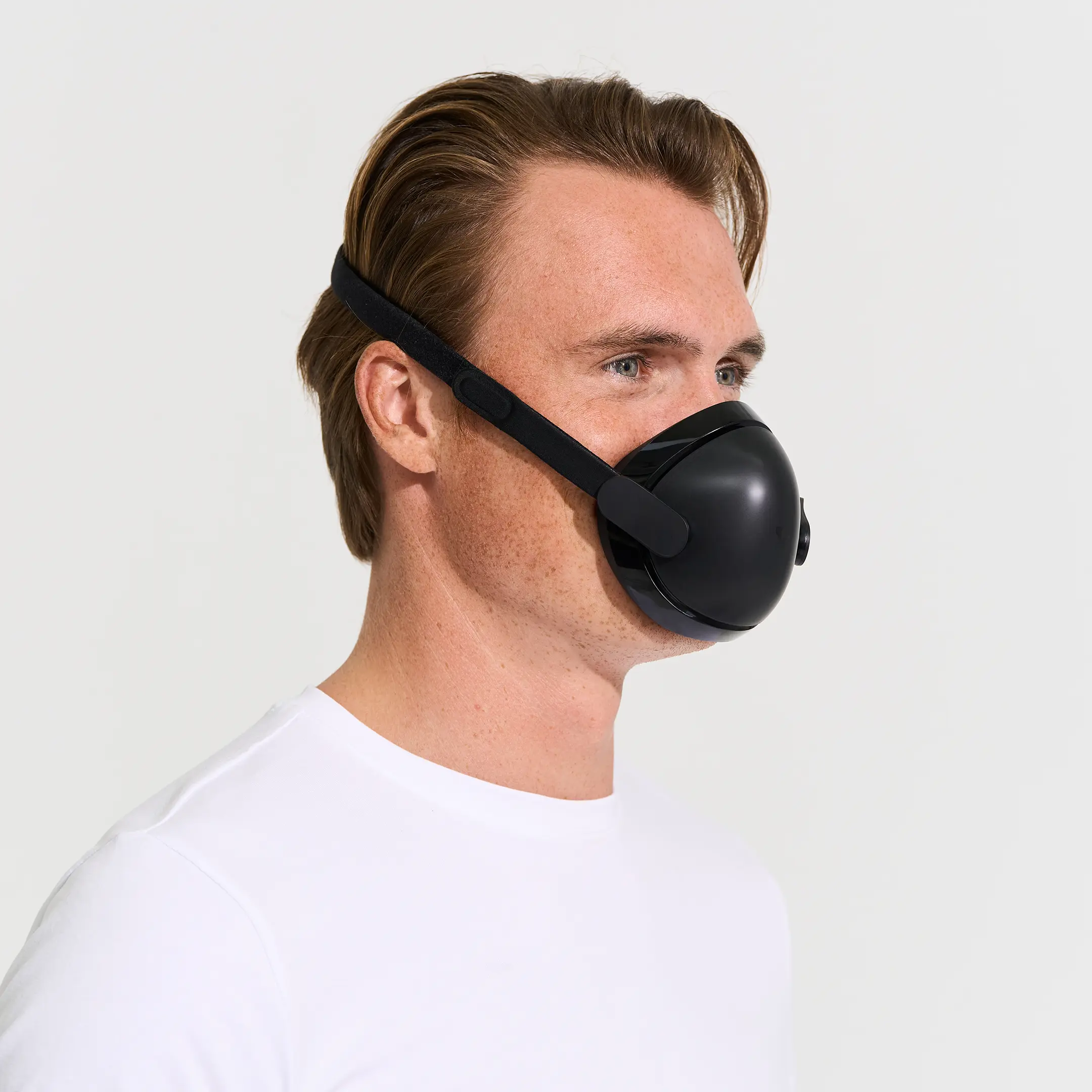
Befeuchtete Luft atmen funktioniert. Dies ist die einzige Intervention, die in allen Studien durchweg Ergebnisse zeigt. Ein Raumbefeuchter in Ihrem Schlafzimmer, ein tragbarer Luftbefeuchter auf Reisen – alles, was der Atemluft Feuchtigkeit zuführt, bekämpft die Ursache.
Eine Meta-Analyse von neun randomisierten kontrollierten Studien aus dem Jahr 2023, veröffentlicht in Sleep and Breathing, ergab, dass befeuchtete Luft Symptome von trockener Nase, trockenem Mund und trockenem Hals im Vergleich zu nicht befeuchteter Luft reduzierte.

Atmen Sie durch die Nase, nicht durch den Mund. Ihre Nasengänge wärmen und befeuchten die Luft, bevor sie Ihren Hals und Ihre Lunge erreicht. Mundatmung umgeht dieses System vollständig. Deshalb wachen Menschen, die mit offenem Mund in klimatisierten Räumen schlafen, mit den schlimmsten Symptomen auf.
Drehen Sie die Klimaanlage um ein oder zwei Grad hoch. Eine Klimaanlage, die bei moderaten Temperaturen läuft, entzieht weniger Feuchtigkeit. Wenn Sie das Thermostat steuern, bewahrt eine etwas wärmere Einstellung mehr Feuchtigkeit im Raum.
Was ist also das Fazit?
Klimaanlagen trocknen Ihren Hals aus, weil sie der Luft Feuchtigkeit entziehen, und Ihr Atemtrakt kann seine schützende Flüssigkeitsschicht nicht aufrechterhalten, wenn die Luftfeuchtigkeit unter 40 % fällt. Diese Trockenheit beeinträchtigt die mukoziliäre Clearance, löst Entzündungen aus und macht Sie anfälliger für Reizungen und Infektionen.
Wassertrinken ist notwendig, aber nicht ausreichend. Die Lösung muss dort ansetzen, wo das Problem beginnt: in der Luft selbst.
Egal, ob Sie sich in einem klimatisierten Schlafzimmer, einem klimatisierten Büro oder einer Flugzeugkabine mit 5-12 % Luftfeuchtigkeit befinden, die physikalischen Gesetze ändern sich nicht. Trockene Luft entzieht Ihren Atemwegsoberflächen Feuchtigkeit. Ihr Körper kann sie nicht schnell genug ersetzen. Und ein Glas Wasser, egal wie viele Sie trinken, verkürzt diesen Prozess nicht.
Die Luft, die Sie atmen, braucht Feuchtigkeit. Hier beginnt und endet es.
In diesem Artikel zitierte Quellen:
- Salah, B., et al. (1988). "Nasal mucociliary transport in healthy subjects is slower when breathing dry air." European Respiratory Journal, 1(9), 852-855.
- Johns Hopkins University (2025). "Global warming risks dehydrating and inflaming human airways." Communications Earth & Environment. hopkinsmedicine.org
- Kudo, E., et al. (2019). "Low ambient humidity impairs barrier function and innate resistance against influenza infection." PNAS, 116(22), 10905-10910. pnas.org
- Wolkoff, P. (2018). "Indoor air humidity, air quality, and health — An overview." International Journal of Hygiene and Environmental Health, 221(3), 376-390.
- Norback, D., et al. (2013). "Air quality and relative humidity in commercial aircrafts." Building and Environment, 67, 83-91.
- Sivasankar, M. & Fisher, K.V. (2002). "Oral breathing increases Pth and vocal effort by superficial drying of vocal fold mucosa." Journal of Voice, 16(2), 172-181.
- Tanner, K., et al. (2014). "Phonation threshold pressure and vocal effort by superficial drying of vocal fold mucosa." Annals of Otology, Rhinology & Laryngology.
- Auris Nasus Larynx (2012). Study on oral hydration and nasal mucosal function in dry environments.
- Sleep and Breathing (2023). Meta-analysis of nine RCTs on humidified air and respiratory symptoms.
Dieser Artikel dient zu Informationszwecken. Es handelt sich nicht um eine regulierte Beratung. Wenn Sie anhaltende Atemwegsbeschwerden haben, konsultieren Sie einen Arzt.