Insensible Water Loss in Flugzeugen: Was trockene Kabinenluft wirklich mit Ihren Atemwegen macht
Sie kennen das Gefühl. Nach ein paar Stunden Flug fühlen sich Ihre Nase verstopft an, Ihr Hals kratzt und Ihre Lippen werden rissig. Sie greifen zur Wasserflasche. Trinken Sie mehr. Trinken Sie weiter. Und bis Sie landen, fühlen Sie sich immer noch ausgetrocknet.
Das liegt daran, dass das Problem nicht in Ihrem Magen liegt. Es liegt in Ihren Atemwegen.
Was Sie erleben, hat einen klinischen Namen: insensibler Wasserverlust. Er passiert mit jedem Atemzug, den Sie in der Höhe machen. Und die Wissenschaft ist überraschend klar, warum Ihre Wasserflasche ihn nicht beheben kann.
Was ist insensibler Wasserverlust?
Insensibler Wasserverlust ist das Wasser, das Ihr Körper verliert, ohne dass Sie es bemerken. Im Gegensatz zu Schweiß, den Sie sehen und fühlen können, geschieht der insensible Verlust passiv, über Ihre Haut und über Ihre Atemwege. Sie können ihn nicht kontrollieren. Sie können nicht fühlen, wie er passiert. Und unter bestimmten Bedingungen beschleunigt er sich.
An einem normalen Tag bei normaler Luftfeuchtigkeit verlieren allein Ihre Atemwege etwa 400 ml Wasser. Das entspricht ungefähr dem Inhalt einer kleinen Flasche. Dies kommt von der Auskleidung Ihrer Atemwege, die feucht bleiben muss, um richtig zu funktionieren. Jedes Mal, wenn Sie ausatmen, trifft warme, feuchte Luft aus Ihren Lungen auf kühlere, trockenere Luft außerhalb Ihres Körpers, und ein Teil dieser Feuchtigkeit entweicht.
Je trockener die Luft ist, die Sie atmen, desto mehr Feuchtigkeit entzieht jeder Atemzug den Oberflächen Ihrer Atemwege.
Quelle: Insensible Fluid Loss, StatPearls, National Library of Medicine (NCBI Bookshelf)
Was Flugzeugkabinen anders macht
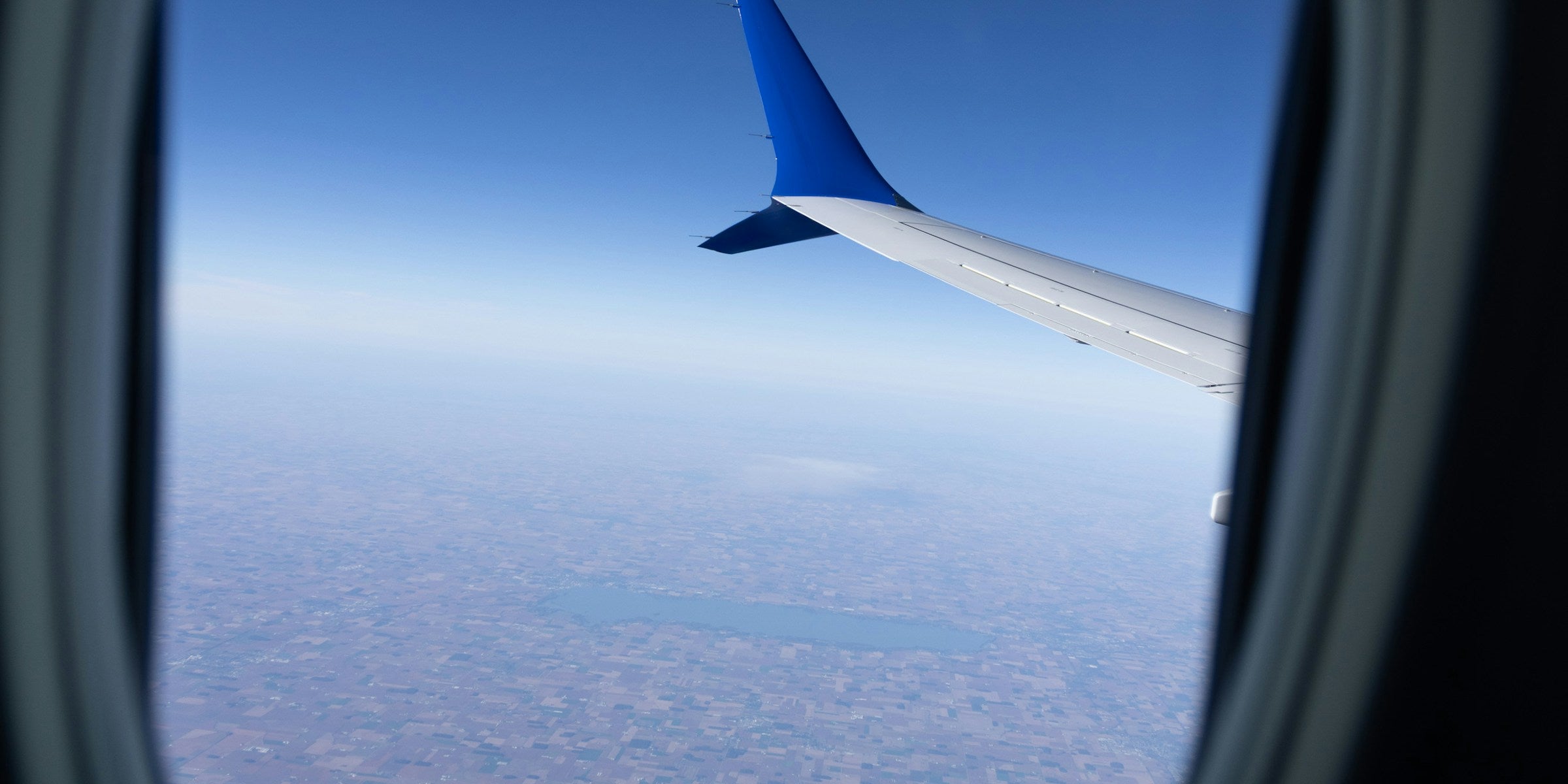
In Reiseflughöhe kommt die Luft, die in die Kabine gelangt, von außerhalb des Flugzeugs, wo die Temperaturen bei etwa -60 °C liegen und es fast keine Feuchtigkeit gibt. Selbst nachdem das Klimatisierungssystem sie erwärmt hat, liegt die Kabinenfeuchtigkeit zwischen 5 und 12 %. Ein typisches Büro oder Zuhause liegt bei 40–50 %.
Das ist ein großer Unterschied. Und Ihre Atemwege spüren es sofort.
Eine Umfrage unter 3.630 Flugpassagieren ergab, dass eine trockene oder verstopfte Nase zu den häufigsten Beschwerden während des Fluges gehörte und sich auf längeren Strecken verschlimmerte. Die Forscher stellten fest, dass Sitzkomfort, Luftruhe und Luftqualität die wichtigsten Faktoren waren, die den Passagieren wichtig waren.
Quelle: Passenger Comfort and the Effect of Air Quality, ASTM International (ASTM)

Atemwegs-Wasserverlust: Wohin die Feuchtigkeit tatsächlich geht
Die meisten Menschen gehen davon aus, dass die Feuchtigkeit, die sie auf Flügen verlieren, von irgendwo tief in ihrem Körper kommt. Das ist nicht der Fall. Sie stammt direkt von der Oberfläche ihrer Atemwege: Nasengänge, Rachen, obere Atemwege.
Dies ist der respiratorische Wasserverlust und der Hauptweg für den insensiblen Wasserverlust in Flugzeugen.
Ihre Atemwege sind mit einer dünnen Schleimschicht ausgekleidet, die Partikel einfängt und das Austrocknen des Gewebes verhindert. Winzige haarähnliche Strukturen, Zilien genannt, fegen diesen Schleim entlang und reinigen alles, was Sie eingeatmet haben. Dieses System, die mukoziliäre Clearance, ist die Art und Weise, wie sich Ihr Atemtrakt selbst reinigt.
Im Jahr 1988 testeten Forscher des Cochin Hospitals in Paris, was passiert, wenn gesunde Probanden nur 30 Minuten lang trockene Luft atmen. Das Ergebnis: Die nasale mukoziliäre Clearance verlangsamte sich erheblich. Die trockene Luft entzog der Schleimschicht so viel Wasser, dass sich die Konsistenz des Schleims änderte und die Zilien langsamer wurden.
Dreißig Minuten. Das ist kaum nach dem Start.
Quelle: Salah B, Dinh Xuan AT, Fouilladieu JL, et al. „Nasal mucociliary transport in healthy subjects is slower when breathing dry air.“ European Respiratory Journal, 1988;1(9):852–855.

Wassertrinken hilft nicht
Das ist zwar kontraintuitiv, aber die Forschung ist eindeutig: Die orale Flüssigkeitszufuhr stellt die Feuchtigkeit, die Ihre Atemwege an trockene Luft verlieren, nicht wieder her.
Eine 2012 in Auris Nasus Larynx veröffentlichte Studie setzte 14 gesunde Probanden vier Stunden lang in eine Kammer bei 23 °C und 10 % relativer Luftfeuchtigkeit (Bedingungen, die eine Flugzeugkabine nachahmen). Eine Gruppe trank vorher einfaches Wasser. Eine andere trank eine Elektrolytlösung. Eine dritte bekam nichts.
Das Ergebnis: Die Vorhydration mit einfachem Wasser machte im Vergleich zum Nichts trinken keinen messbaren Unterschied bei der nasalen mukoziliären Clearance. Der Elektrolyt-Gruppe ging es nach zwei Stunden etwas besser, aber selbst dieser Vorteil verblasste.
Der Grund ist die grundlegende Physiologie. Das Wasser, das Sie trinken, gelangt in Ihren Magen, wird in Ihren Blutkreislauf aufgenommen und verteilt sich über Ihren gesamten Körper. Aber die Auskleidung Ihrer Atemwege verliert Feuchtigkeit direkt an die Luft, die darüberströmt. Das Wasser in Ihrem Darm und das Wasser, das von Ihrer Nasenschleimhaut verdunstet, sind kaum miteinander verbunden.
Wassertrinken auf Flügen ist immer noch eine gute Idee. Erwarten Sie jedoch nicht, dass es den insensiblen Wasserverlust in Ihren Atemwegen behebt.
Quelle: Takahashi R, Ishida M, Saitoh M, et al. „Effect of prehydration on nasal mucociliary clearance in low relative humidity.“ Auris Nasus Larynx, 2012;39(1):48–52. (PubMed)

Was ist mit Ihrer Stimme?
Sind Sie schon einmal von einem langen Flug gelandet und haben bemerkt, dass Ihre Stimme rau klingt? Dafür gibt es einen Grund.
Forschung von Sivasankar und Fisher (2002) zeigte, dass bereits 15 Minuten Mundatmung, die zum Standard wird, wenn die Nase verstopft ist, den phonation threshold pressure messbar erhöht. Das ist der minimale Luftdruck, den Ihre Lungen benötigen, um Klang zu erzeugen. Einfacher ausgedrückt, es erfordert mehr Anstrengung zu sprechen.
Spätere Arbeiten von Tanner (2014) bestätigten, dass die Befeuchtung den Effekt umkehrt. Wenn die eingeatmete Luft ausreichend Feuchtigkeit enthält, erholen sich die Stimmlippen.
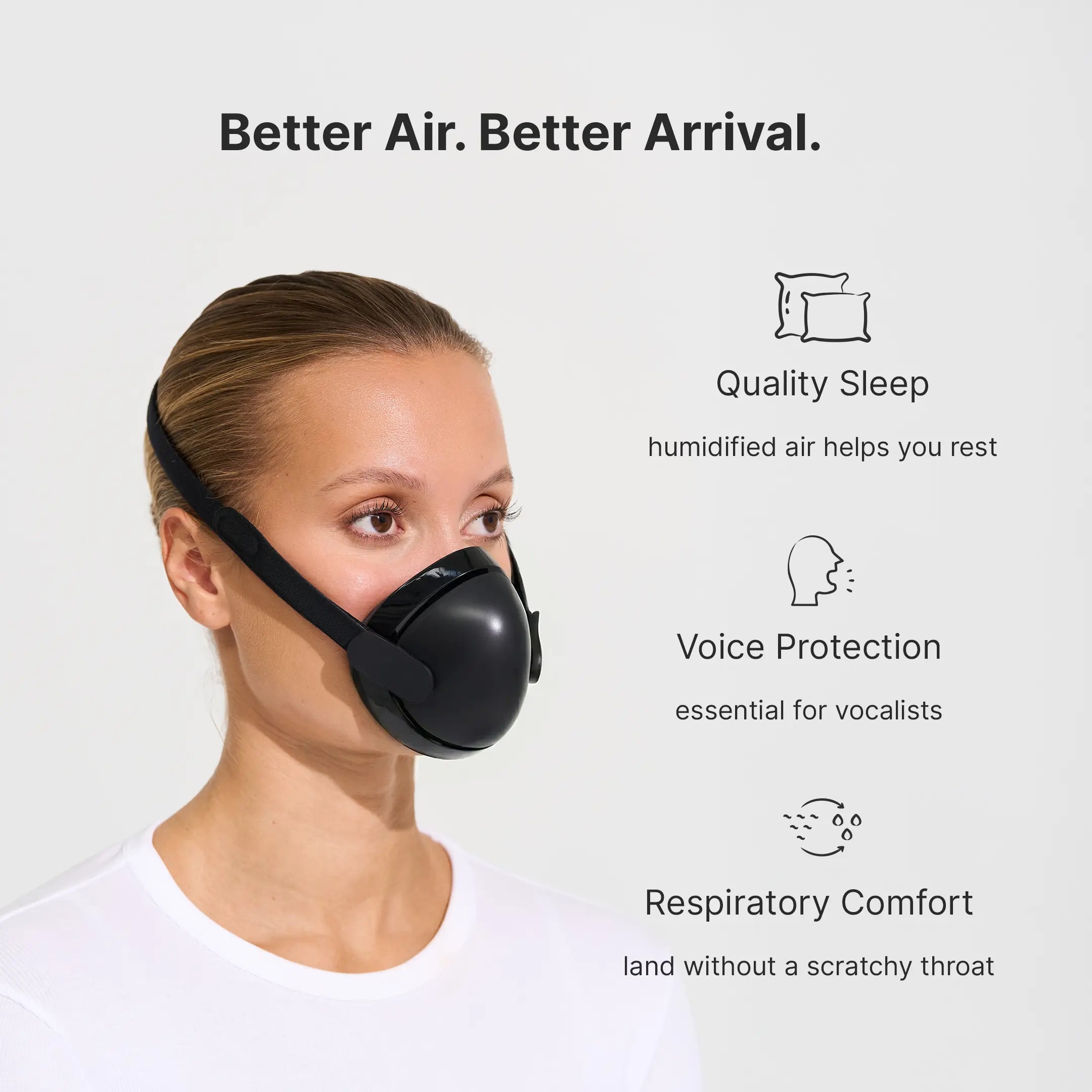
Für Sänger, Schauspieler, Rundfunksprecher und Podcaster geht dies über Unbehagen hinaus. Der respiratorische Wasserverlust in der Höhe ist eine echte Berufsgefahr.
Quelle: Sivasankar M, Fisher KV. „Oral breathing increases Pth and vocal effort by superficial drying of vocal fold mucosa.“ Journal of Voice, 2002;16(2):172–181.

Was tatsächlich hilft: befeuchtete Luft
Wenn das Problem darin besteht, dass trockene Luft den Atemwegsoberflächen Feuchtigkeit entzieht, ist die logische Lösung, die Luft zu befeuchten, bevor sie diese Oberflächen erreicht.
Eine 2019 in PLOS ONE von Hiroshi Kimura veröffentlichte randomisierte kontrollierte Studie testete genau dies. Siebenunddreißig Freiwillige trugen eine beheizte Befeuchtungsmaske in einer doppelblinden Crossover-Studie. Im Vergleich zu Placebo reduzierte die Befeuchtungsmaske den Nasenwiderstand und veränderte die Atemmuster: geringere Atemfrequenz, höheres Atemzugvolumen. Die Probanden atmeten effizienter durch die Nase.
Getrennt davon zeigen Forschungen zur CPAP-Therapie (die bei Schlafapnoe eingesetzt wird) durchweg, dass das Hinzufügen von beheizter Befeuchtung Nasentrockenheit, Halsschmerzen und Mundtrockenheit reduziert. Eine Studie von Massie et al. (1999), veröffentlicht in Chest, ergab, dass Befeuchtung die einzige Bedingung war, unter der Patienten berichteten, erfrischter aufzuwachen.
Halten Sie die Luft feucht, bevor sie Ihre Atemwege erreicht, und die körpereigenen Abwehrkräfte bleiben intakt.
Quellen:
- Kimura H. „The effects of heated humidification to nasopharynx on nasal resistance and breathing pattern.“ PLOS ONE, 2019;14(2):e0210957. (Volltext)
- Massie CA, Hart RW, Peralez K, Richards GN. „Effects of humidification on nasal symptoms and compliance in sleep apnea patients using continuous positive airway pressure.“ Chest, 1999;116(2):403–408.
Was bedeutet das also für Reisende?
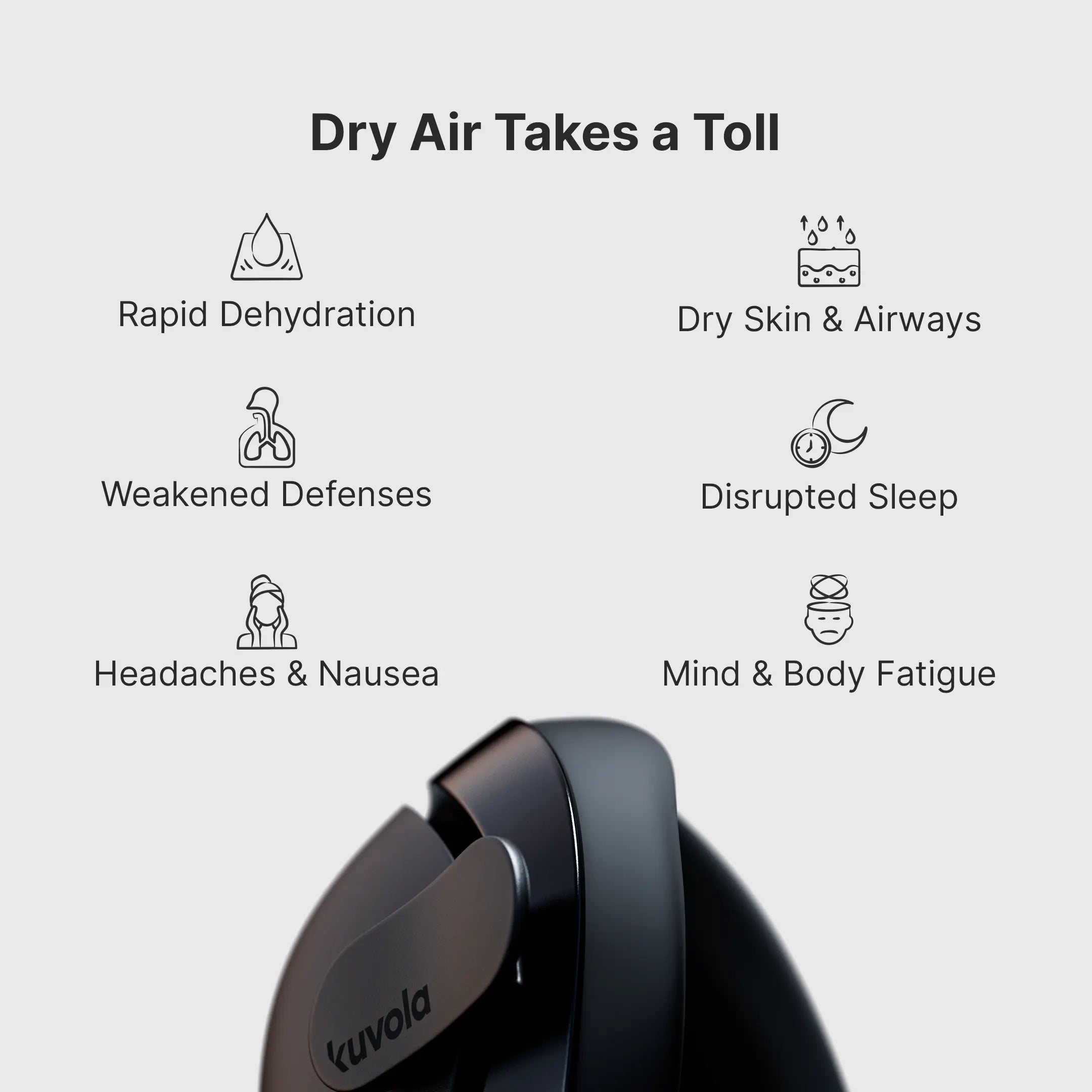
Der insensibler Wasserverlust in Flugzeugen ist real, aber spezifischer, als die meisten Menschen denken. Jeder Atemzug in der Höhe entzieht den Atemwegsoberflächen, dem Gewebe, das Ihre Nase, Ihren Rachen und Ihren Stimmapparat auskleidet, Feuchtigkeit. Trockene Kabinenluft verursacht keine Ganzkörperdehydration, beeinträchtigt aber das mukoziliäre System, das Ihre Atemwege angenehm und funktionsfähig hält.
Trinkwasser auf Flügen? Es lohnt sich immer noch. Aber es erreicht nicht die Oberflächen, an denen die Feuchtigkeit tatsächlich entweicht.
Die Feuchtigkeit, die Ihre Atemwege verlässt, ist ein Oberflächenproblem. Und es erfordert eine Intervention auf der Luftseite, nicht auf der Magenseite.
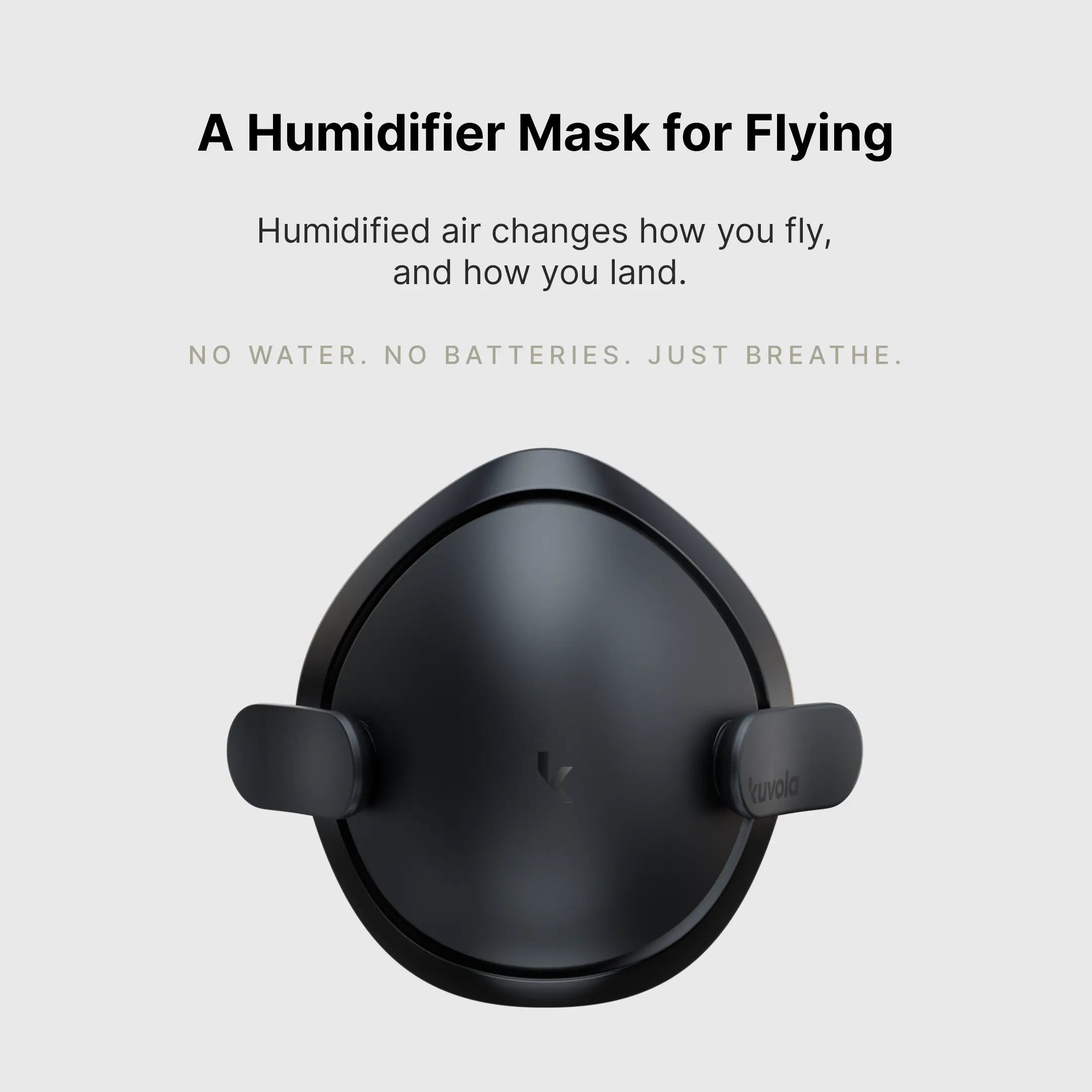
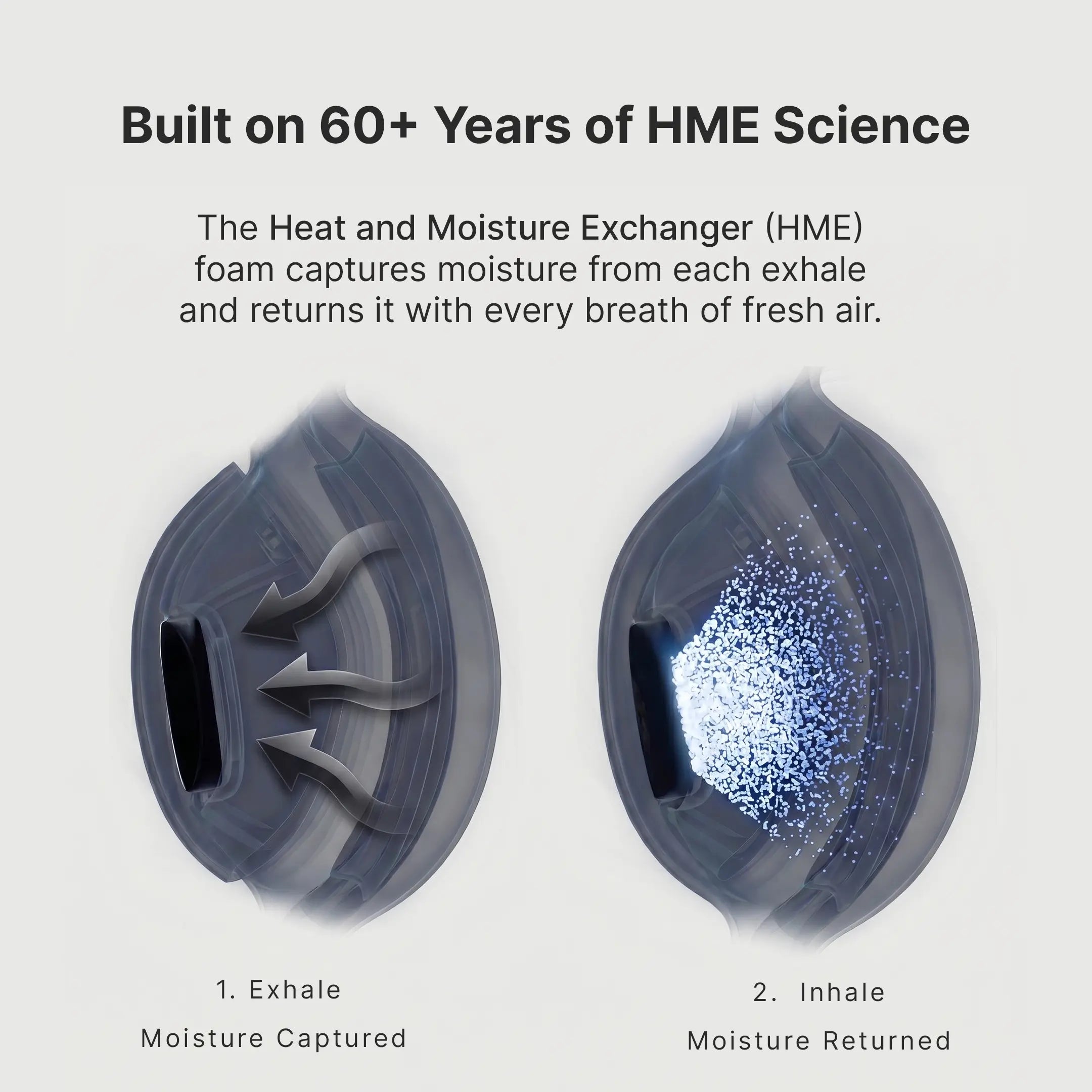
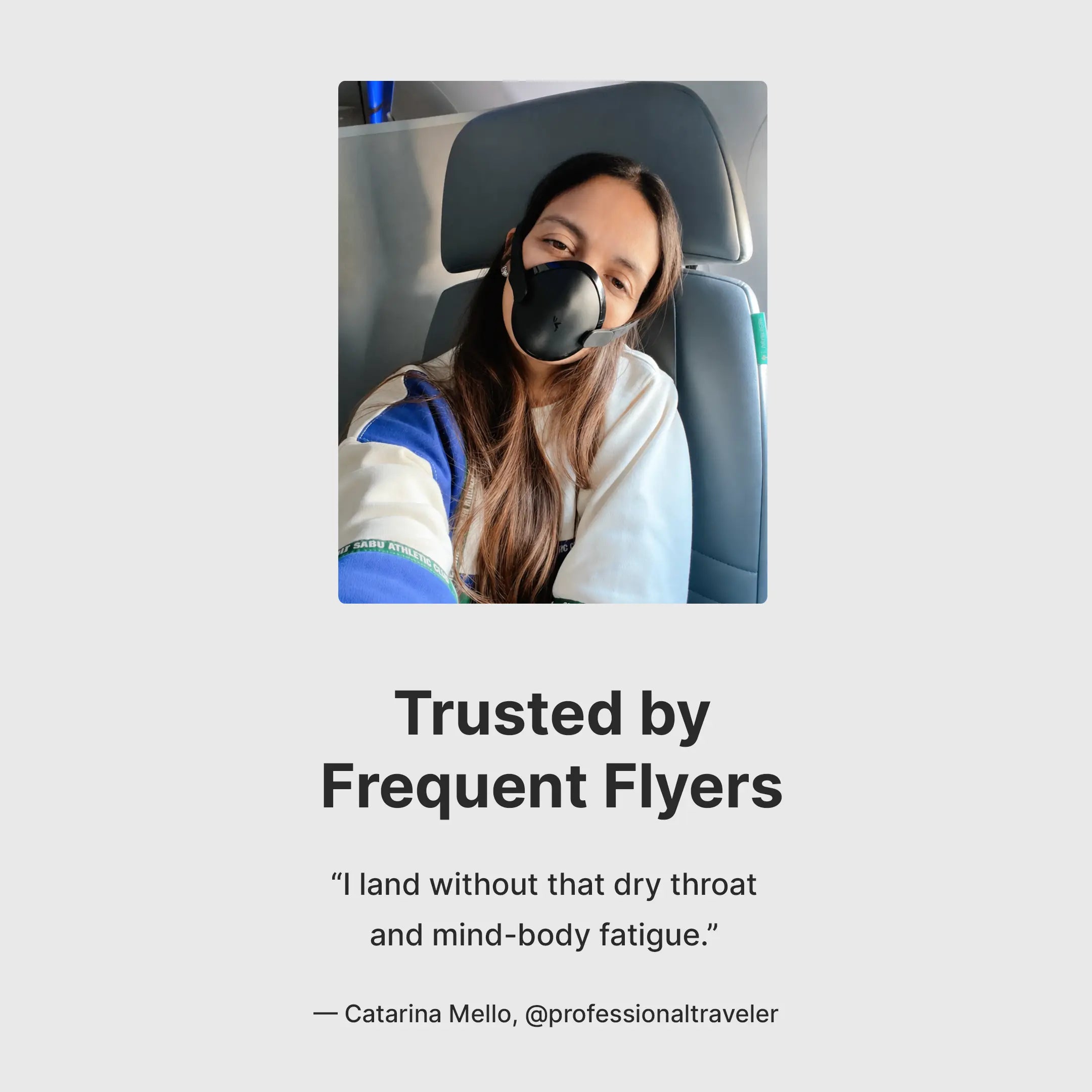
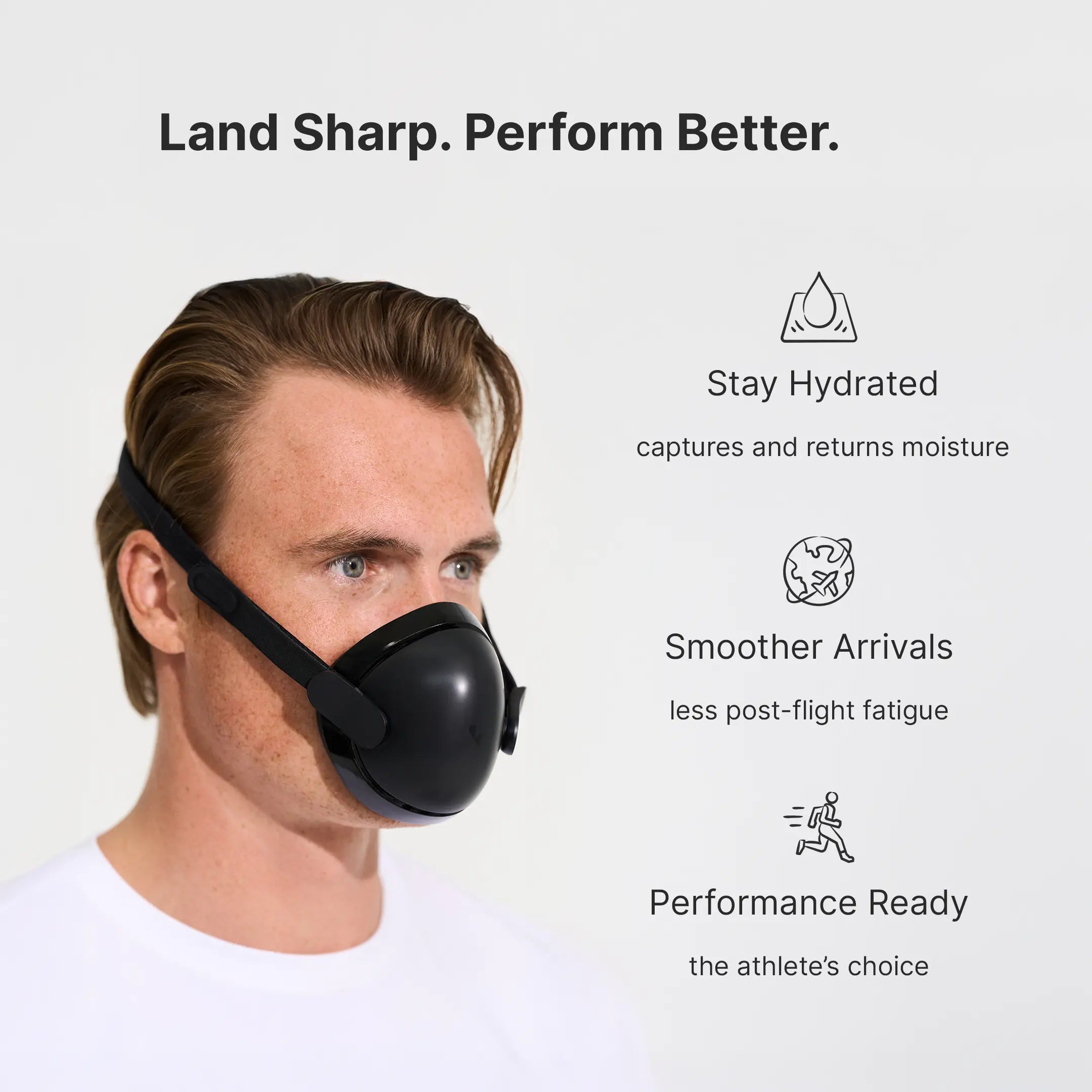
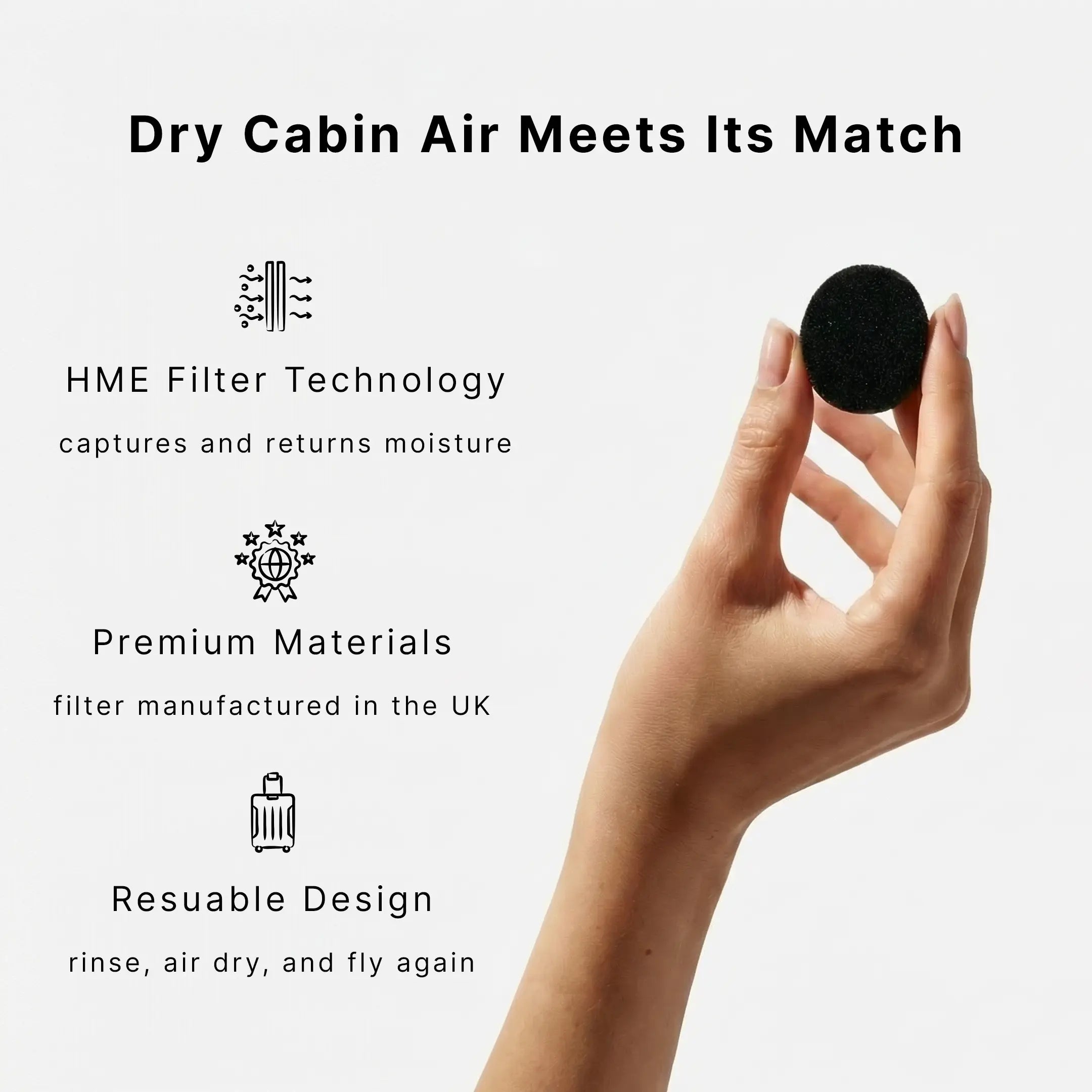
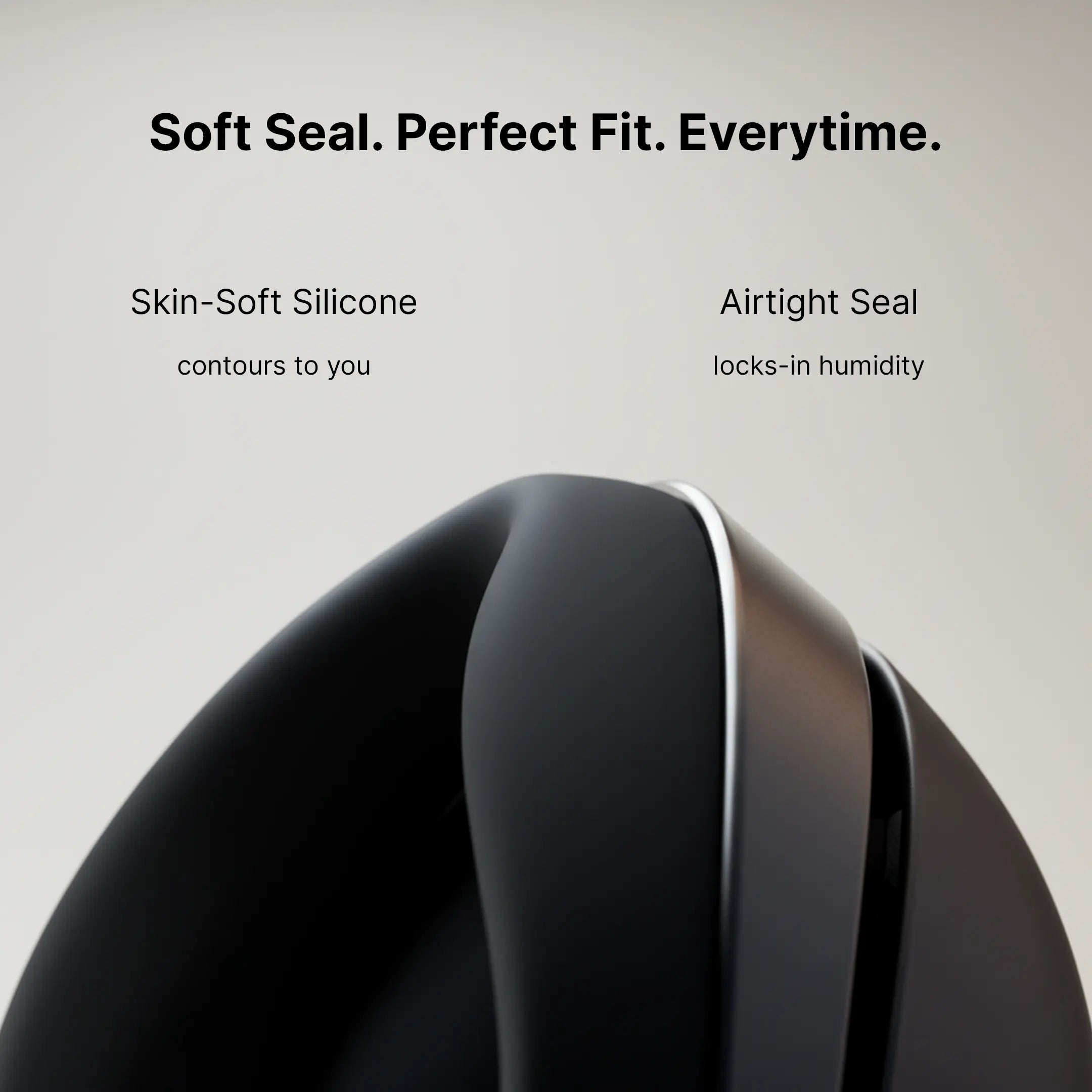
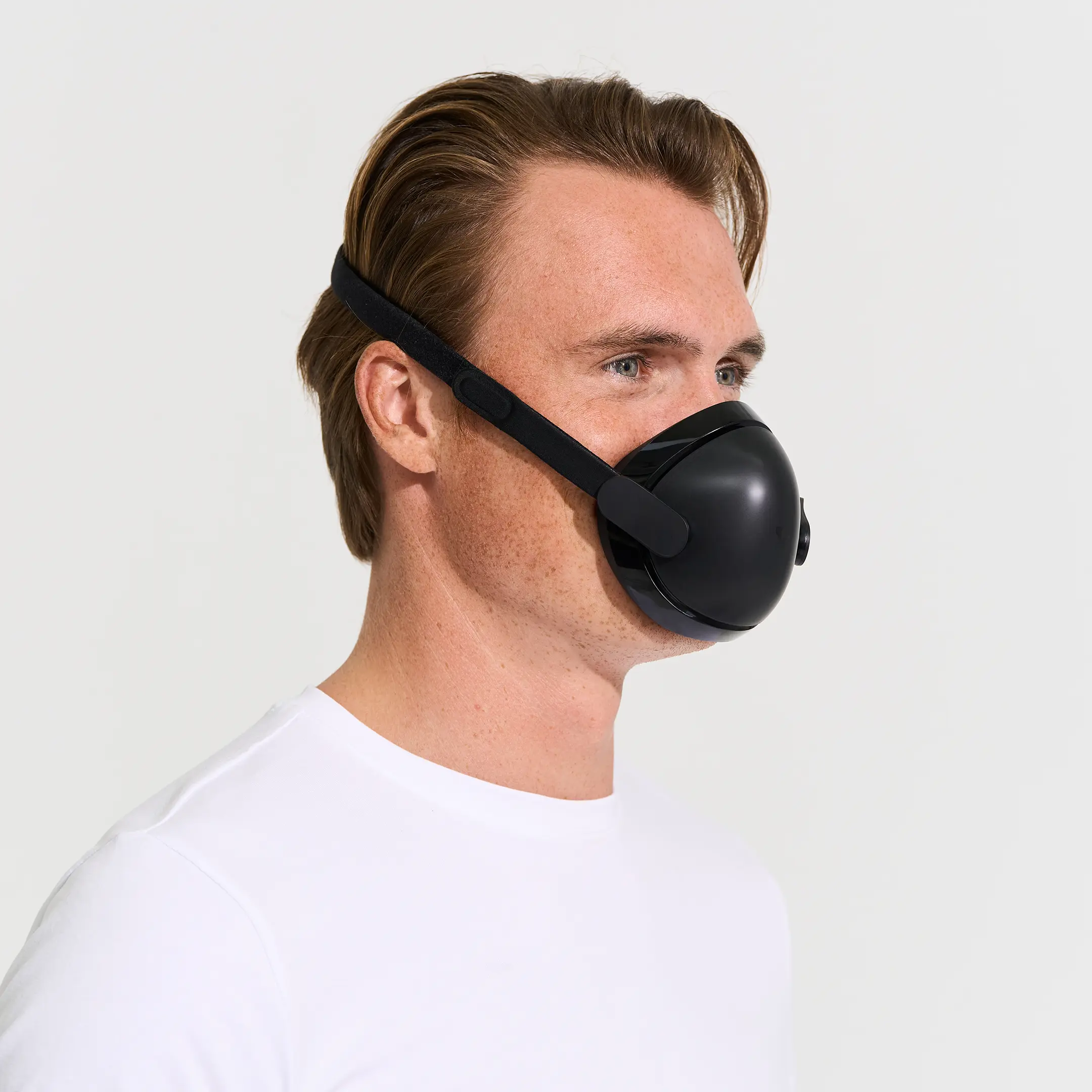
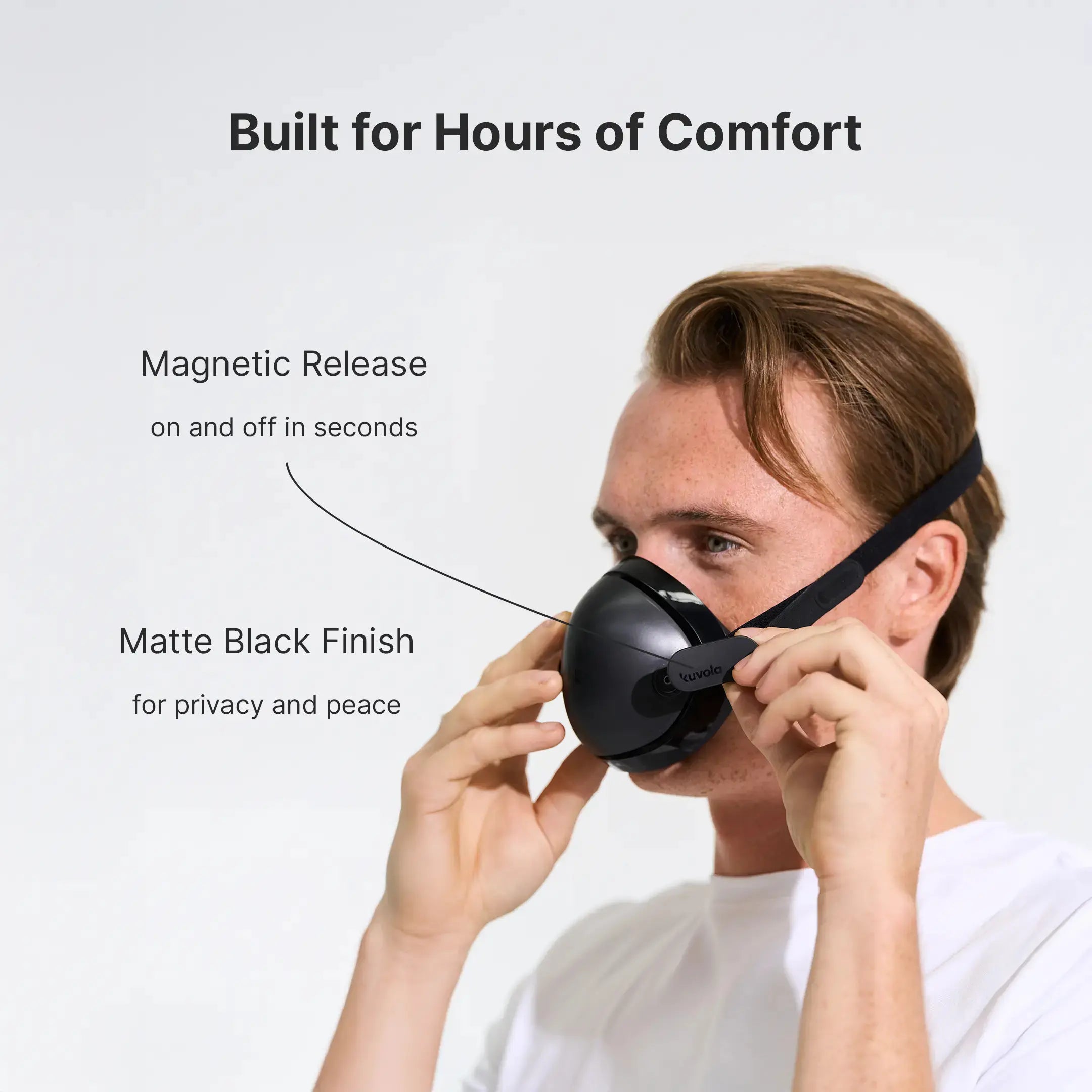
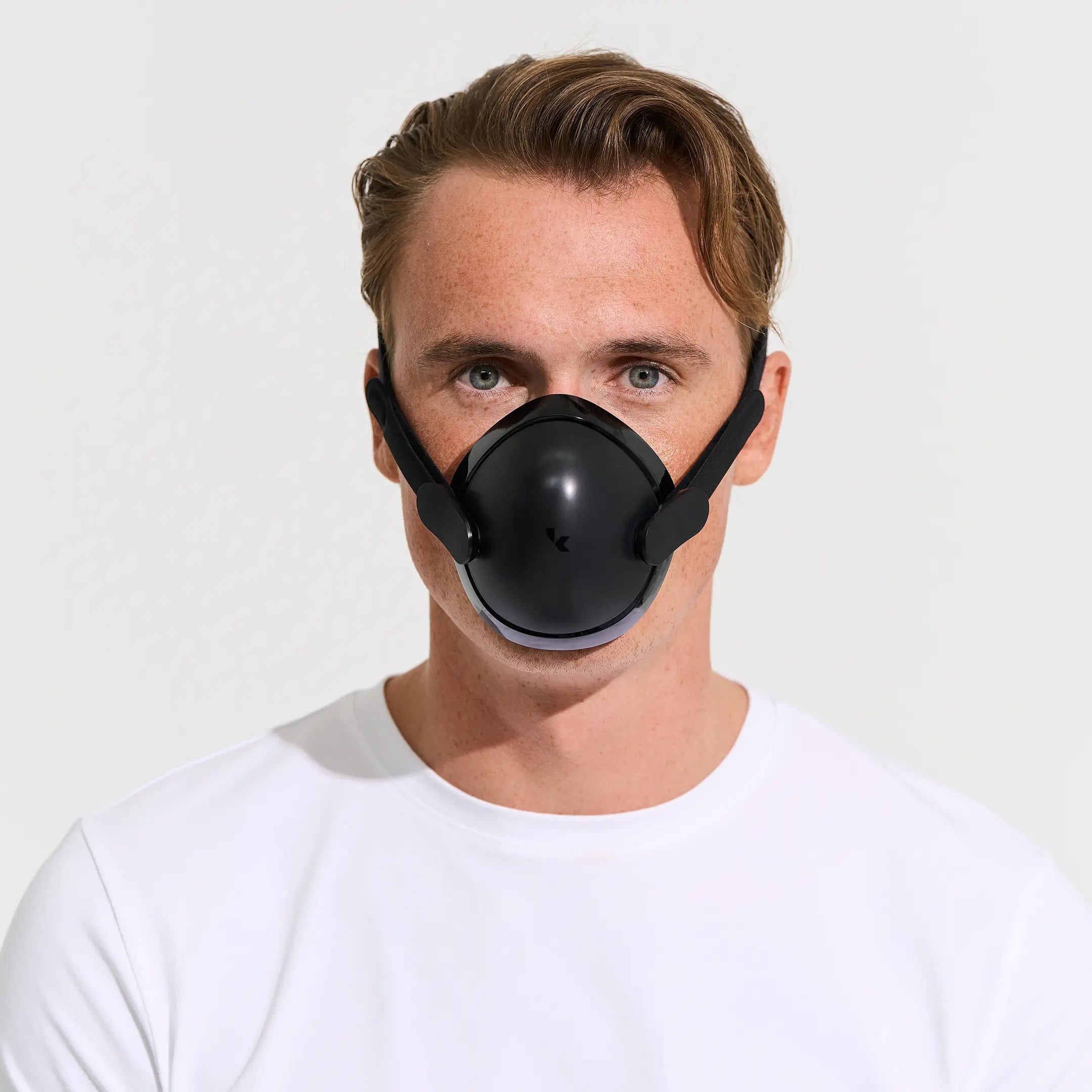
Das ist es, was Kuvola tut. Mithilfe der Wärme- und Feuchtigkeitsaustauschtechnologie, der gleichen Art, die in der Beatmungsmedizin im Krankenhaus verwendet wird, fängt Kuvola die Feuchtigkeit in Ihrem Ausatemzug ein und führt sie der Luft zu, die Sie einatmen. Keine Wassertanks, keine Batterien. Ihre eigene Hydratation, dort, wo sie hingehört.
Der beste Weg, um den respiratorischen Wasserverlust in der Höhe zu bewältigen, ist nicht, mehr zu trinken. Es ist, weniger zu verlieren.