Luftbefeuchtermaske für den Schlaf: was sie bewirkt, wie sie funktioniert und wer sie wirklich braucht

Kennen Sie das Gefühl, wenn Sie nach dem Schlaf im Flugzeug aufwachen – trockener Hals, rissige Lippen, eine so verstopfte Nase, dass Sie schon Mundatmen, bevor Sie die Augen öffnen?
Das ist nicht nur „Flugzeugluft“. Das passiert, wenn Sie stundenlang bei einer Luftfeuchtigkeit atmen, die weit unter dem liegt, was Ihr Körper erwartet.
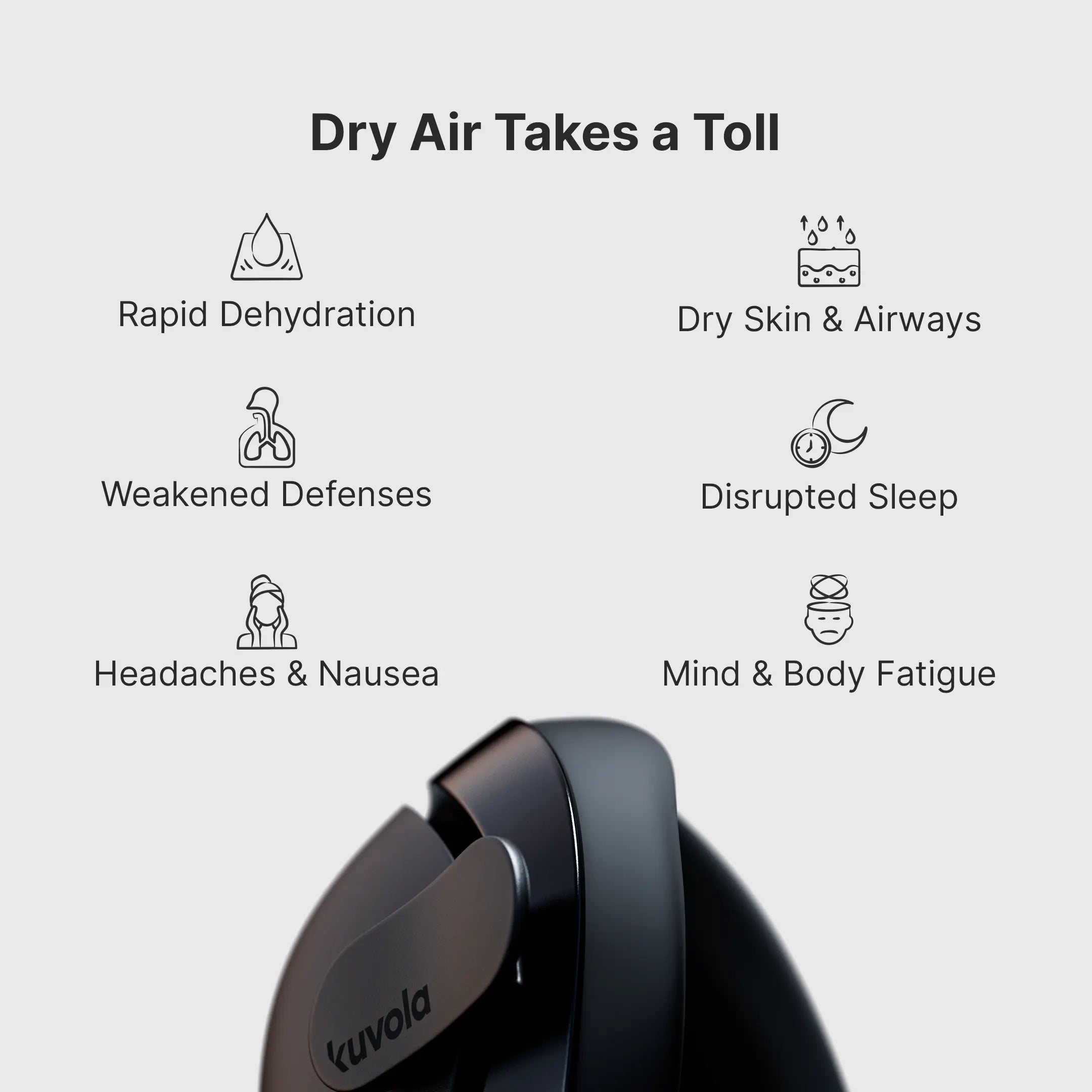
Die Kabinenluft in einem kommerziellen Flugzeug liegt zwischen 5 und 12 % relativer Luftfeuchtigkeit. Zum Vergleich: Eine angenehme Raumluft liegt bei 40 bis 60 %. Ihre Atemwege sind nicht für diese Bedingungen gemacht, und sie lassen Sie es wissen, wenn Sie landen.
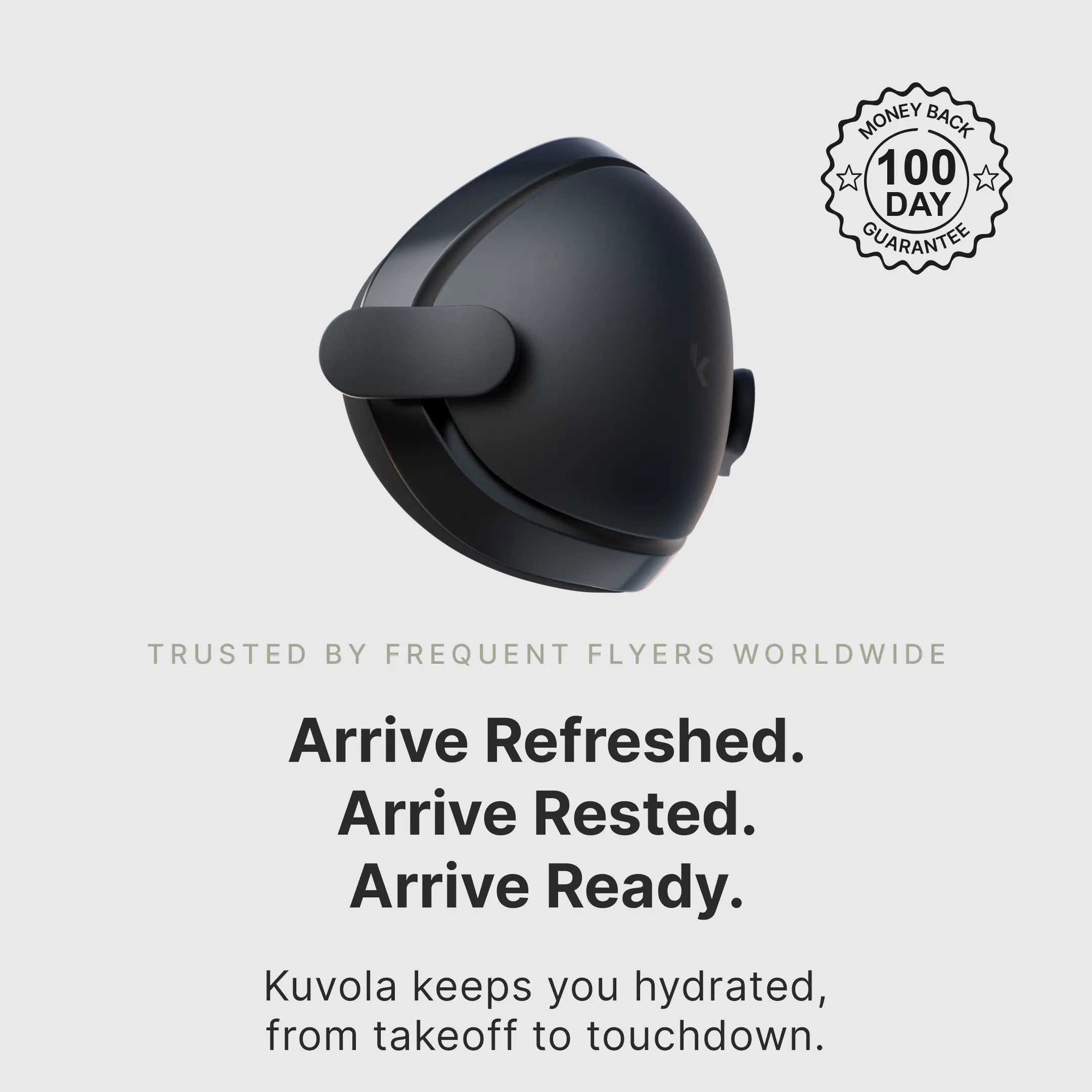
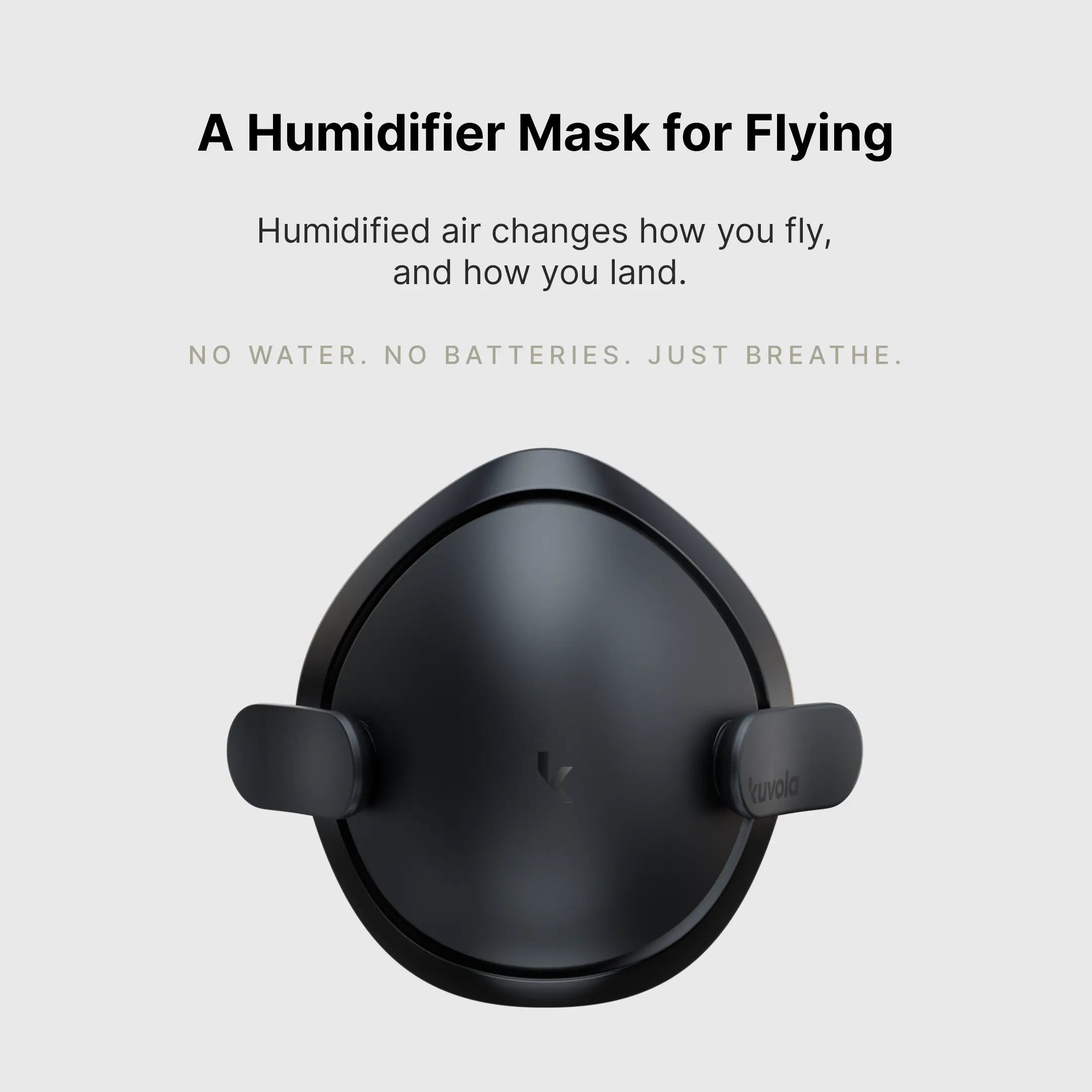
Eine Befeuchtungsmaske ist eine einfache Lösung für dieses Problem. Und im Gegensatz zu einem Raumbefeuchter, der gut für Ihr Schlafzimmer ist, aber in 10.000 Metern Höhe nutzlos ist, reist eine Befeuchtungsmaske mit Ihnen.
Dies ist, was sie tut, warum die Forschung sie unterstützt und wer am meisten davon profitiert.

Wie eine Befeuchtungsmaske funktioniert (kein Wasser, keine Batterien)
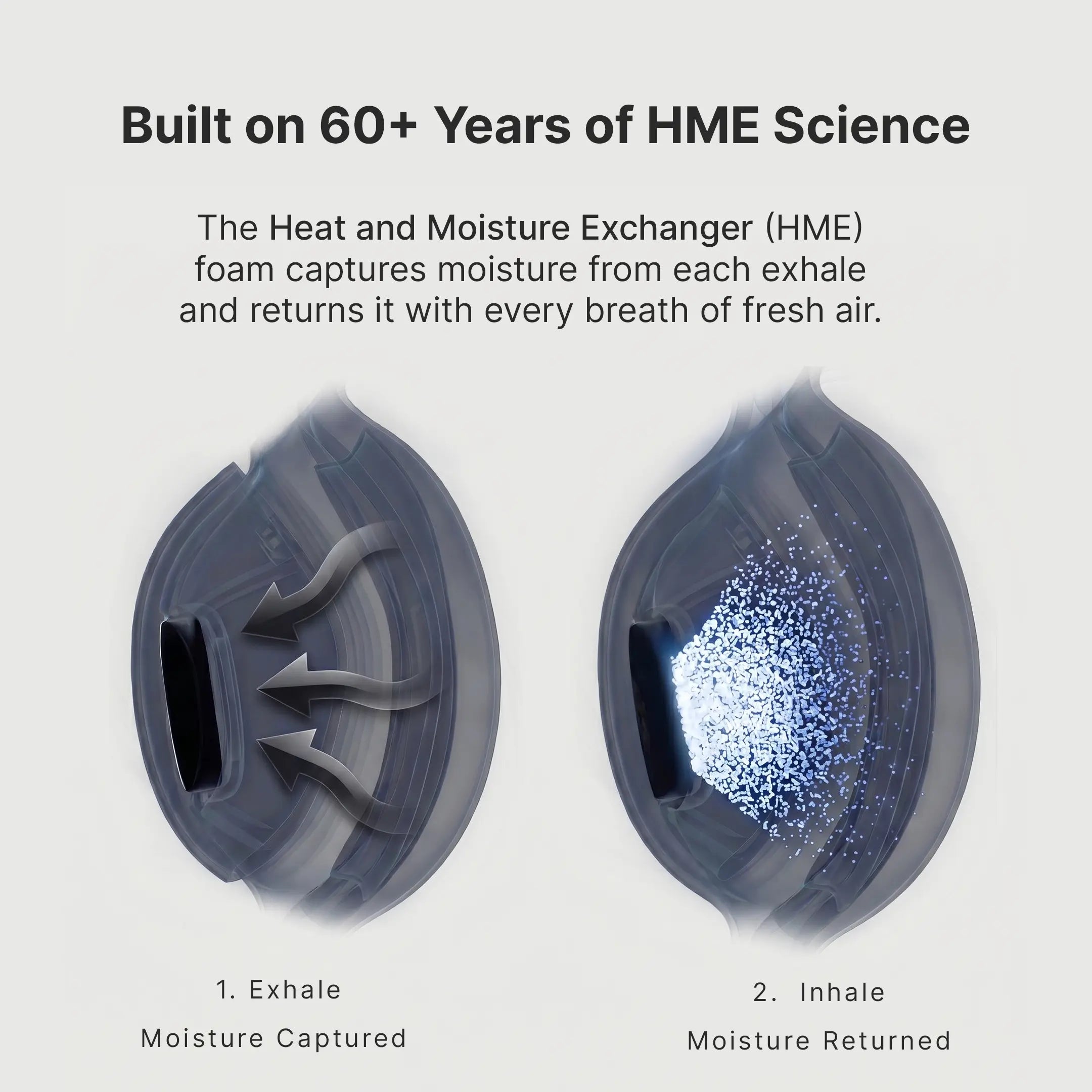
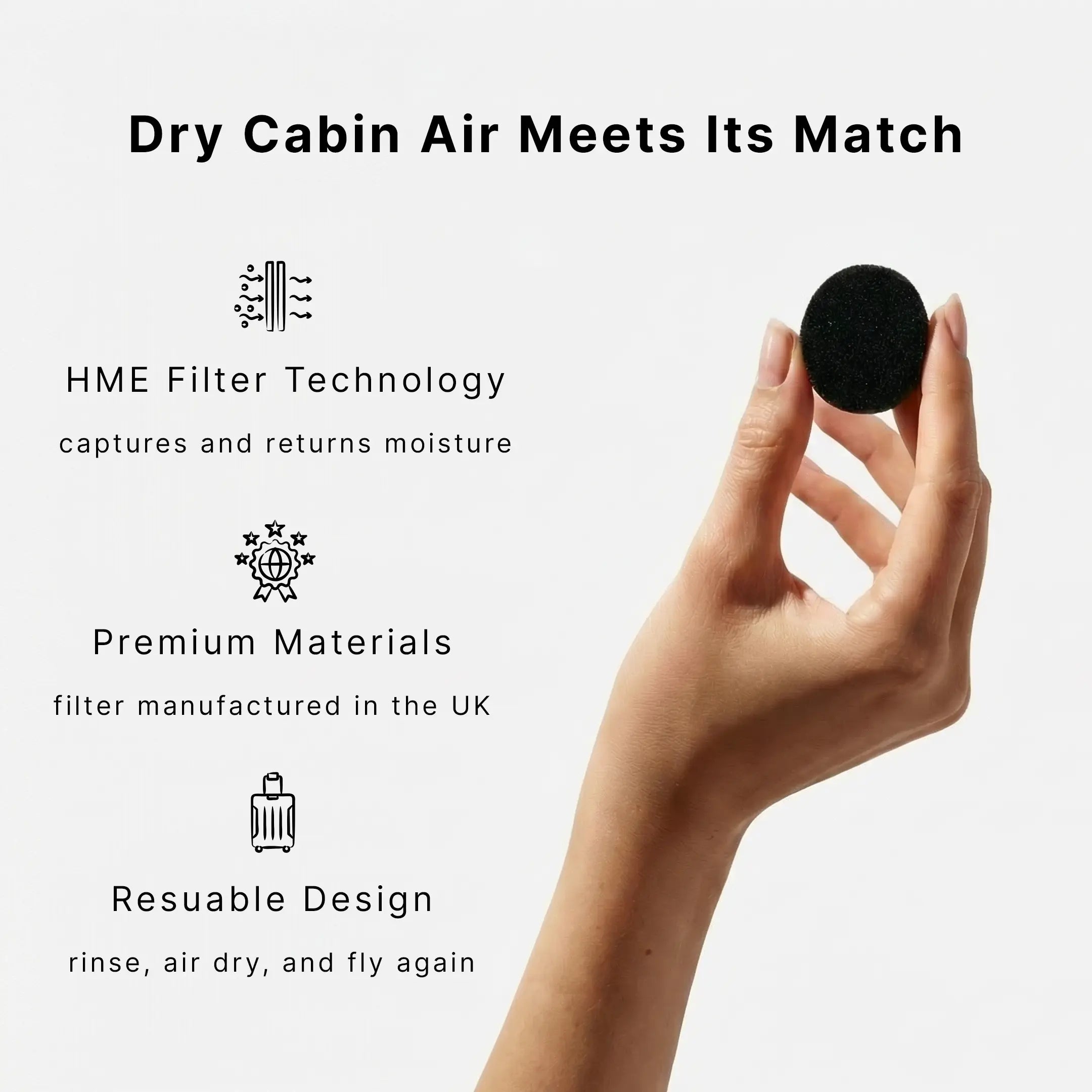
Eine Befeuchtungsmaske verwendet ein Prinzip namens Wärme- und Feuchtigkeitsaustausch, oder HME. Es handelt sich um dieselbe Technologie, die in der Atemwegspflege in Krankenhäusern verwendet wird, angepasst für den täglichen Gebrauch.
Das Konzept ist einfach:
- Beim Ausatmen transportiert Ihr Atem Wärme und Feuchtigkeit. Der Filter der Maske fängt beides auf, bevor es entweicht.
- Beim Einatmen strömt frische Luft durch denselben Filter. Sie nimmt die gespeicherte Feuchtigkeit und Wärme auf und liefert dann befeuchtete Luft an Ihre Atemwege zurück.
Verwandter Artikel: Wie die Kuvola Befeuchtungsmaske funktioniert
Nichts wird recycelt. Keine abgestandene Luft. Kein Wasserreservoir. Keine Elektronik. Der Filter gibt einfach das zurück, was Ihr Körper gerade verlieren wollte.
Die HME-Technologie wurde in klinischen Umgebungen ausführlich untersucht. Eine in Respiratory Care veröffentlichte Übersicht ergab, dass HME-Filter eine wirksame Methode zur Aufrechterhaltung der Atemwegsfeuchtigkeit sind, mit dem zusätzlichen Vorteil, als antimikrobielle Barriere zu wirken. Laryngektomie-Patienten, die HME-Geräte verwendeten, verzeichneten eine Verringerung des Hustens und eine verbesserte pulmonale Rehabilitation bei hoher Compliance (PMC, 2023).
In der Sportwissenschaft zeigte eine Studie in ERJ Open Research, dass das Tragen einer HME-Maske während des Trainings unter kalten, trockenen Bedingungen die Schwere der anstrengungsinduzierten Bronchokonstriktion im Vergleich zum Verzicht darauf reduzierte (PMC, 2020).
Befeuchtete Luft zu atmen schützt Ihre Atemwege. Eine Maske ist lediglich eine tragbare Möglichkeit, dies zu erreichen.

Warum Ihre Atemwege im Schlaf austrocknen (und warum Wasser es nicht behebt)
Jeder Atemzug, den Sie in der Höhe oder in einem trockenen Raum nehmen, entzieht Ihren Atemwegsoberflächen Feuchtigkeit. Ärzte nennen dies unsichtbaren Wasserverlust. Es ist unsichtbar, aber kontinuierlich. Ihre Nase, Ihr Rachen und Ihre Bronchialgänge geben die ganze Nacht Feuchtigkeit an die trockene Luft ab.
Die meisten Menschen nehmen an, dass mehr Wasser trinken dies behebt. Das stimmt nicht.
Eine 2012 in Auris Nasus Larynx veröffentlichte Studie ergab, dass die Hydratation durch Wassertrinken die Funktion der Nasenschleimhaut nicht wiederherstellt. Der Feuchtigkeitsverlust findet an der Oberfläche Ihrer Atemwege statt, nicht aus Ihrem Blutkreislauf. Während es also aus anderen Gründen eine gute Idee ist, während eines Fluges ausreichend hydriert zu bleiben, wird es Ihre Nase und Ihren Hals nicht daran hindern, auszutrocknen.
Was funktioniert, ist das Atmen befeuchteter Luft. Eine Metaanalyse von neun randomisierten kontrollierten Studien, die 2023 in Sleep & Breathing veröffentlicht wurde, bestätigte, dass befeuchtete Luft die Symptome von trockener Nase, trockenem Mund und trockenem Hals während des Schlafs reduziert.

Trockene Atemwege verursachen eine Kettenreaktion.
Die nasale mukoziliäre Clearance, das körpereigene Luftfiltersystem, ist von Feuchtigkeit abhängig. Eine Studie von Salah et al. aus dem Jahr 1988 im European Respiratory Journal zeigte, dass das Atmen trockener Luft für nur 30 Minuten die mukoziliäre Transportgeschwindigkeit halbiert. Wenn dieses System langsamer wird, verstopft Ihre Nase, Sie beginnen, durch den Mund zu atmen, und Ihr Hals trocknet weiter aus.
In einer Umfrage unter 3.630 Flugpassagieren war trockene und verstopfte Nase die am häufigsten gemeldete Beschwerde über den Komfort im Flugzeug.
Der Schlafzusammenhang: Luftfeuchtigkeit und wie Sie sich beim Aufwachen fühlen
Ein kurzer Realitätscheck: Die Forschung hat nicht bewiesen, dass Luftfeuchtigkeit Schlafstadien wie REM oder Tiefschlaf direkt verändert. Was sie beeinflusst, sind die Symptome, die Ihre Schlafqualität beeinträchtigen, wie Verstopfung, trockener Mund, Halsschmerzen und die Art von Unbehagen, die Sie immer wieder aufweckt.
Wenn die Nasenwege austrocknen, erhöht sich der Atemwegswiderstand. Eine Studie von Kimura et al. aus dem Jahr 2019 in PLOS ONE zeigte, dass befeuchtete Luft den Nasenwiderstand reduziert, was das Atmen durch die Nase während des Schlafs erleichtert.
Mundatmung im Schlaf ist ein separates Problem. Sie trocknet Ihren Hals weiter aus und führt normalerweise dazu, dass Sie sich morgens schlechter fühlen. Alles, was Ihnen hilft, durch die Nase zu atmen, einschließlich befeuchteter Luft, ist zu Ihrem Vorteil.
Hier ist ein konkretes Beispiel: Eine kontrollierte Studie von Massie et al. aus dem Jahr 1999 in Chest testete verschiedene Bedingungen für CPAP-Benutzer. Die Gruppe, die befeuchtete Luft atmete, war die einzige Gruppe, die angab, sich erfrischter zu fühlen. Alle anderen? Kein Unterschied.
Das bedeutet nicht, dass eine Befeuchtungsmaske schlechten Schlaf von selbst beheben wird. Aber wenn trockene Luft Sie daran hindert, in einem Flugzeug gut zu schlafen, macht die Verbesserung der Luftqualität einen echten Unterschied.
Wer am meisten von einer Befeuchtungsmaske zum Schlafen profitiert
Nicht jeder braucht eine. Aber einige Reisende bemerken den Unterschied sofort.
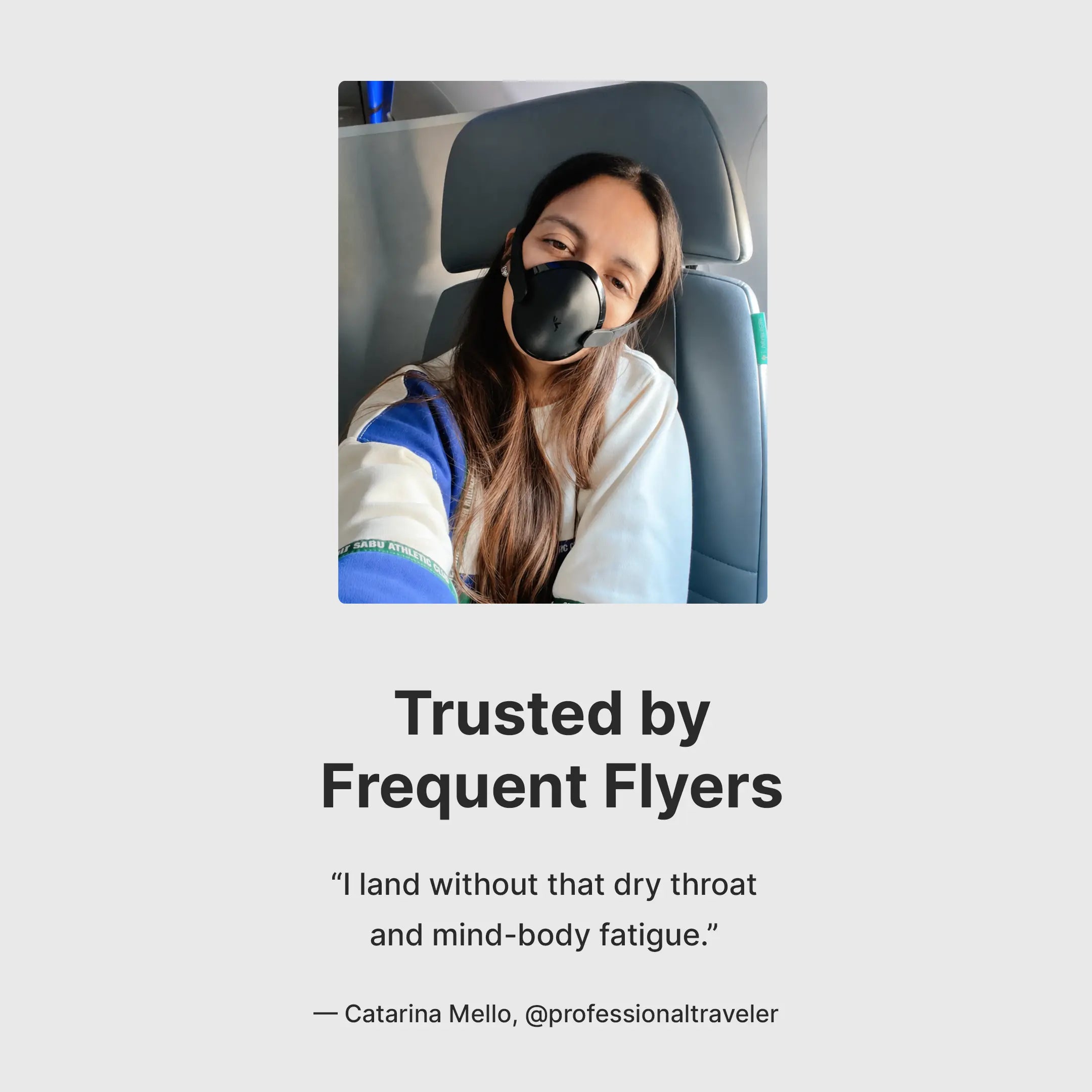
Regelmäßige Langstreckenflieger
Wenn Sie regelmäßig Transatlantik- oder Transpazifikrouten fliegen, summieren sich die Auswirkungen der trockenen Kabinenluft. Dieses erschöpfte, benebelte Gefühl, wenn Sie landen? Jetlag bekommt die ganze Schuld, aber stundenlanges Atmen von Luft mit 5 bis 12 % Luftfeuchtigkeit fordert seinen eigenen Tribut von Ihren Atemwegen – und Ihrem Komfort.
Jeder, der nach Flügen mit trockenem Mund oder Halsschmerzen aufwacht
Dies ist das häufigste Signal, dass trockene Luft Ihren Komfort beeinträchtigt. Wenn es konsequent passiert, sind Sie ein Kandidat.
Stimmprofis
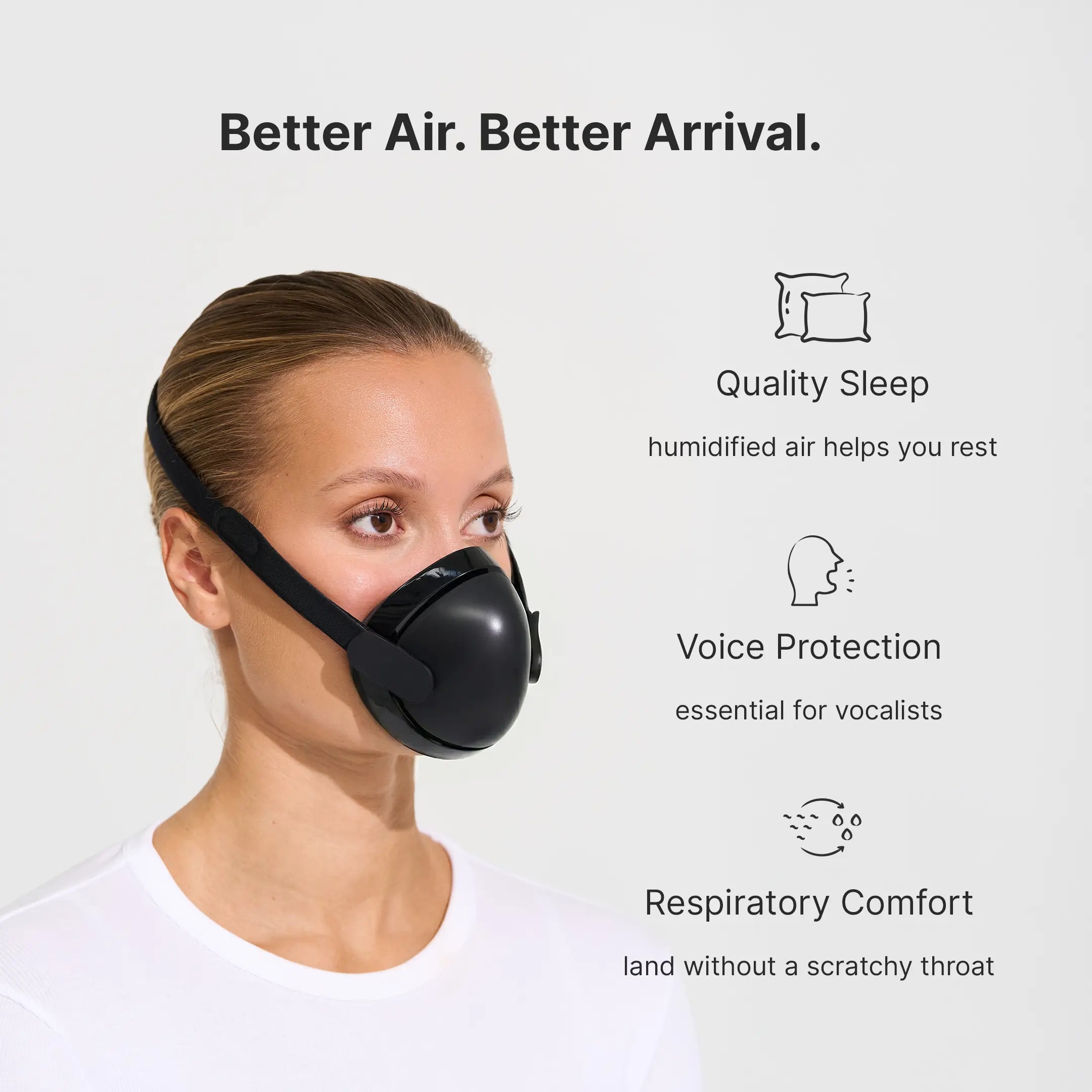
Sänger, Schauspieler, Rundfunksprecher, Stimmtrainer – jeder, dessen Lebensunterhalt davon abhängt, dass seine Stimmbänder einsatzbereit sind. Die Forschung hier ist die stärkste aller Gruppen. Sivasankar & Fisher (2002) fanden heraus, dass bereits 15 Minuten Mundatmung in trockener Luft den Phonation Threshold Pressure – den minimalen Kraftaufwand, der erforderlich ist, um Ihre Stimmbänder in Schwingung zu versetzen – messbar erhöht. Das bedeutet mehr Anstrengung, um denselben Klang zu erzeugen, was die Ermüdung beschleunigt. Tanner (2014) bestätigte, dass die Rehydrierung der Kehlkopfoberfläche den Effekt umkehrt.
Denken Sie darüber nach, was ein 10-stündiger Nachtflug bewirkt: stundenlanges Atmen von Kabinenluft bei 5 bis 12 % Luftfeuchtigkeit, wahrscheinlich durch den Mund, während Sie schlafen. Sie landen, und Ihre Stimme fühlt sich angespannt, anstrengend, dünn an. Für einen tourenden Künstler mit einer Probe oder einem Soundcheck am Nachmittag ist das kein Unbehagen – es ist ein Berufsrisiko. Eine Befeuchtungsmaske ersetzt keine richtige Stimmhygiene, aber sie beseitigt die größte Umweltbedrohung für Ihre Stimme auf Reisen.
Menschen, die in trockenen Umgebungen schlafen
Dies ist nicht auf Flüge beschränkt. Hotelzimmer mit aggressiven Klimaanlagen, Winterheizungen, Wüstenklima. Jedes davon drückt die Raumluftfeuchtigkeit weit unter ein angenehmes Niveau, und eine Befeuchtungsmaske funktioniert auf die gleiche Weise, egal wo Sie sich befinden.
Wie man eine Befeuchtungsmaske für den Schlaf im Flugzeug verwendet
Die Verwendung ist einfacher als die meisten Reiseausrüstungen. So funktioniert es mit Kuvola, der speziell für Reisen entwickelten Befeuchtungsmaske:
- Öffnen Sie den versiegelten Beutel vor Ihrem Flug.
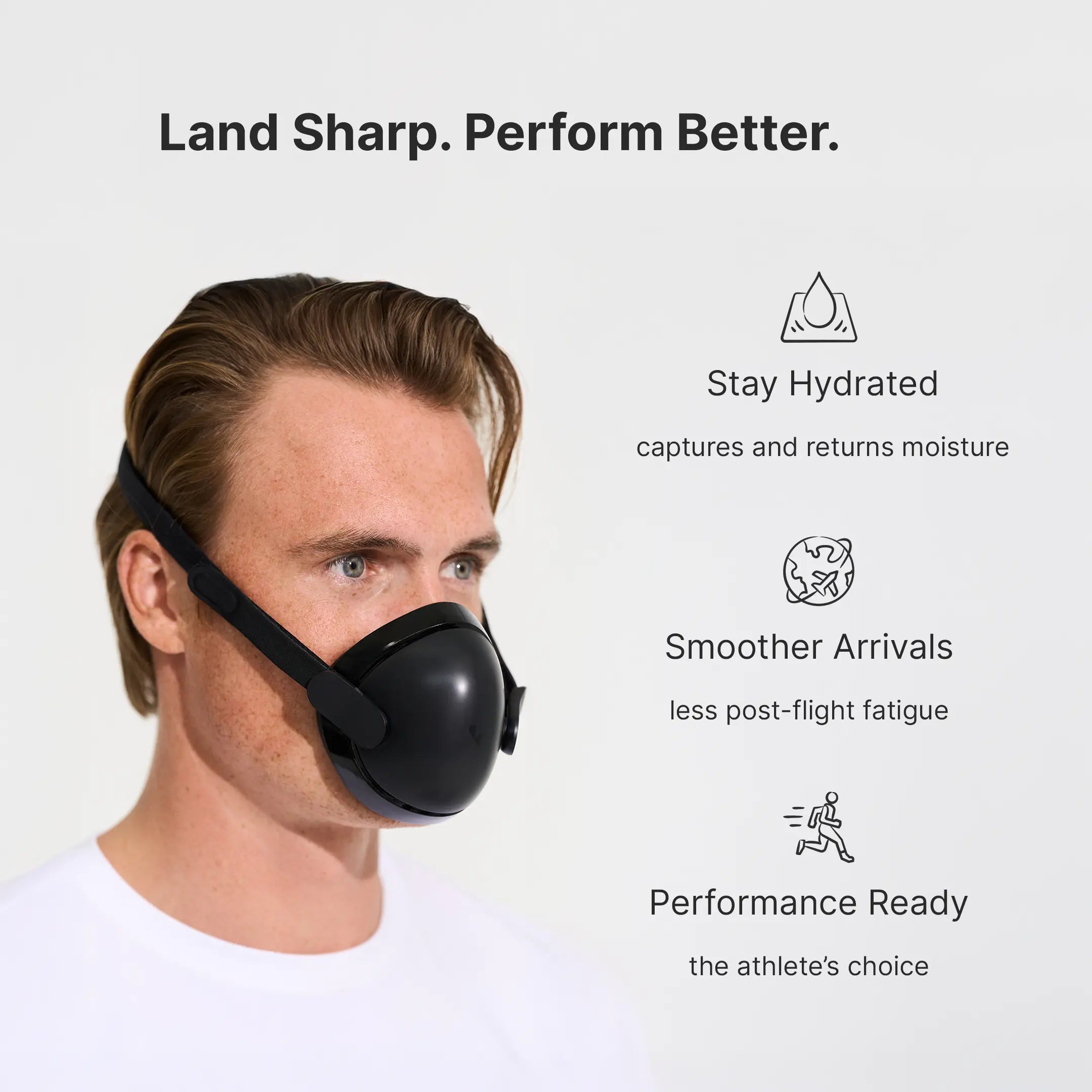
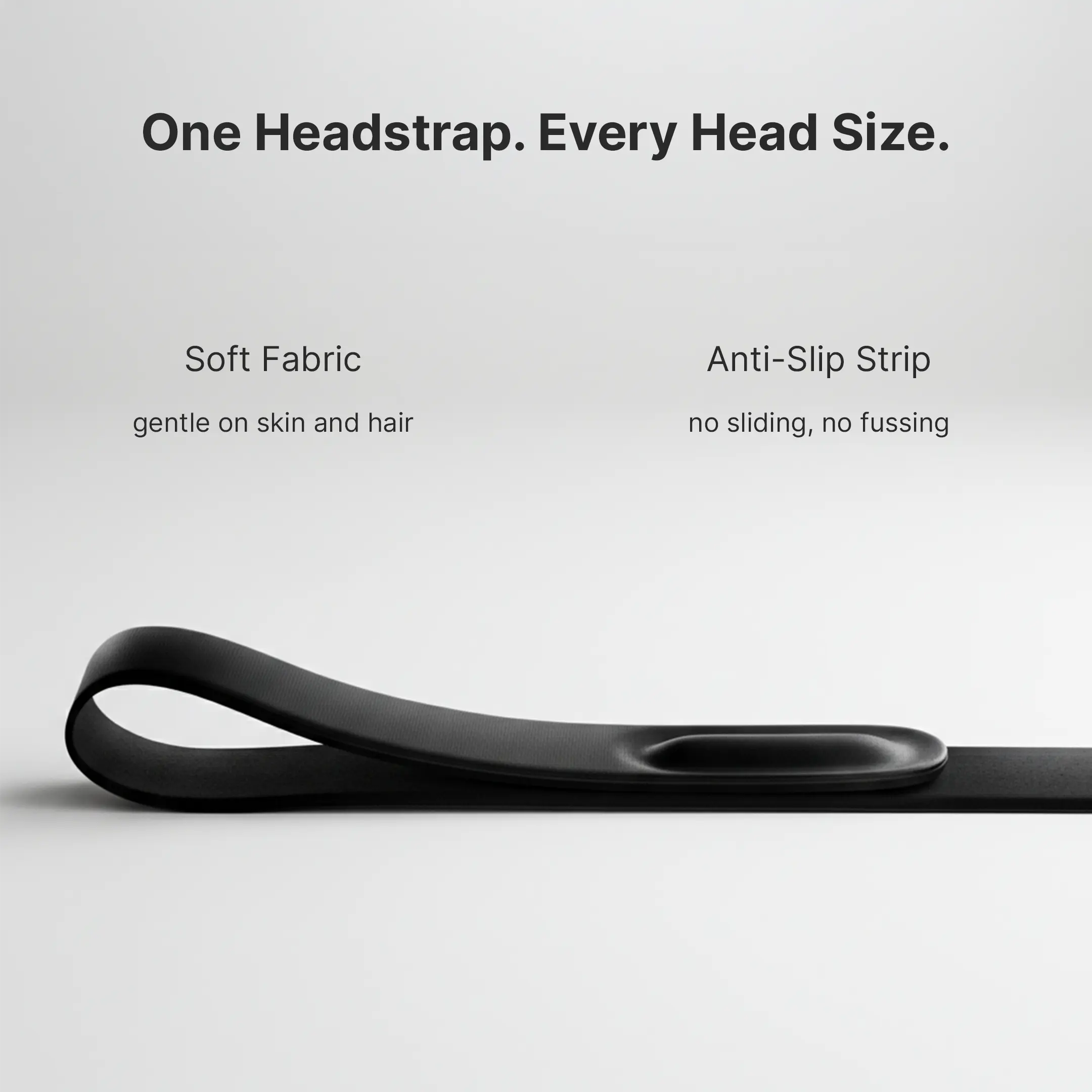
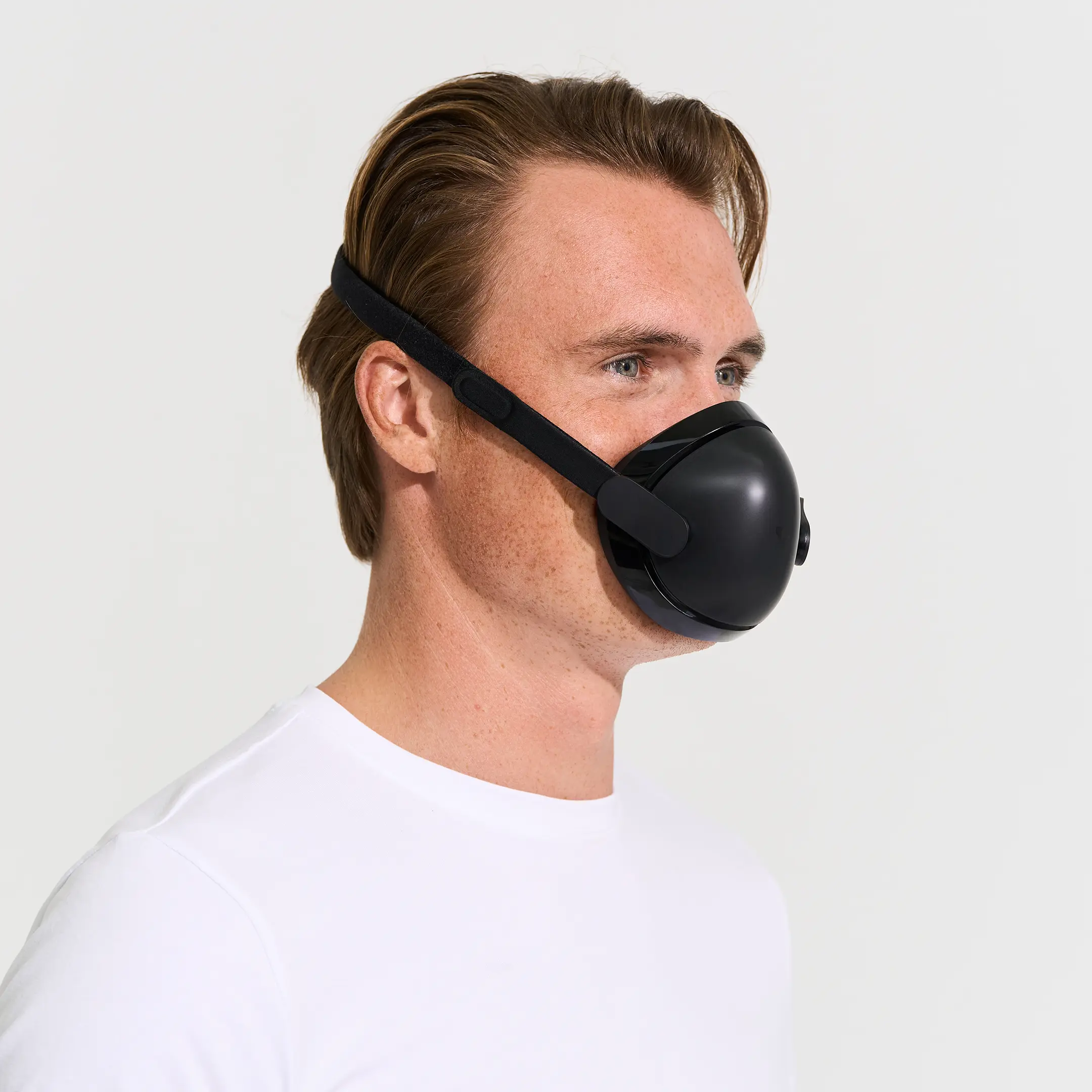
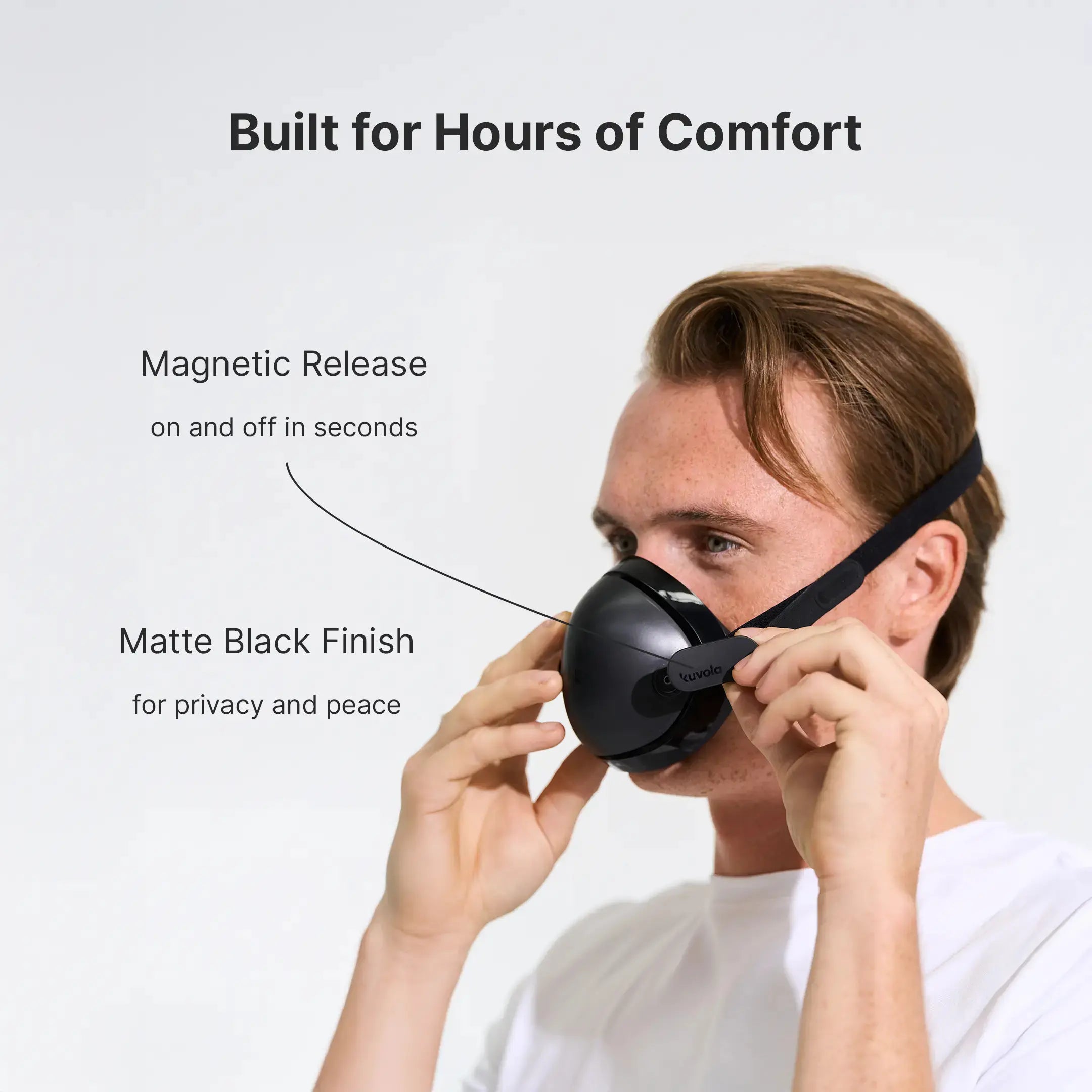
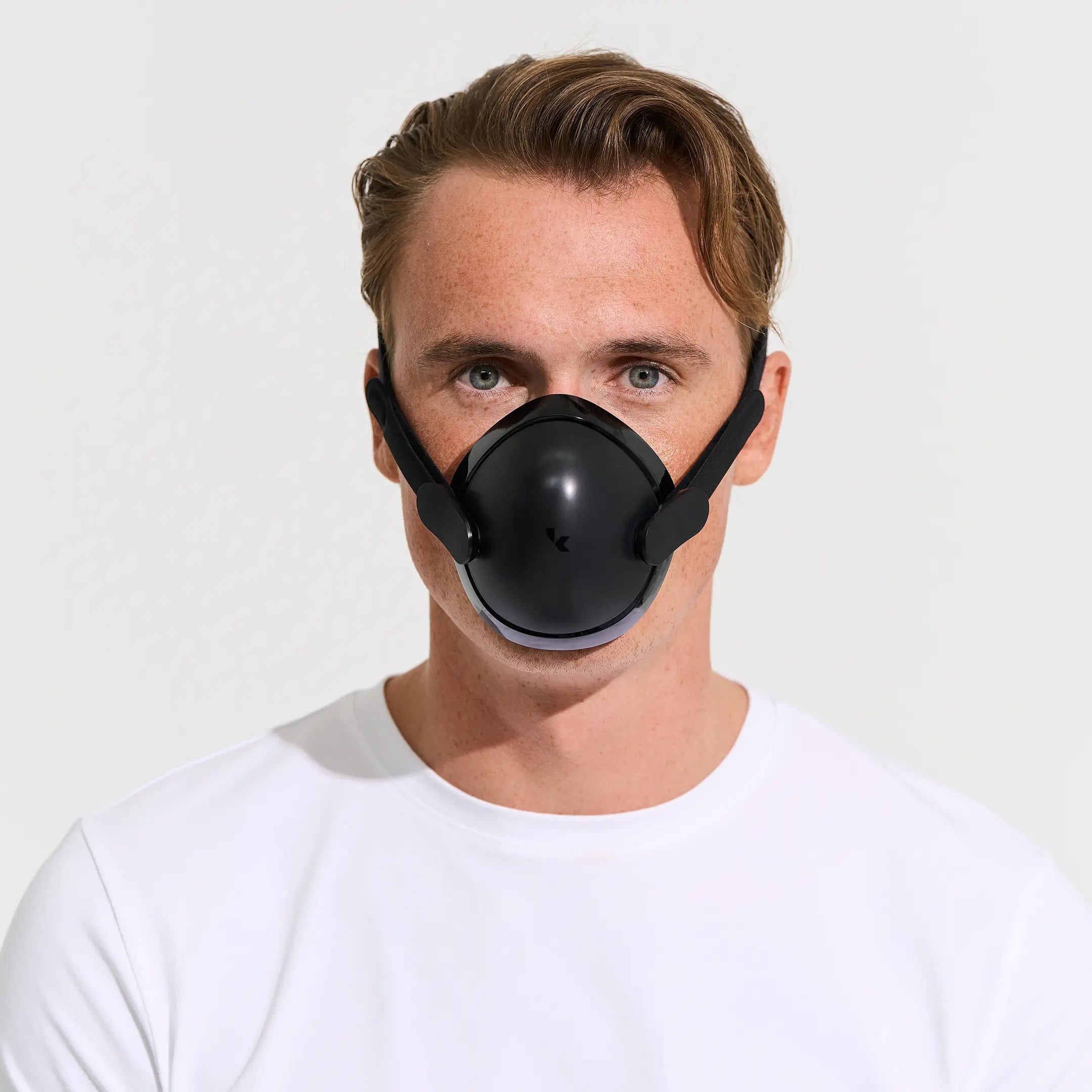
- Stellen Sie die Gurte für einen bequemen, sicheren Sitz über Nase und Mund ein.
- Atmen Sie normal. Der HME-Filter erledigt die Arbeit.
- Schlafen Sie. Die Maske fängt Feuchtigkeit bei jedem Ausatmen auf und gibt sie bei jedem Einatmen zurück.
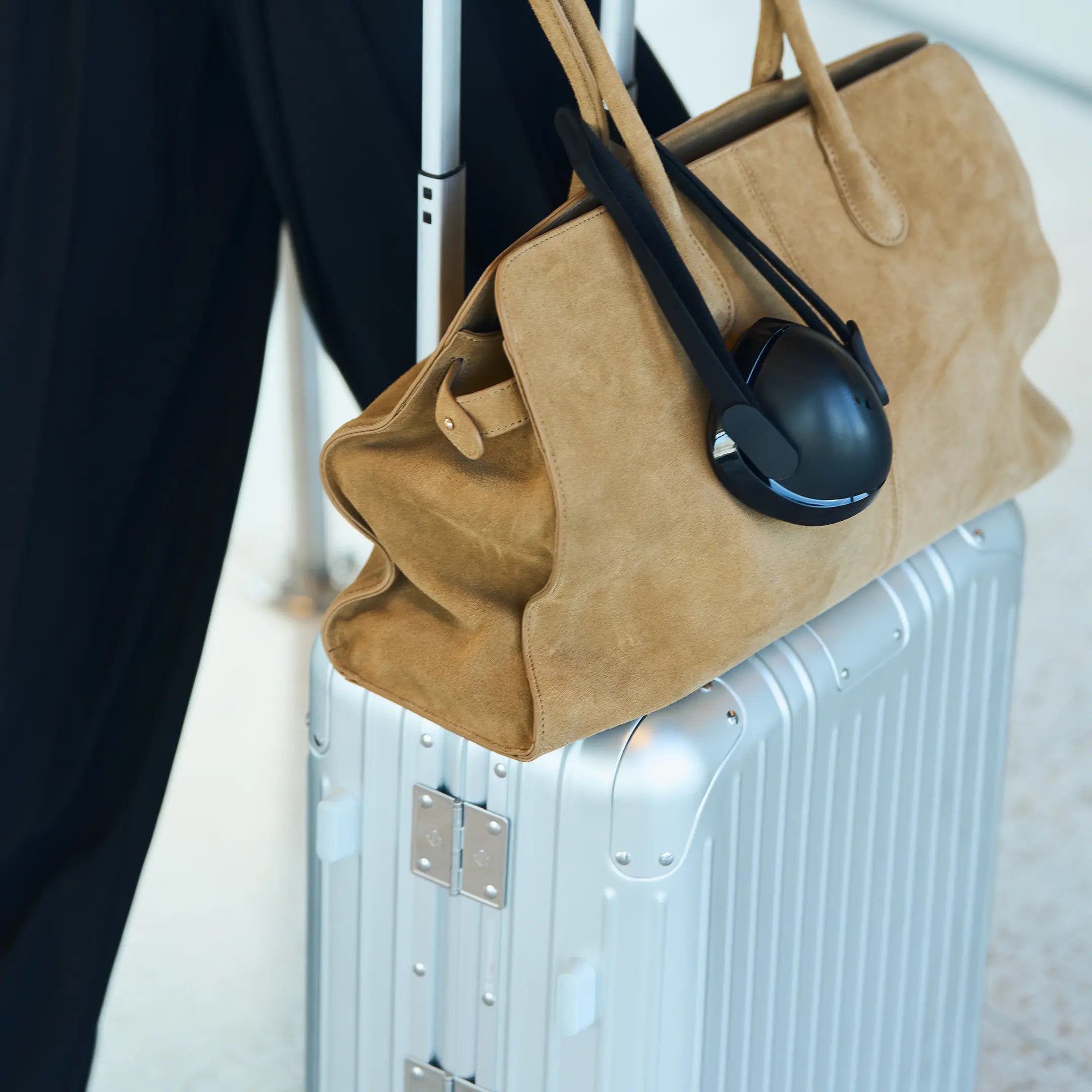
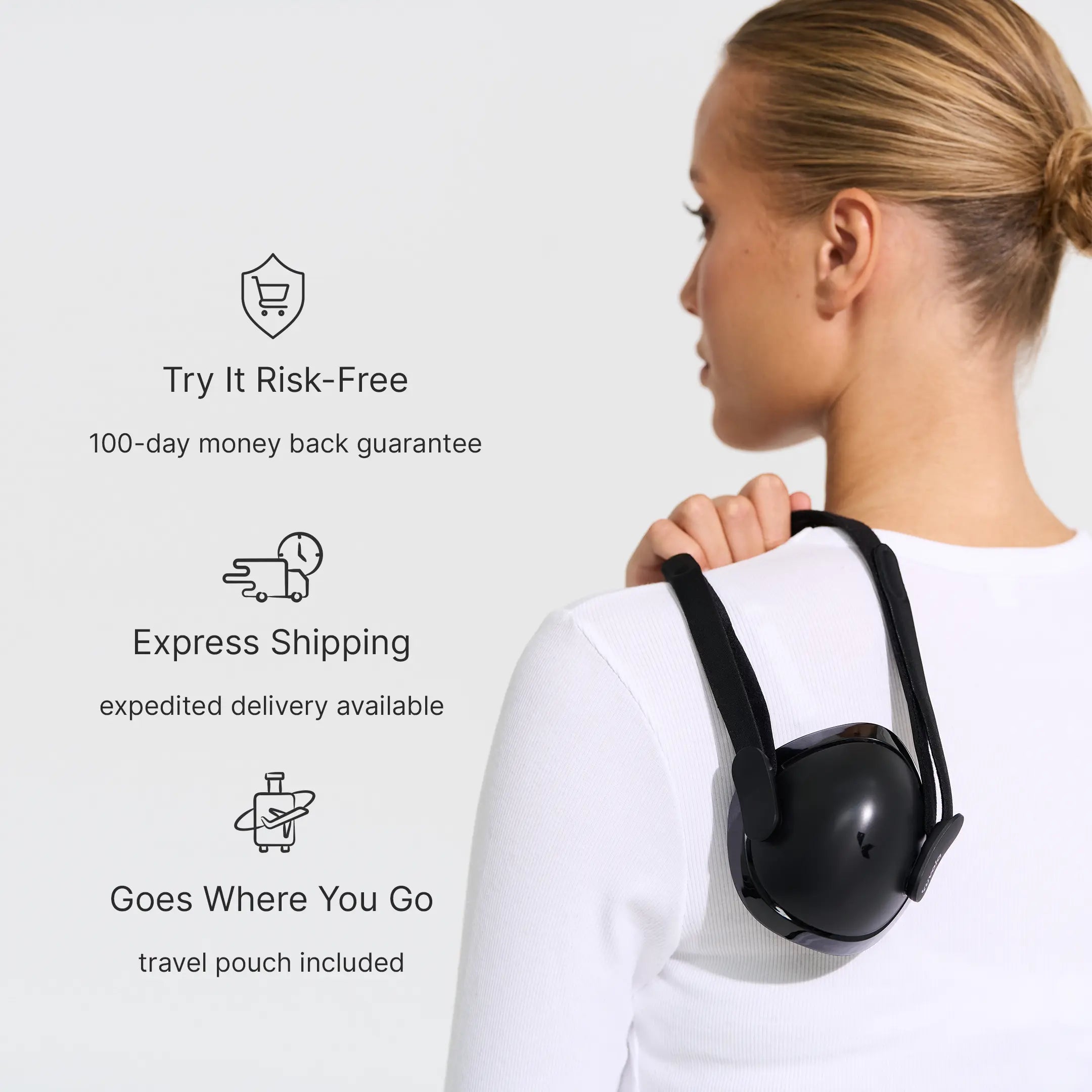
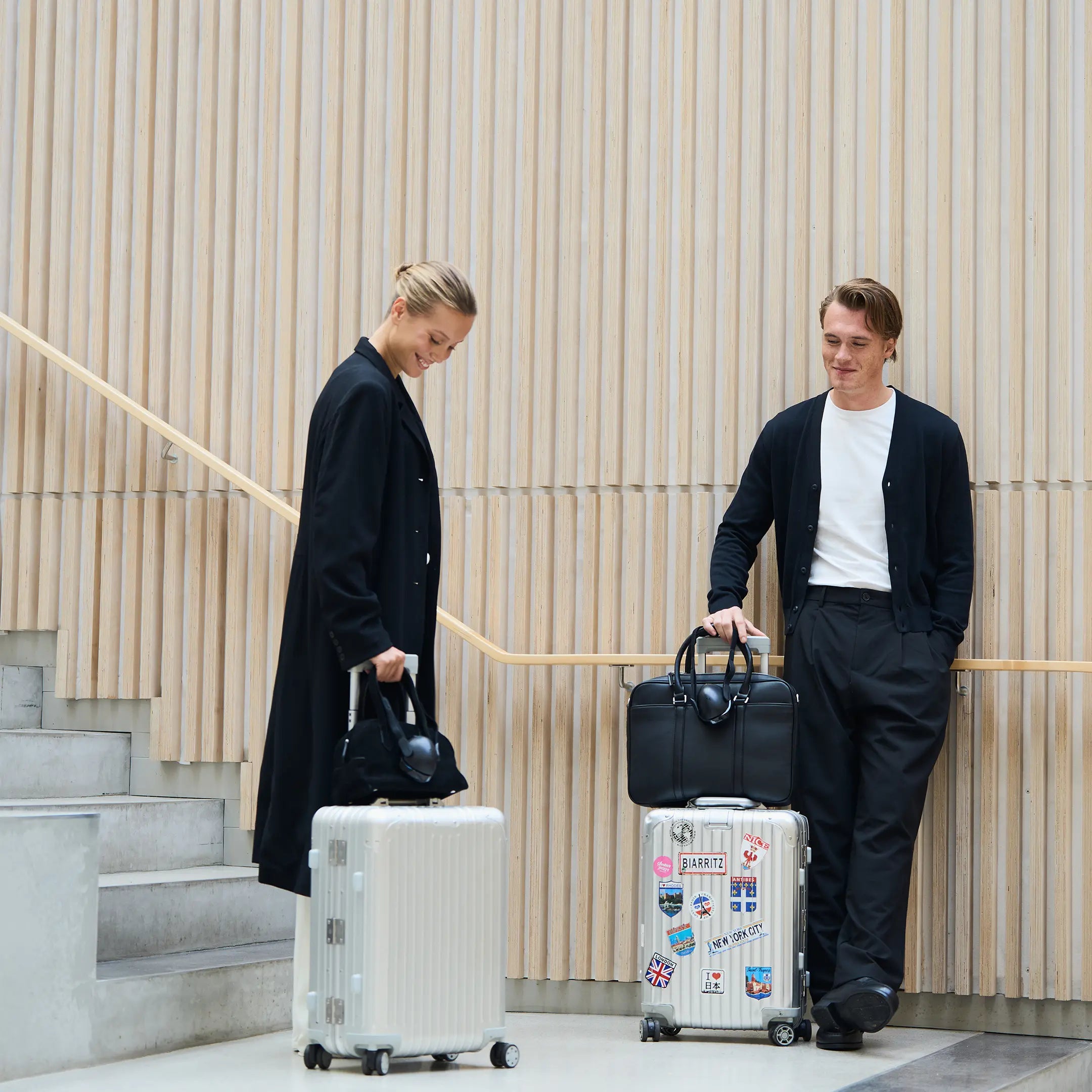
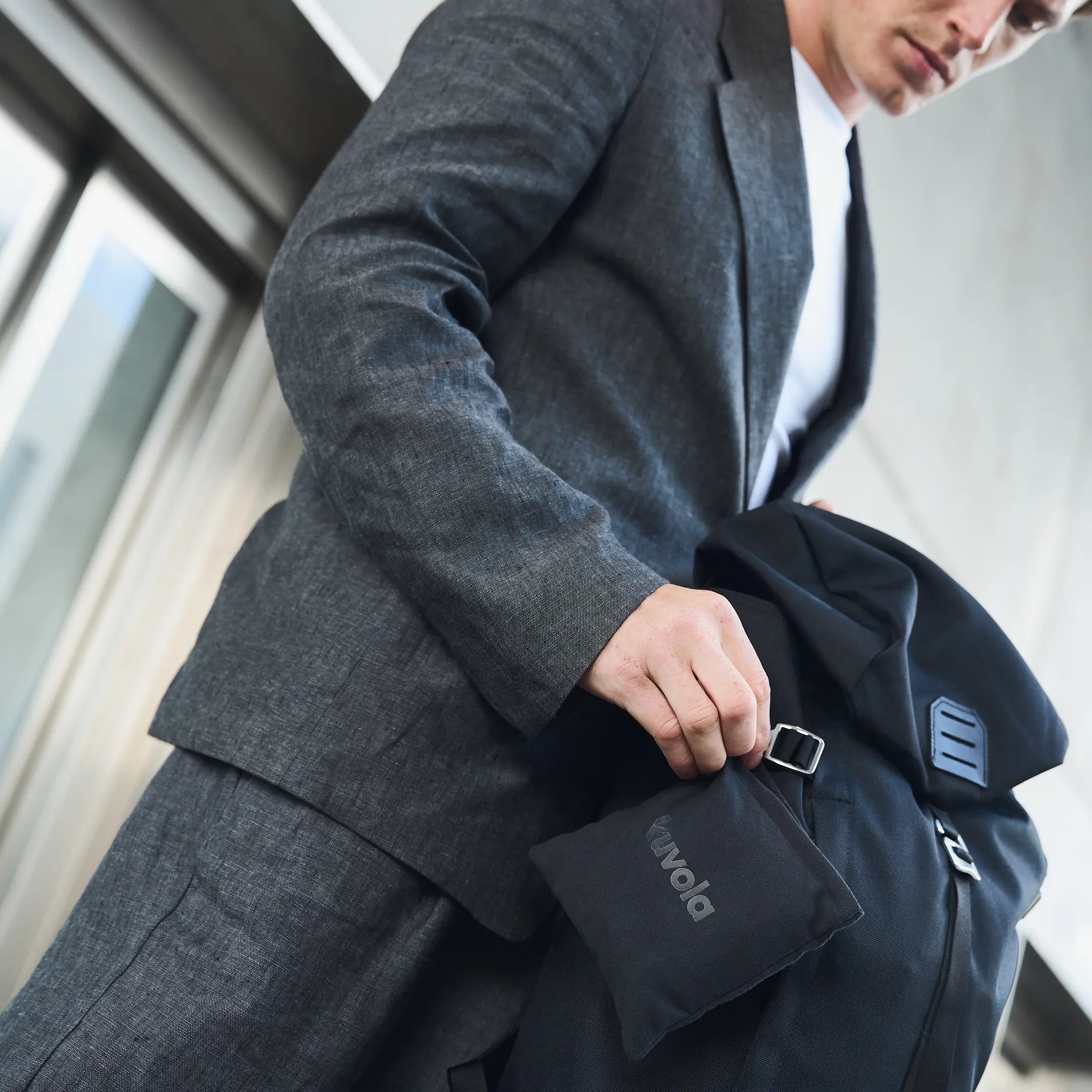
Es gibt keine Einrichtung, kein Aufladen, keine Flüssigkeit, die verschüttet werden könnte. Sie passt in eine Manteltasche. Sie ziehen sie an, atmen und landen mit einem anderen Gefühl, als Sie es gewohnt sind.
Die meisten Reisenden tragen sie, sobald die Kabinenbeleuchtung heruntergedimmt wird, und nehmen sie ab, wenn sie aufwachen. Einige ziehen sie früher an, wenn sie in den ersten Stunden die Trockenheit spüren.
Befeuchtungsmaske vs. Raumbefeuchter: verschiedene Werkzeuge, verschiedene Situationen
Ein Raumbefeuchter ist die richtige Wahl für Ihr Schlafzimmer zu Hause, besonders im Winter oder in trockenen Klimazonen. Er fügt dem gesamten Raum Feuchtigkeit hinzu. Aber er passt nicht in Ihr Handgepäck und hilft nicht in Umgebungen, die Sie nicht kontrollieren können: Flugzeugkabinen, Hotelzimmer, Nachtzüge.
Eine Befeuchtungsmaske ist persönlich. Sie erzeugt ein Mikroklima aus befeuchteter Luft direkt an Ihren Atemwegen, unabhängig von den Bedingungen um Sie herum. Das macht sie genau in den Situationen nützlich, in denen ein Raumbefeuchter nicht folgen kann.
| Raumbefeuchter | Befeuchtungsmaske | |
|---|---|---|
| Funktioniert zu Hause | Ja | Ja |
| Funktioniert auf Flügen | Nein | Ja |
| Funktioniert in Hotels | Nur wenn Sie einen mitbringen | Ja |
| Benötigt Wasser | Ja | Nein |
| Benötigt Strom | Ja | Nein |
| Tragbar | Nicht wirklich | Passt in eine Manteltasche |
Für viele Reisende ist die Antwort nicht das eine oder das andere. Es ist ein Luftbefeuchter zu Hause und eine Maske für unterwegs.
Worauf Sie bei einer Befeuchtungsmaske achten sollten (und warum wir Kuvola so gebaut haben)
Nicht alle Befeuchtungsmasken sind gleich gebaut. Einige Dinge sind wichtig:
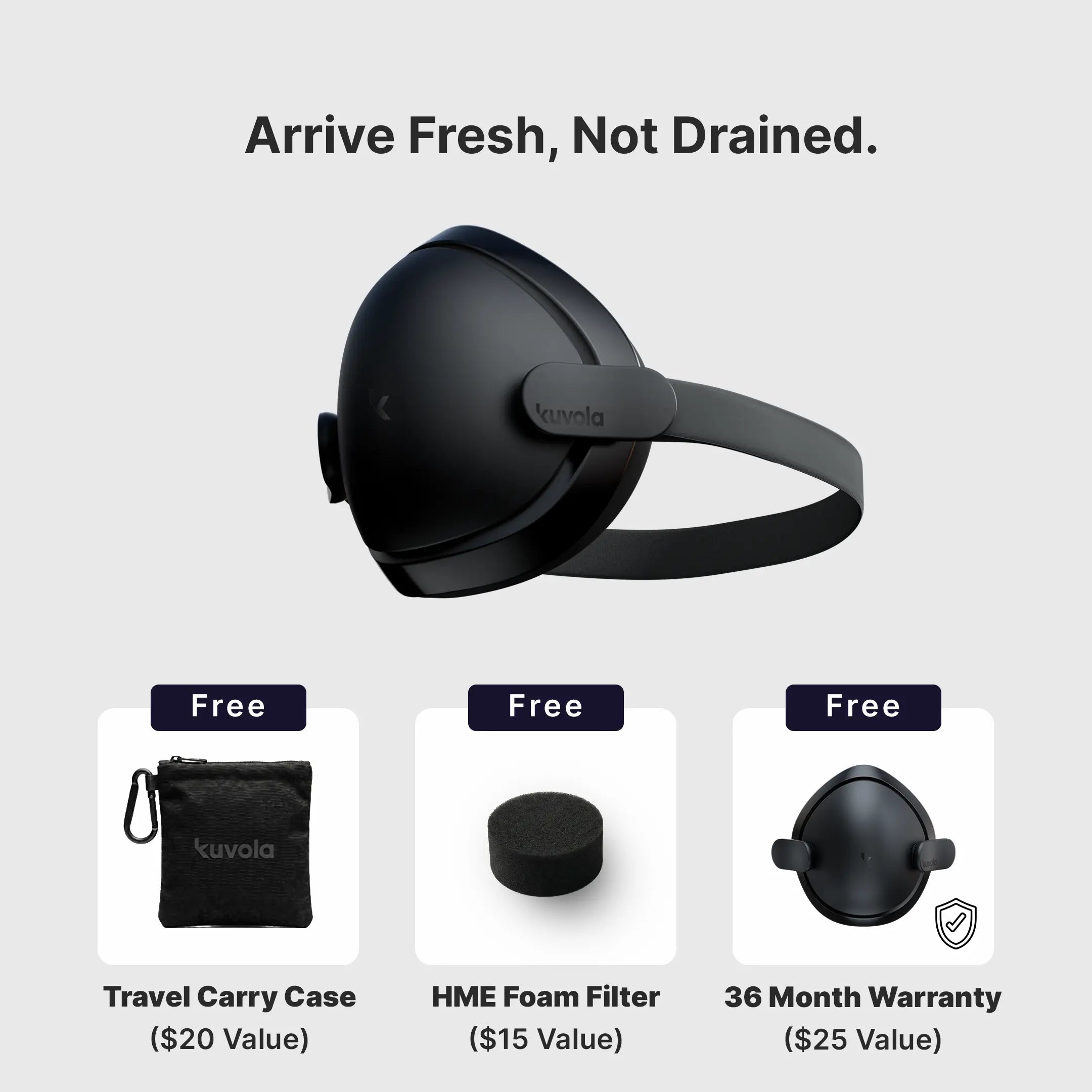
Der Filter ist das gesamte Produkt. Achten Sie auf echte HME-Technologie, nicht nur auf eine Stoffhülle. Ein guter Filter ist so konzipiert, dass er Feuchtigkeit aufnimmt und zurückführt, nicht einfach Partikel blockiert. Kuvola verwendet einen präzisionsgefertigten HME-Filter, dieselbe Technologieklasse, die in Krankenhausbeatmungssystemen verwendet wird, angepasst für ein tragbares Format.
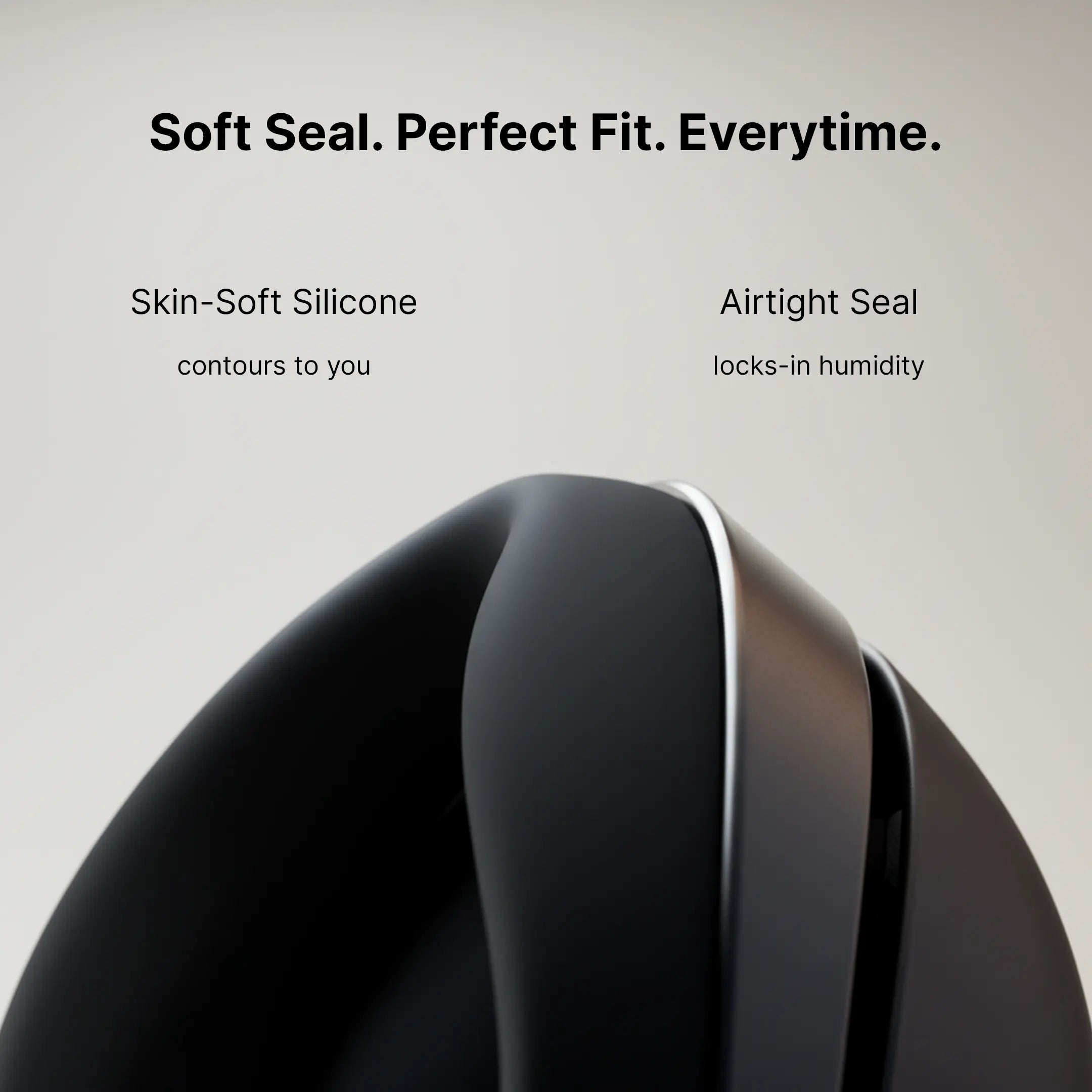
Passform ist wichtig. Wenn Luft an den Rändern entweicht, nützt die Maske nicht viel. Kuvola's verstellbares Gurtsystem bedeckt Nase und Mund mit einem sicheren Abschluss, ohne die Masse klinischer Geräte.
Atmungsaktivität ist genauso wichtig. Manche Masken geben einem das Gefühl, durch ein Kissen zu atmen. Kuvola gleicht Feuchtigkeitsspeicherung mit geringem Atemwiderstand aus, sodass das Atmen natürlich bleibt, selbst wenn Sie einschlafen.
Verzichten Sie auf alles mit Batterien, Ladevorgängen oder einem Wasserreservoir. Die besten Befeuchtungsmasken verwenden passive HME-Technologie. Physik, nicht Strom. Das ist alles, was Kuvola ist: ein gut konstruierter Filter und eine bequeme Passform, hergestellt nach höchsten Standards in Großbritannien.
Probieren Sie einen Flug damit aus
Eine Befeuchtungsmaske ist einfacher, als es klingt. Sie ziehen sie an, atmen, und die Luft, die Sie einatmen, kommt befeuchtet statt knochentrocken an.
Die Wissenschaft zeigt alle in dieselbe Richtung: trockene Luft schädigt die Funktion Ihrer Atemwege, verlangsamt die natürliche Filterung Ihres Körpers und lässt Sie sich schlechter fühlen. Befeuchtete Luft verhindert diesen Schaden. Eine gut gestaltete Maske macht befeuchtete Luft einfach tragbar.
Wenn Sie regelmäßig fliegen und immer wieder mit trockenem Hals, einer Stimme, die nicht mitmachen will, oder einem nebligen Kopf landen, probieren Sie Kuvola auf Ihrem nächsten Flug aus. Eine Reise reicht aus, um den Unterschied zu spüren.
Referenzen:
- Salah, B. et al. (1988). „Nasal mucociliary transport in healthy subjects is slower when breathing dry air.“ European Respiratory Journal, 1(9), 852-855.
- Massie, C.A. et al. (1999). „Effect of humidification at different flow rates on the sleep of CPAP users.“ Chest, 116(2), 403-408.
- Sivasankar, M. & Fisher, K. (2002). „Oral breathing increases Pth and Ptp in individuals with vocal fatigue.“ Journal of Speech, Language, and Hearing Research.
- Kimura, Y. et al. (2019). „Effect of humidified air on nasal resistance.“ PLOS ONE.
- Tanner, K. et al. (2014). „The effects of three nebulized osmotic agents in the dry larynx.“ Journal of Speech, Language, and Hearing Research.
- Auris Nasus Larynx (2012). Studie zur systemischen Hydratation und Nasenschleimhautfunktion.
- Sleep & Breathing (2023). Metaanalyse von neun RCTs zu befeuchteter Luft und Symptomen der oberen Atemwege.
- Umfrage unter 3.630 Flugpassagieren zu Beschwerden über den Komfort im Flugzeug.
- PMC (2023). HME-Wirksamkeit bei Laryngektomie-Patienten. Link
- PMC (2020). HME-Maske und anstrengungsinduzierte Bronchokonstriktion. Link