Humidifier mask for sleeping: what it does, how it works, and who actually needs one

You know that feeling when you wake up from sleeping on a flight — dry throat, cracked lips, a nose so stuffed you're mouth-breathing before your eyes are even open?
That's not just "airplane air." It's what happens when you breathe for hours in humidity well below what your body expects.
Cabin air on a commercial flight sits between 5 and 12% relative humidity. For context, comfortable indoor air runs 40 to 60%. Your airways weren't built for those conditions, and they let you know about it when you land.
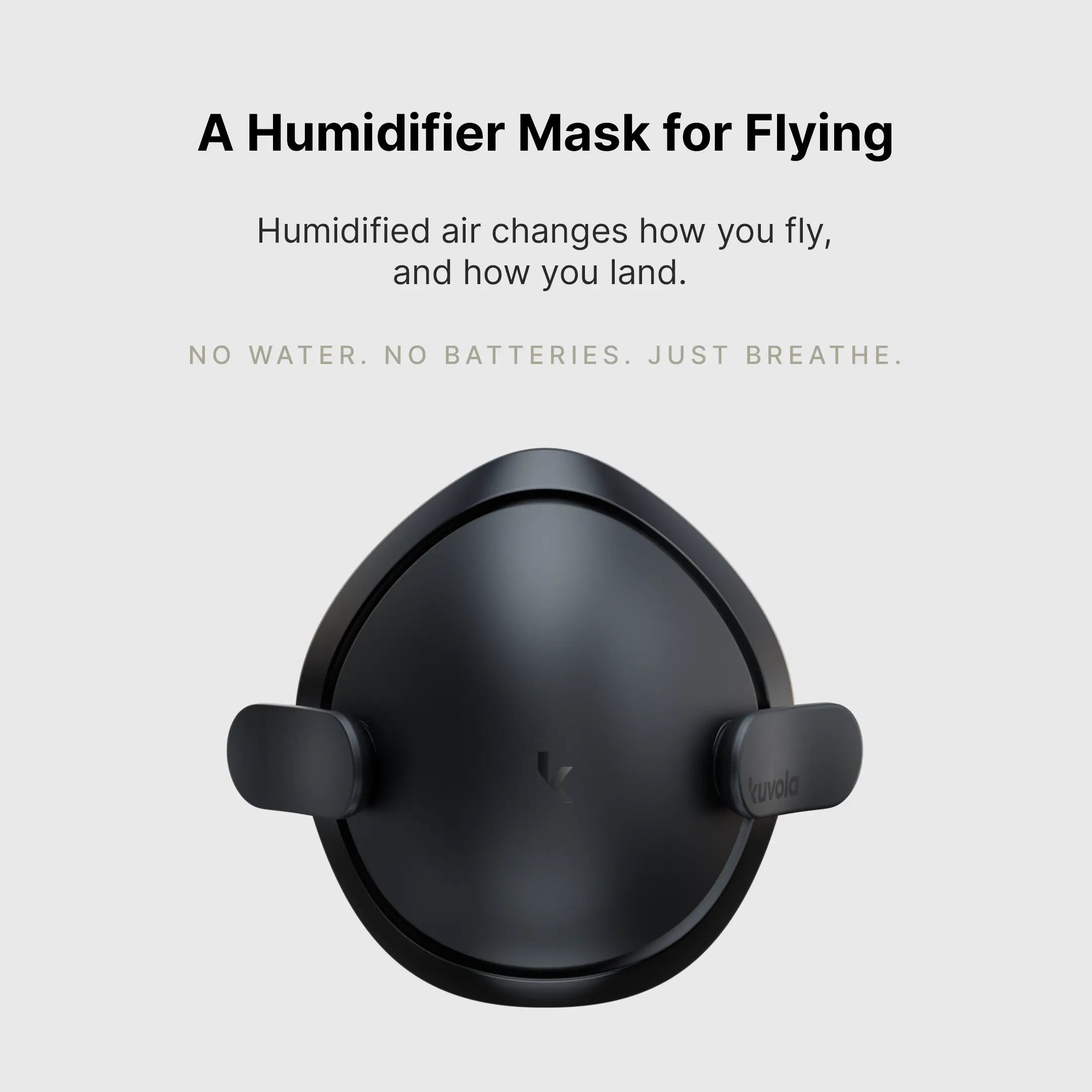
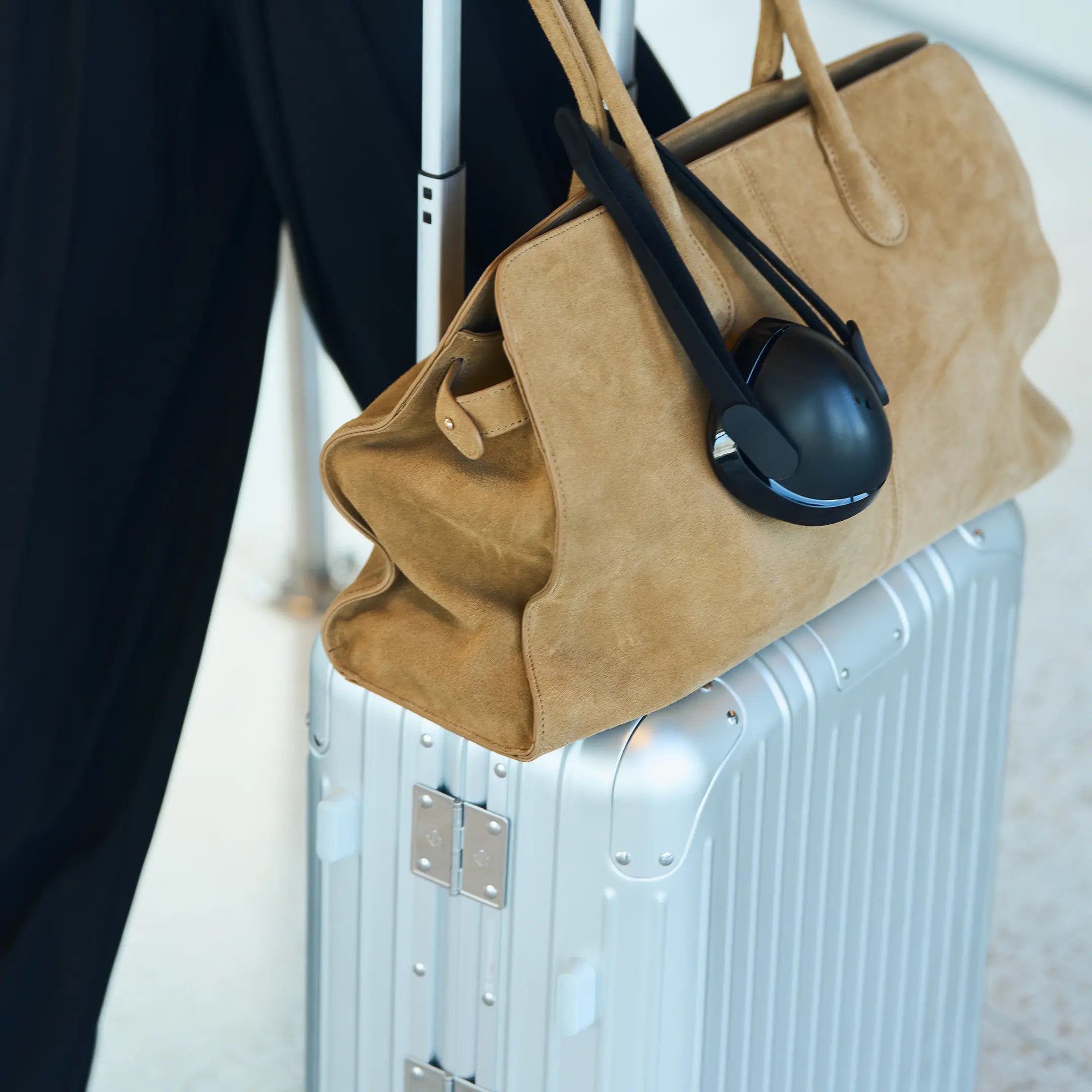
A humidifier mask is a simple fix for this problem. And unlike a room humidifier, which is great for your bedroom but useless at 35,000 feet, a humidifier mask travels with you.
This is what it does, why the research supports it, and who gets the most out of it.

How a humidifier mask works (no water, no batteries)
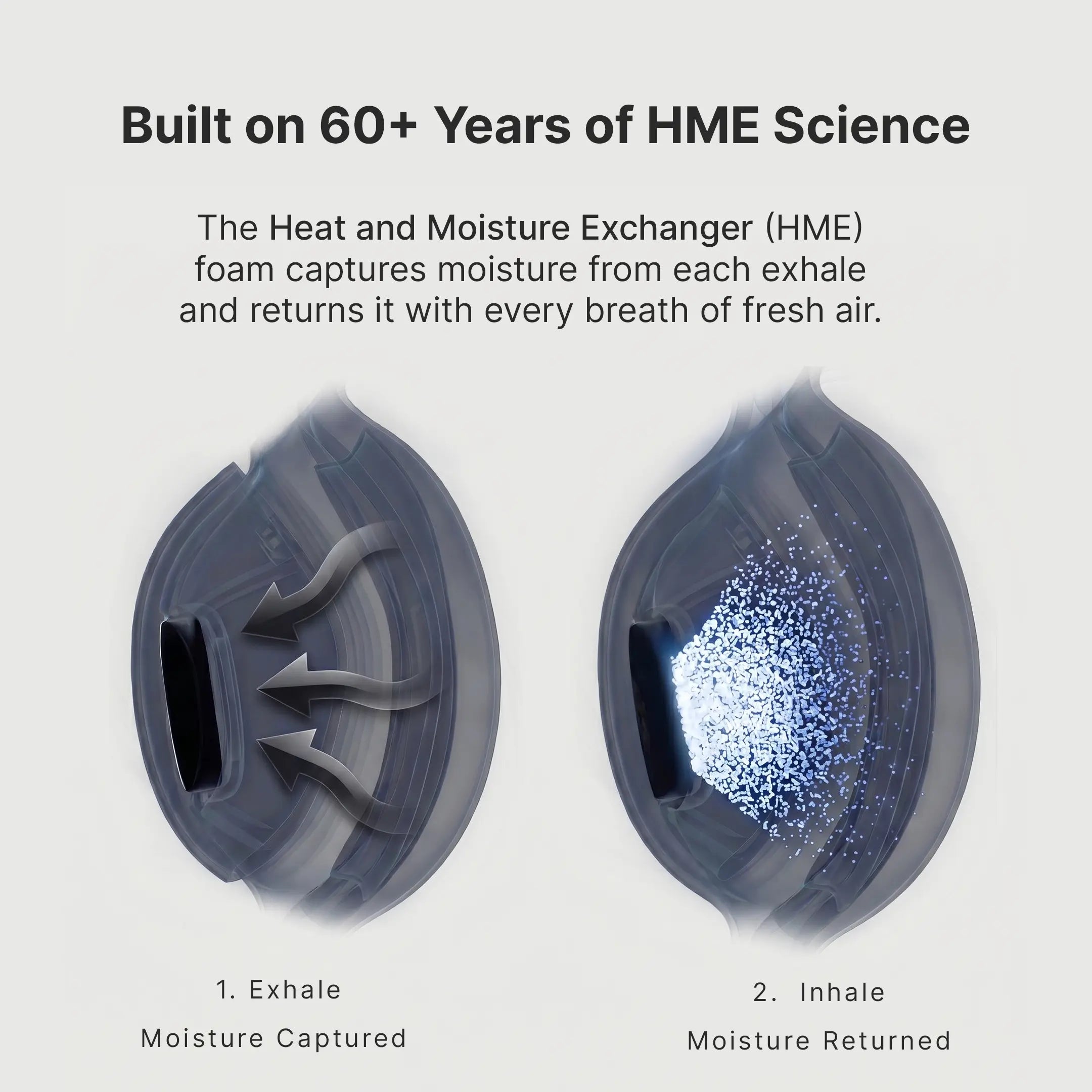
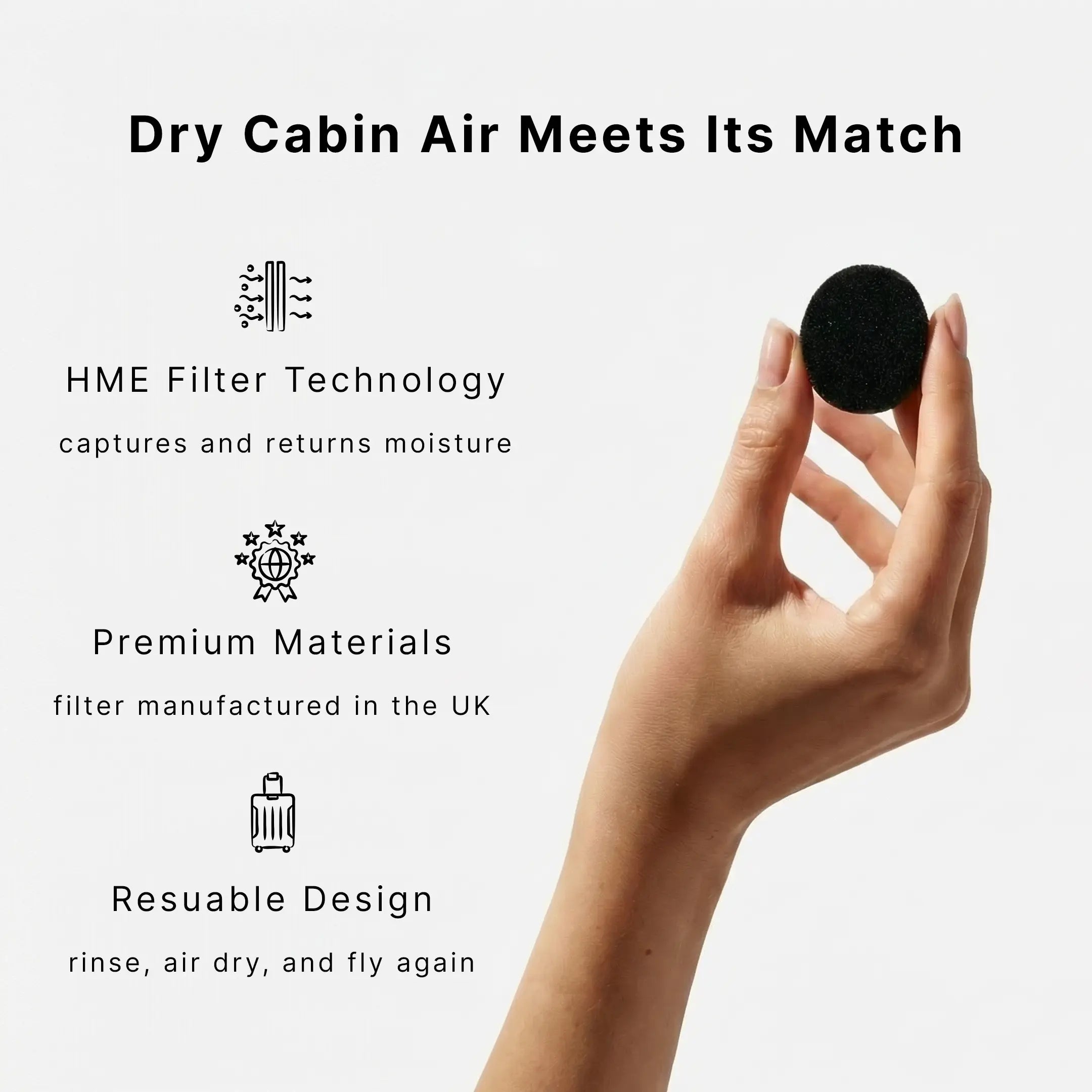
A humidifier mask uses a principle called Heat and Moisture Exchange, or HME. It's the same class of technology used in hospital respiratory care, adapted for everyday use.
The concept is simple:
- When you exhale, your breath carries warmth and moisture. The mask's filter captures both before they escape.
- When you inhale, fresh air passes through that same filter. It picks up the stored moisture and warmth, then delivers humidified air back to your airways.
Related Article: How the Kuvola Humidifier Mask works
Nothing gets recycled. No stale air. No water reservoir. No electronics. The filter simply returns what your body was about to lose.
HME technology has been studied extensively in clinical settings. A review published in Respiratory Care found that HME filters are an effective method of maintaining airway humidity, with the added benefit of acting as an antimicrobial barrier. Laryngectomy patients using HME devices saw reduced coughing and improved pulmonary rehabilitation when compliance was high (PMC, 2023).
In exercise science, a study in ERJ Open Research showed that wearing an HME mask during exercise in cold, dry conditions reduced the severity of exercise-induced bronchoconstriction compared to going without (PMC, 2020).
Breathing humidified air protects your airways. A mask is just a portable way to make that happen.

Why your airways dry out while you sleep (and why water doesn't fix it)
Every breath you take at altitude or in a dry room pulls moisture off your airway surfaces. Doctors call this insensible water loss. It's invisible but continuous. Your nose, throat, and bronchial passages are giving up moisture to dry air all night.
Most people assume drinking more water fixes this. It doesn't.
A 2012 study published in Auris Nasus Larynx found that hydration from drinking water does not restore nasal mucosal function. The moisture loss happens at the surface of your airways, not from your bloodstream. So while staying hydrated on a flight is a good idea for other reasons, it won't stop your nose and throat from drying out.
What does work is breathing humidified air. A meta-analysis of nine randomized controlled trials, published in Sleep & Breathing in 2023, confirmed that humidified air reduces symptoms of dry nose, dry mouth, and dry throat during sleep.

Dry airways cause a chain reaction.
Nasal mucociliary clearance, your body's built-in air filtration system, depends on moisture. A 1988 study by Salah et al. in the European Respiratory Journal showed that breathing dry air for just 30 minutes cuts mucociliary transport speed in half. When that system slows down, your nose gets congested, you start mouth-breathing, and your throat dries out further.
In a survey of 3,630 airline passengers, dry and stuffy nose was the single most-reported complaint about in-flight comfort.
The sleep connection: humidity and how you feel when you wake up
A quick reality check: research hasn't proven that humidity directly changes sleep stages like REM or deep sleep. What it does affect are the symptoms that wreck your sleep quality, like congestion, dry mouth, sore throat, and the kind of discomfort that keeps waking you up.
When nasal passages dry out, airflow resistance increases. A 2019 study by Kimura et al. in PLOS ONE demonstrated that humidified air reduces nasal resistance, making it easier to breathe through your nose while sleeping.
Mouth breathing during sleep is a separate issue. It dries your throat further and usually leaves you feeling worse in the morning. Anything that helps you stay nose-breathing, including humidified air, works in your favor.
Here's a concrete example: a 1999 controlled trial by Massie et al. in Chest tested different conditions for CPAP users. The group breathing humidified air was the only group that reported waking up feeling more refreshed. Everyone else? No difference.
That doesn't mean a humidifier mask will fix bad sleep on its own. But if dry air is what's keeping you from sleeping well on a flight, fixing the air quality makes a real difference.
Who benefits most from a humidifier mask for sleeping
Not everyone needs one. But some travelers notice the difference immediately.
Frequent long-haul flyers
If you're doing transatlantic or transpacific routes regularly, the effects of dry cabin air accumulate. That worn-out, foggy feeling when you land? Jet lag gets all the blame, but hours of breathing air at 5 to 12% humidity takes its own toll on your airways — and your comfort.
Anyone who wakes up with a dry mouth or sore throat after flights
This is the most common signal that dry air is affecting your comfort. If it happens consistently, you're a candidate.
Voice professionals
Singers, actors, broadcasters, voice coaches — anyone whose livelihood depends on their vocal folds showing up ready to work. The research here is the strongest of any group. Sivasankar & Fisher (2002) found that just 15 minutes of mouth-breathing in dry air measurably raises phonation threshold pressure — the minimum effort required to get your vocal folds vibrating. That means more push to produce the same sound, which accelerates fatigue. Tanner (2014) confirmed that rehydrating the laryngeal surface reverses the effect.
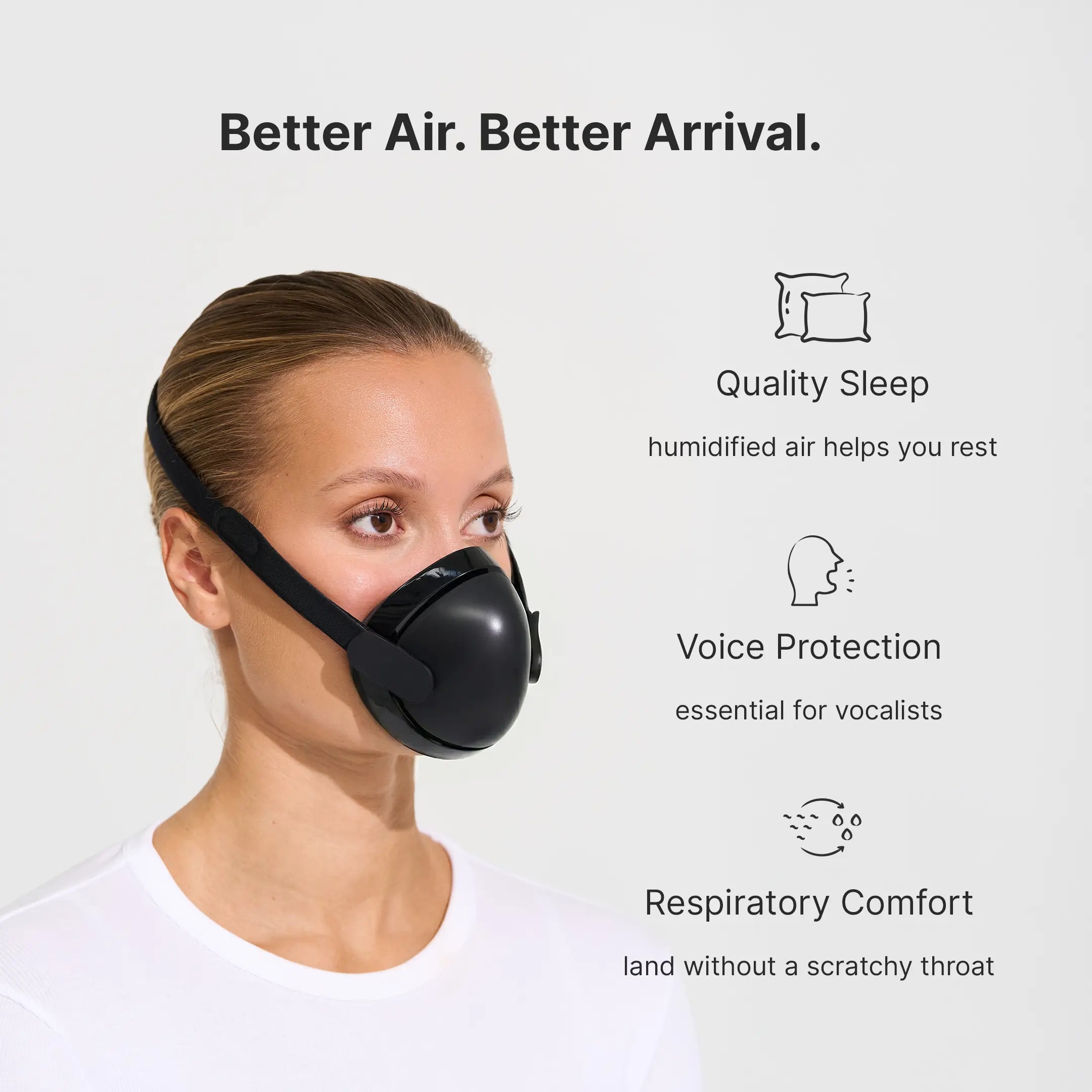
Think about what a 10-hour overnight flight does: hours of breathing cabin air at 5 to 12% humidity, likely through your mouth while you sleep. You land, and your voice feels tight, effortful, thin. For a touring performer with a rehearsal or soundcheck that afternoon, that's not discomfort — it's a professional risk. A humidifier mask won't replace proper vocal hygiene, but it removes the single biggest environmental threat to your voice while you travel.
People who sleep in dry environments
This isn't limited to flights. Hotel rooms with aggressive HVAC, winter heating, desert climates. Any of these push indoor humidity well below comfortable levels, and a humidifier mask works the same way regardless of where you are.
How to use a humidifier mask for sleeping on a flight
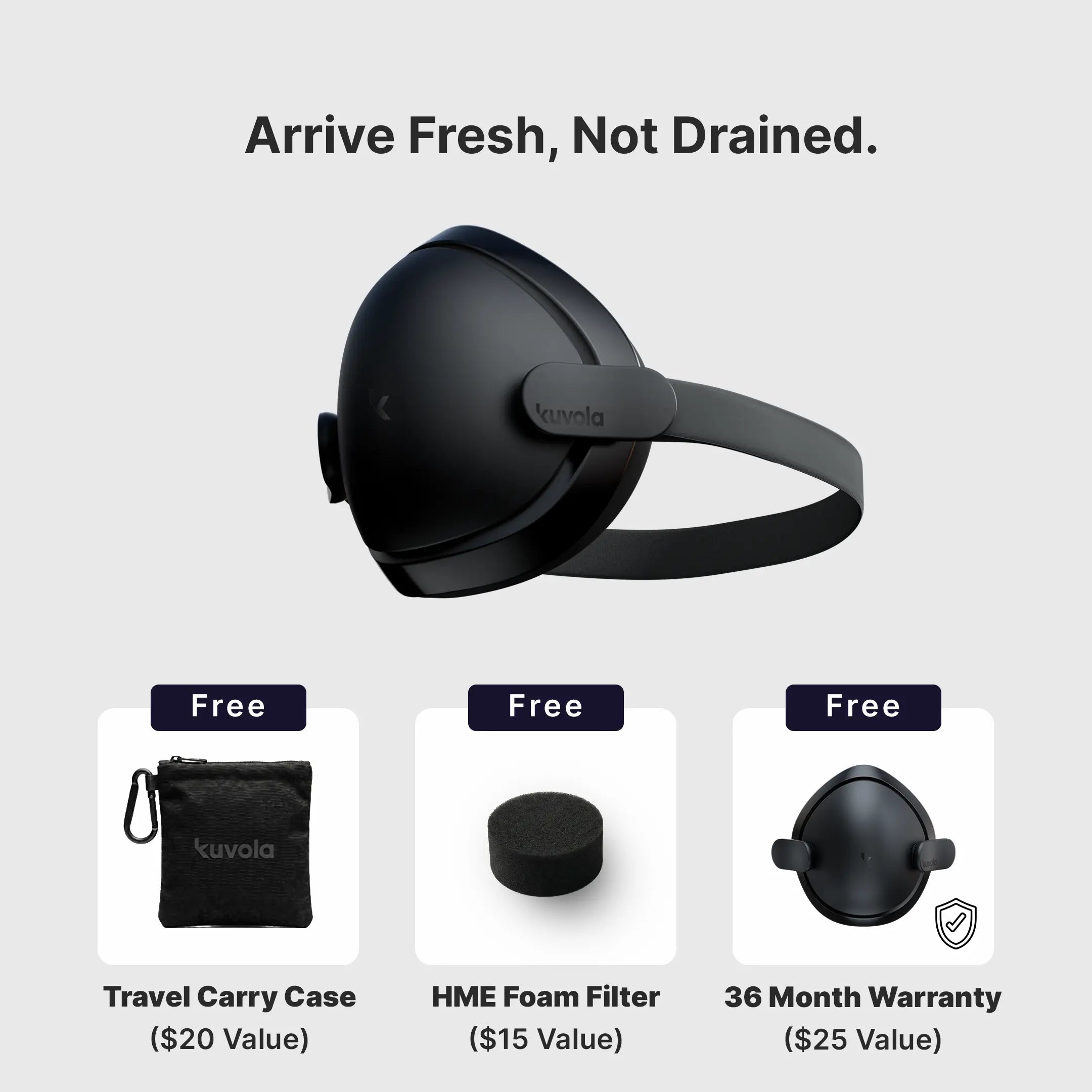
Using one is simpler than most travel gear. Here's how it works with Kuvola, the humidifier mask designed specifically for travel:
- Open the sealed pouch before your flight.
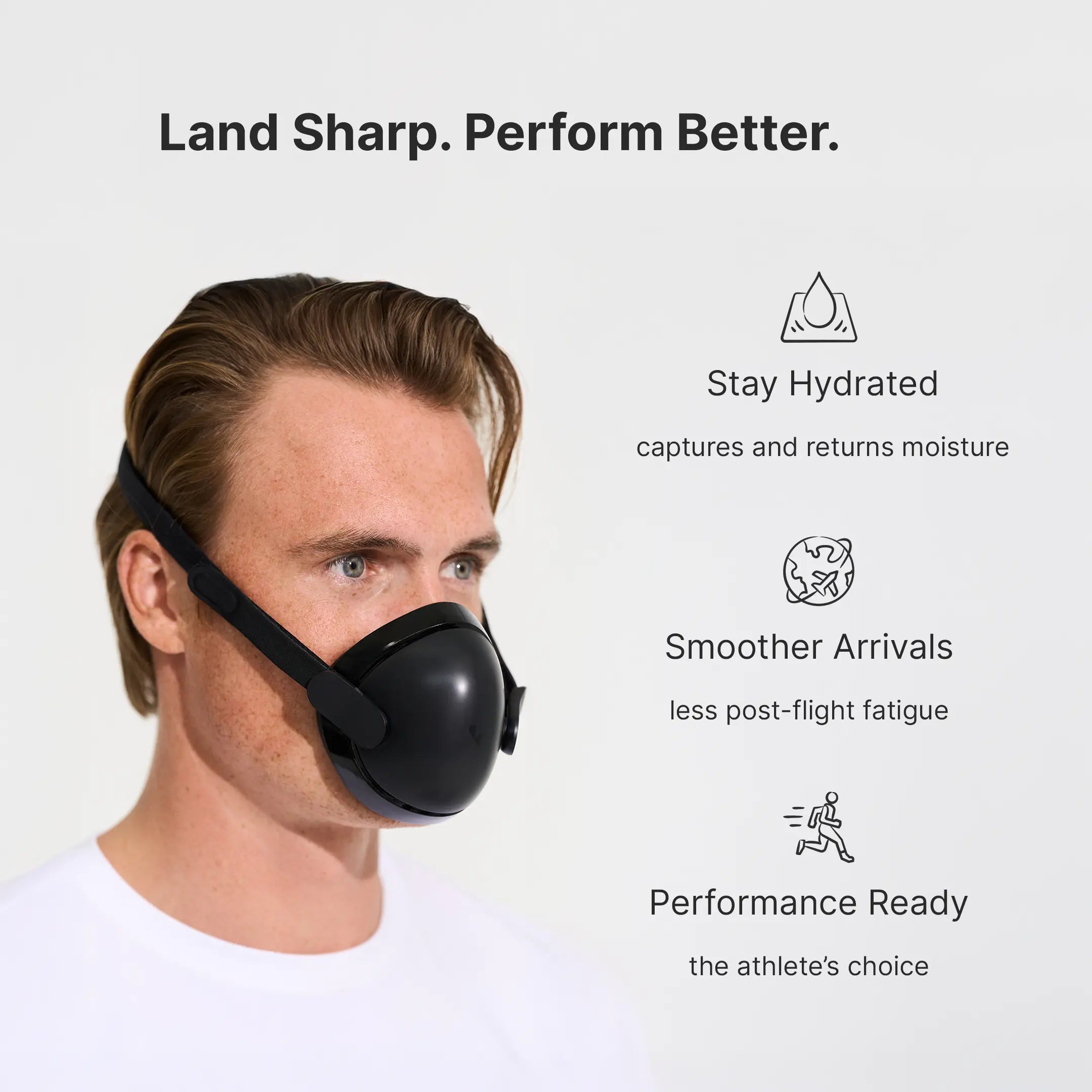
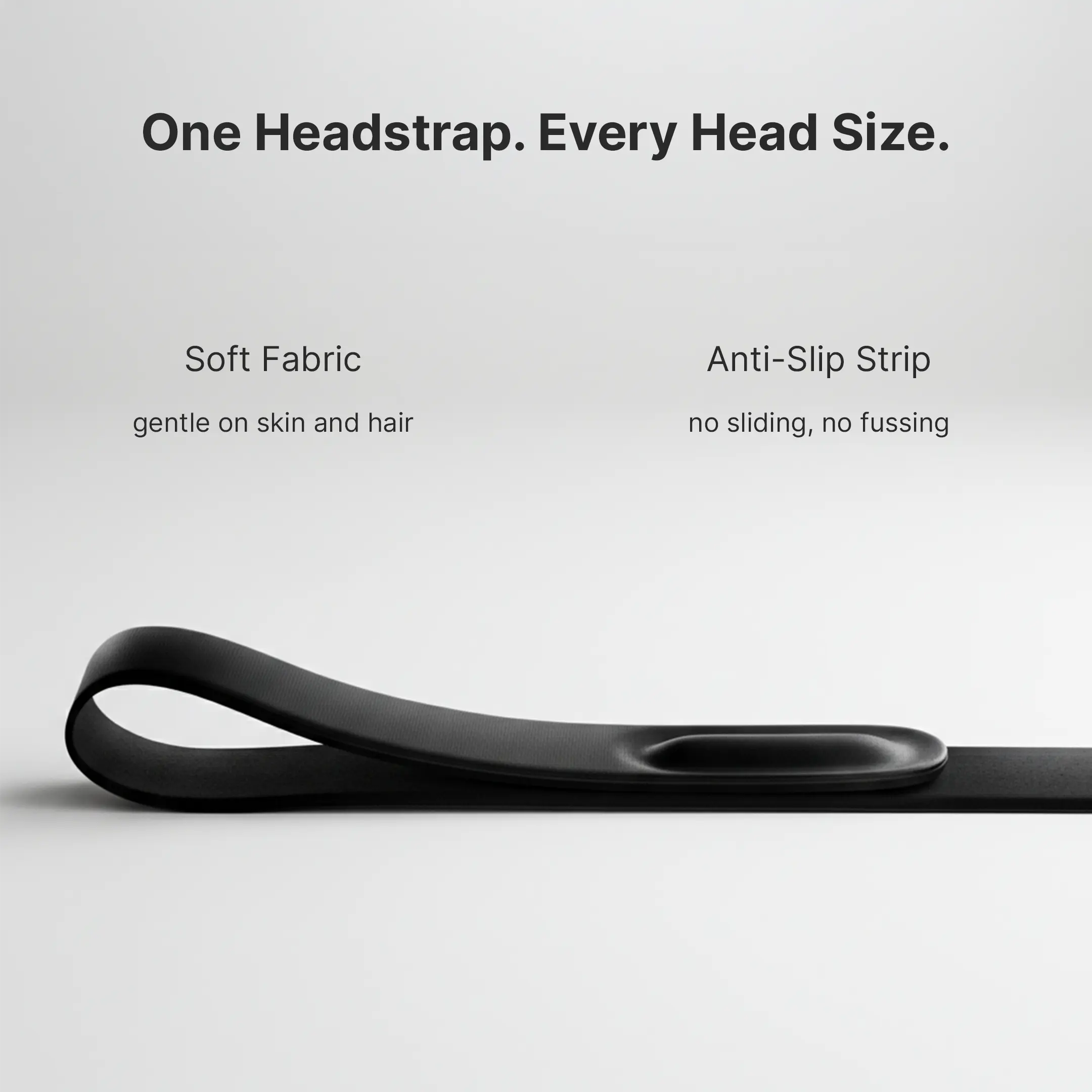
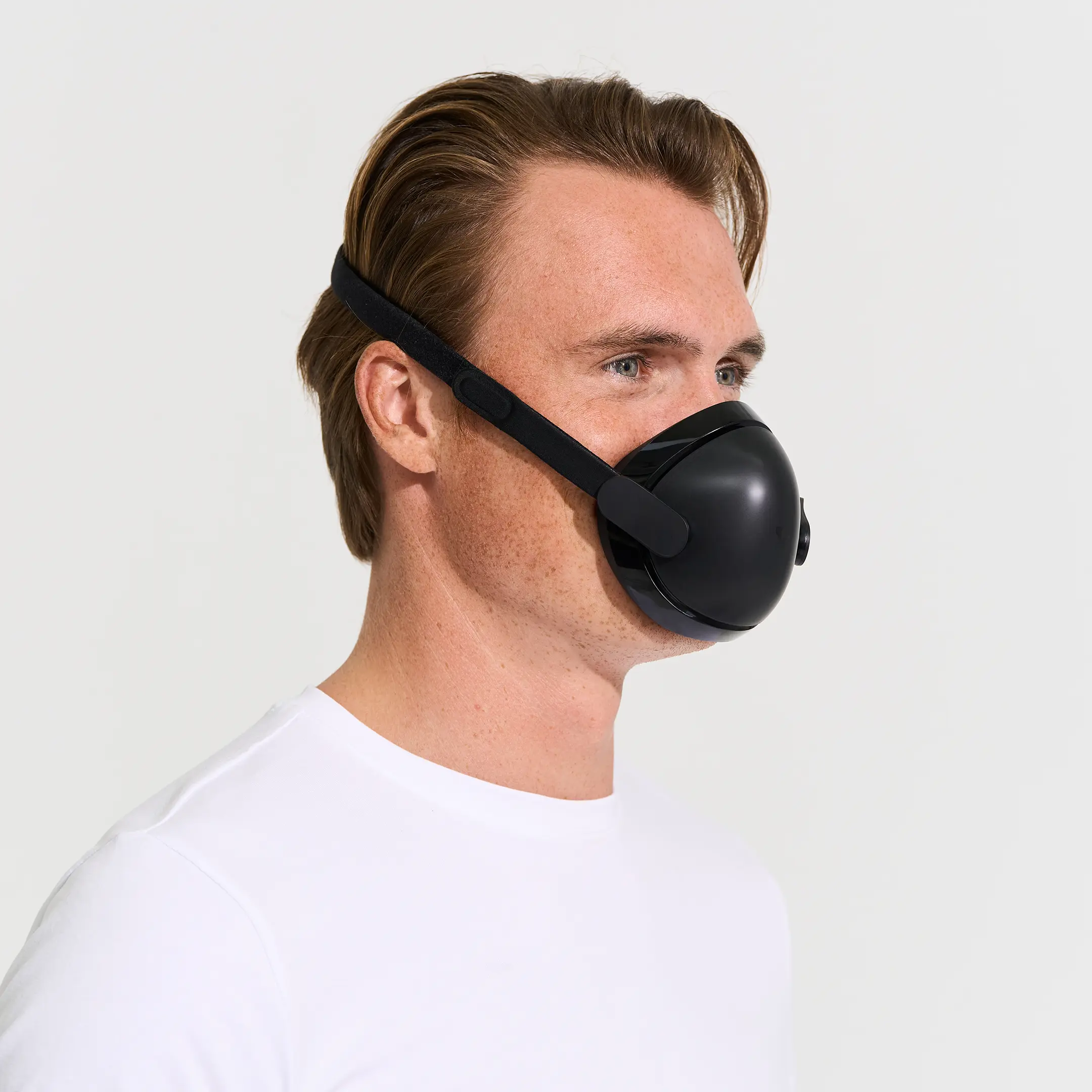
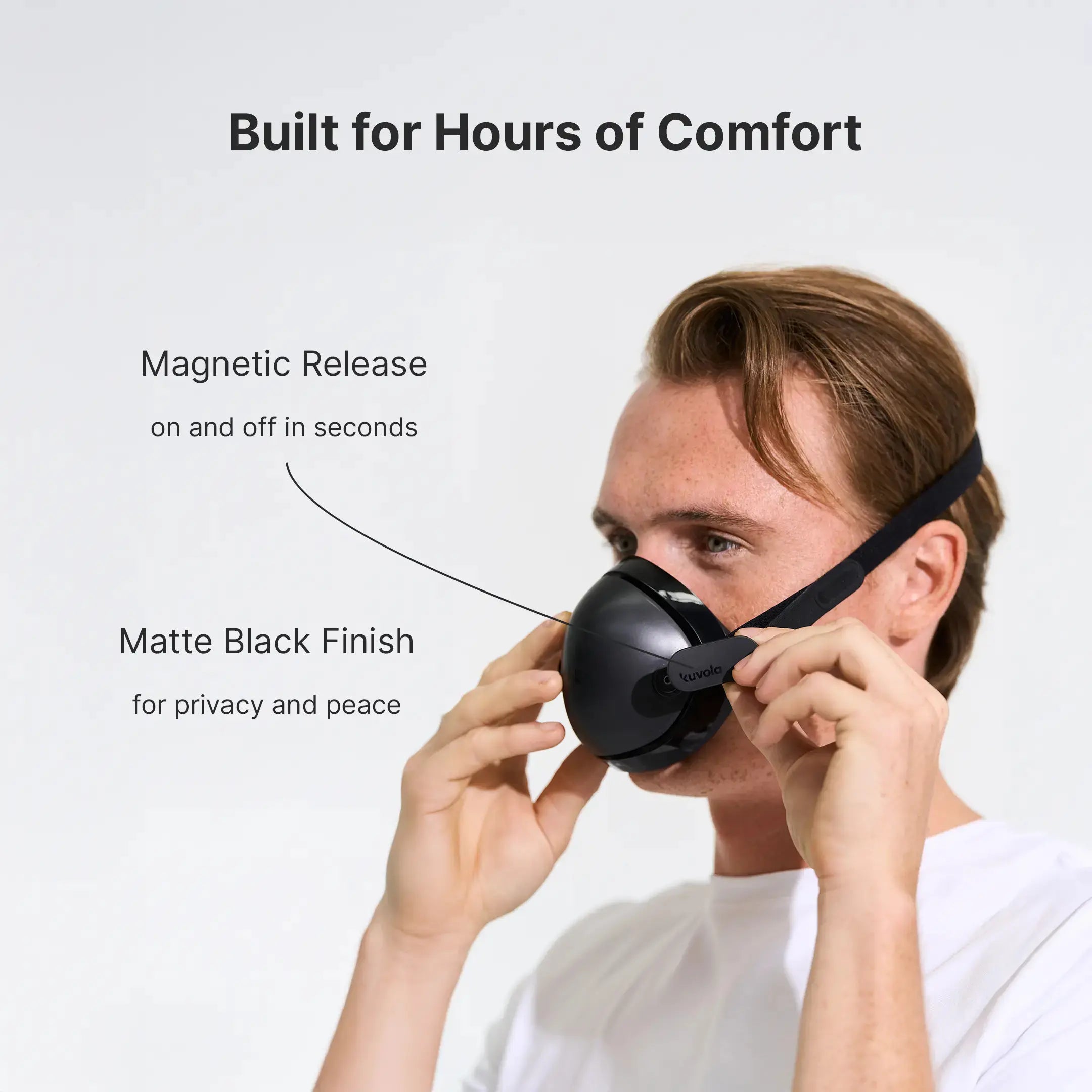
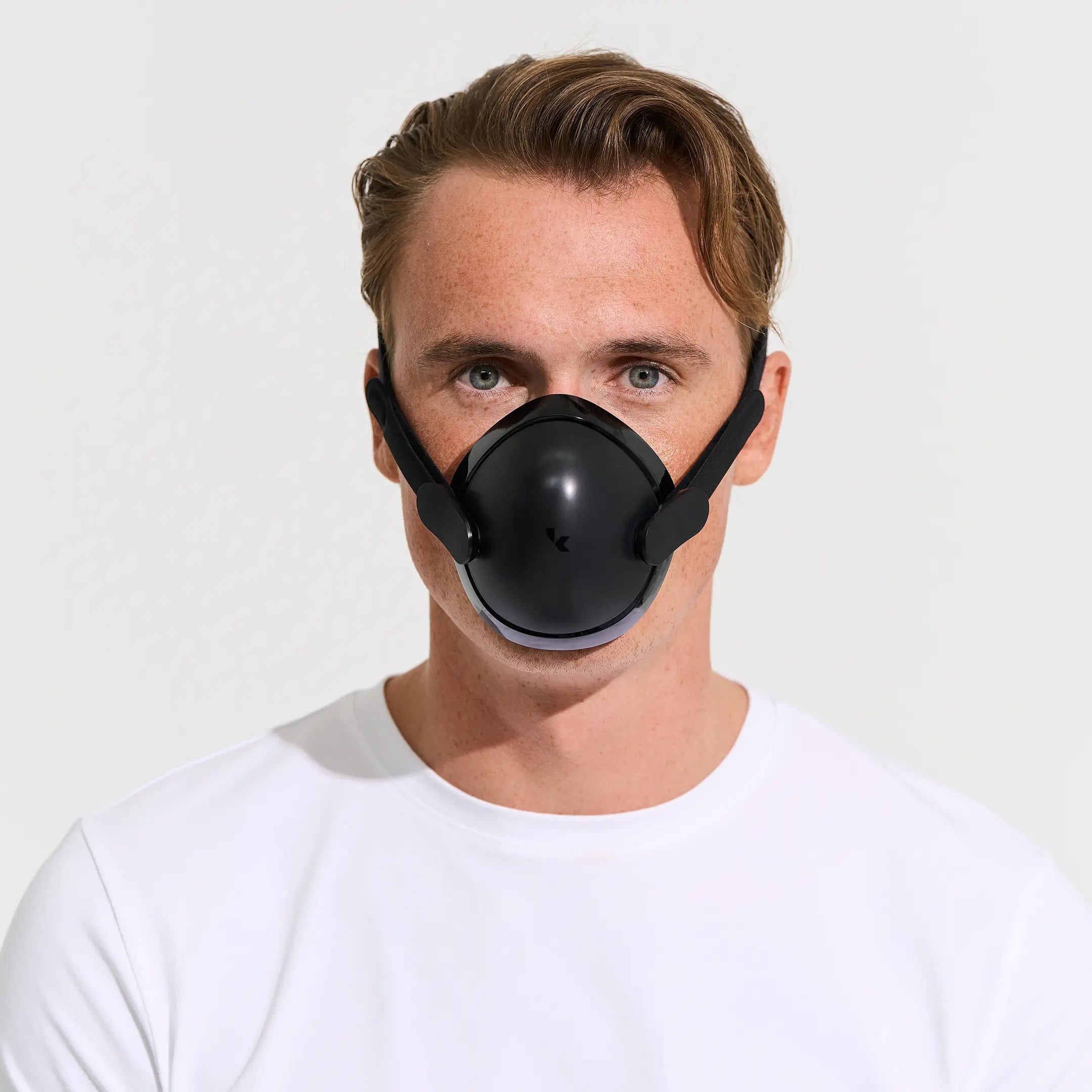
- Adjust the straps for a comfortable, secure fit over your nose and mouth.
- Breathe normally. The HME filter does the work.
- Sleep. The mask captures moisture with each exhale and returns it with each inhale.
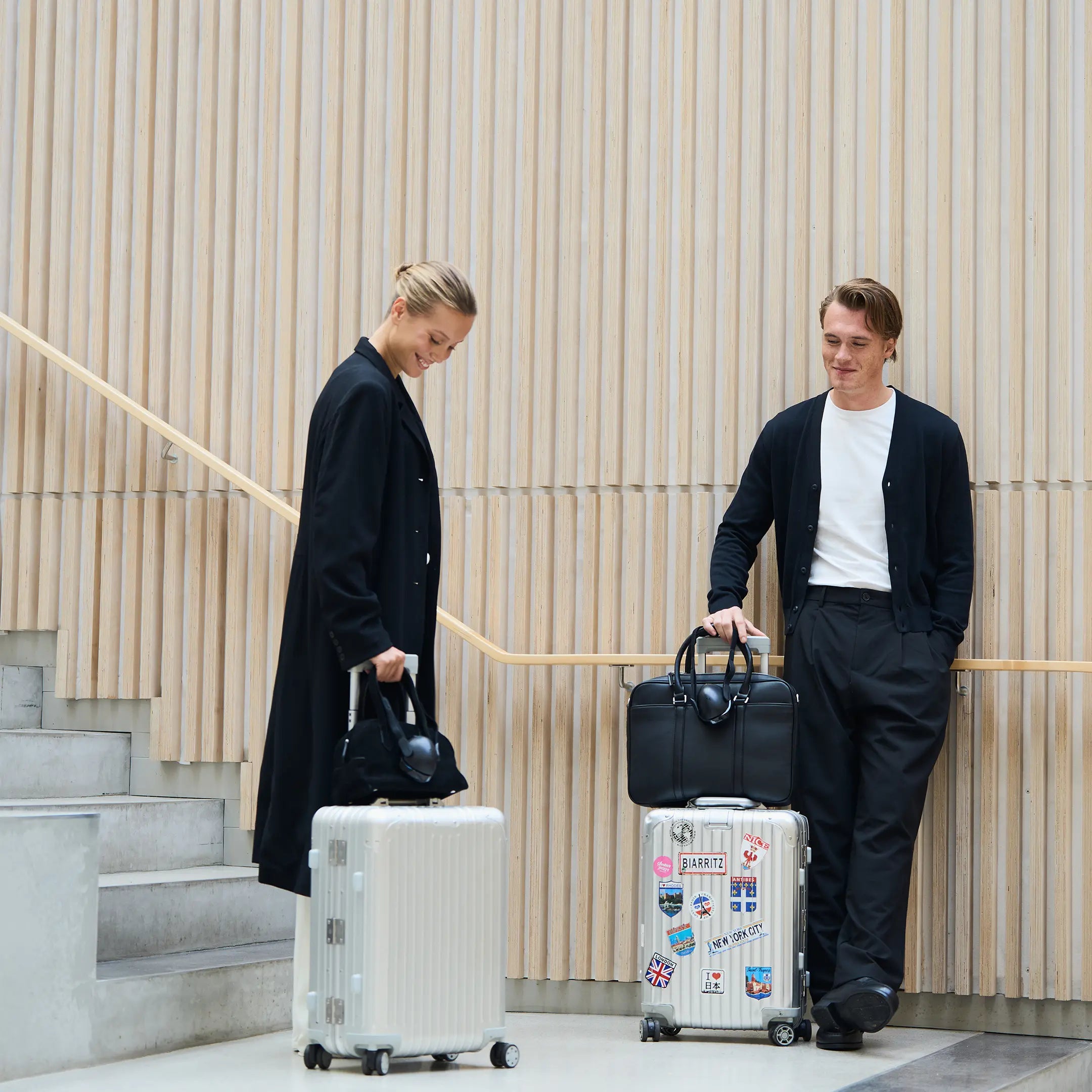
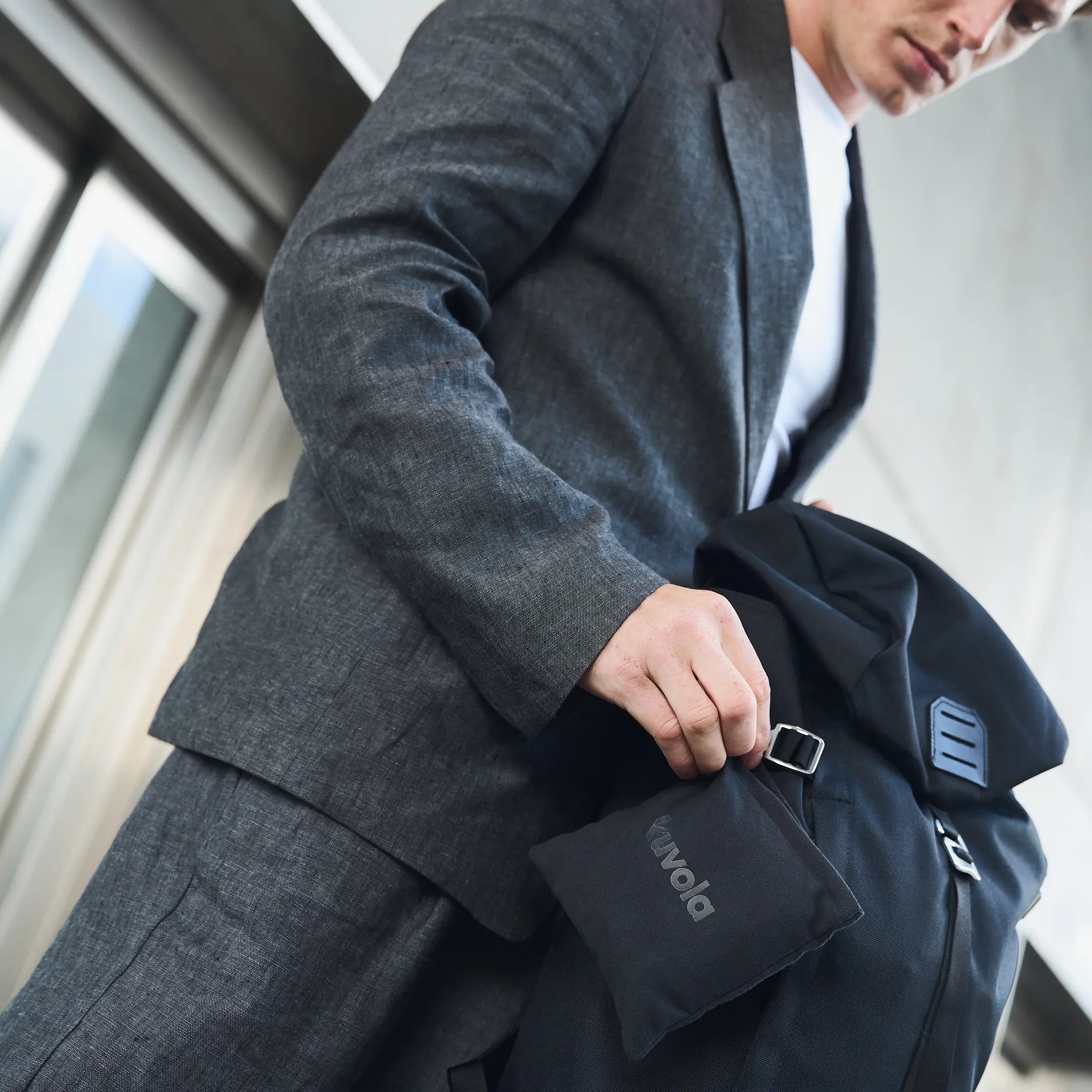
There's no setup, no charging, no liquid to spill. It fits in a coat pocket. You put it on, you breathe, and you land feeling different than you're used to.
Most travelers wear it once the cabin lights go down and take it off when they wake up. Some put it on earlier if they feel the dryness setting in during the first few hours.
Humidifier mask vs. room humidifier: different tools, different situations
A room humidifier is the right choice for your bedroom at home, especially in winter or dry climates. It adds moisture to the entire room. But it won't fit in your carry-on, and it doesn't help in environments you can't control: airplane cabins, hotel rooms, overnight trains.
A humidifier mask is personal. It creates a micro-climate of humidified air right at your airways, regardless of the conditions around you. That makes it useful in exactly the situations where a room humidifier can't follow.
| Room humidifier | Humidifier mask | |
|---|---|---|
| Works at home | Yes | Yes |
| Works on flights | No | Yes |
| Works in hotels | Only if you bring one | Yes |
| Requires water | Yes | No |
| Requires power | Yes | No |
| Portable | Not really | Fits in a coat pocket |
For many travelers, the answer isn't one or the other. It's a humidifier at home and a mask for travel.
What to look for in a humidifier mask (and why we built Kuvola this way)
Not all humidifier masks are built the same. A few things matter:
The filter is the entire product. Look for true HME technology, not just a fabric cover. A good filter is designed to capture and return moisture, not simply block particles. Kuvola uses a precision-engineered HME filter, the same class of technology used in hospital ventilator circuits, adapted for a wearable format.
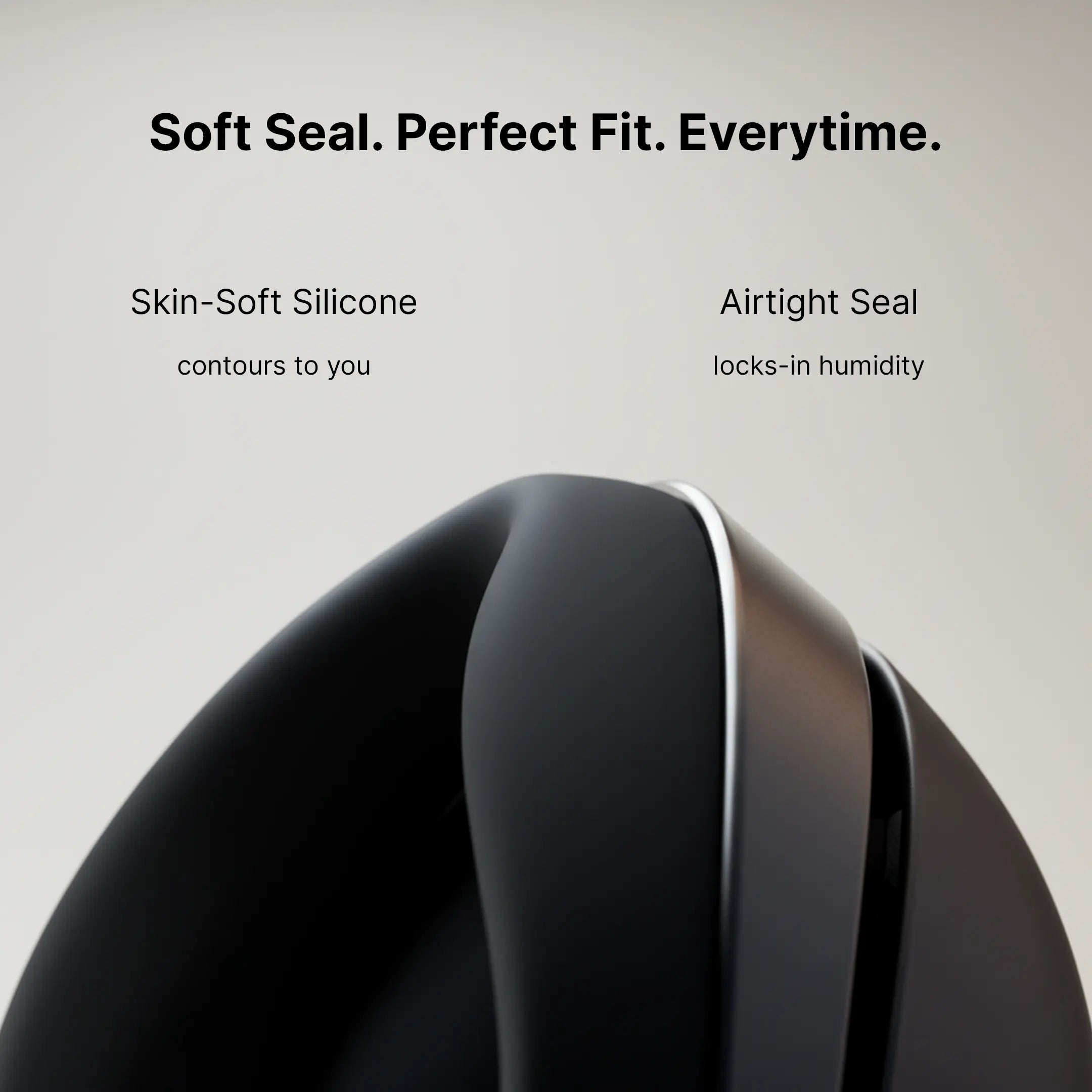
Fit matters. If air leaks around the edges, the mask isn't doing much. Kuvola's adjustable strap system covers both nose and mouth with a secure seal, without the bulk of clinical equipment.
Breathability matters just as much. Some masks make you feel like you're breathing through a pillow. Kuvola balances moisture retention with low airflow resistance so breathing stays natural, even when you're falling asleep.
Skip anything with batteries, charging, or a water reservoir. The best humidifier masks use passive HME technology. Physics, not power. That's all Kuvola is: a well-engineered filter and a comfortable fit, manufactured to exacting standards in the UK.
Try one flight with it
A humidifier mask is simpler than it sounds. You put it on, you breathe, and the air you inhale arrives humidified instead of bone-dry.
The science all points the same direction: dry air damages your airway function, slows your body's natural filtration, and makes you feel worse. Humidified air prevents that damage. A well-designed mask just makes humidified air portable.
If you fly regularly and keep landing with a dry throat, a voice that won't cooperate, or a head full of fog, try Kuvola on your next flight. One trip is enough to feel the difference.
References:
- Salah, B. et al. (1988). "Nasal mucociliary transport in healthy subjects is slower when breathing dry air." European Respiratory Journal, 1(9), 852-855.
- Massie, C.A. et al. (1999). "Effect of humidification at different flow rates on the sleep of CPAP users." Chest, 116(2), 403-408.
- Sivasankar, M. & Fisher, K. (2002). "Oral breathing increases Pth and Ptp in individuals with vocal fatigue." Journal of Speech, Language, and Hearing Research.
- Kimura, Y. et al. (2019). "Effect of humidified air on nasal resistance." PLOS ONE.
- Tanner, K. et al. (2014). "The effects of three nebulized osmotic agents in the dry larynx." Journal of Speech, Language, and Hearing Research.
- Auris Nasus Larynx (2012). Study on systemic hydration and nasal mucosal function.
- Sleep & Breathing (2023). Meta-analysis of nine RCTs on humidified air and upper airway symptoms.
- Survey of 3,630 airline passengers on in-flight comfort complaints.
- PMC (2023). HME effectiveness in laryngectomy patients. Link
- PMC (2020). HME mask and exercise-induced bronchoconstriction. Link